THE COLD WON’T BOTHER YOU AGAIN AFTER READING HOWARTH’S TALE OF WARTIME ENDURANCE

Standard

We Die Alone CvrImagine you’re living on the outskirts of a small rural village or in an isolated farmstead – in Nazi occupied Norway, north of the Artic circle.  On a bitterly cold, dark, mid-winter evening there’s a knock on your door. You open it to find a wounded and disheveled stranger, close to exhaustion. He’s on the run from the Nazis. He needs you to feed and shelter him. You know that if you do, you will be tortured and killed if found out. Not only you, also your children – who are sleeping upstairs – could also be killed to make an example of “collaborators” or transported to a ‘labour’ camp.

What would you do?

This is the recurring real-life dilemma faced by housewives, fishermen and villagers when Jan Baalsrud lands on their doorstep in this month’s book, it’s We Die Alone by David Howarth.

Jan Baalsrud is not a fictional character. He was a Norwegian commando sent from England as part of an under-cover sabotage mission to organize and supply the Norwegian resistance during World War II.   The mission goes horribly wrong when, having sailed from Scotland to a remote bay north of Tromso, the leader of the mission reveals their identity to a local store owner who they have been told is a trusted contact. Too late they realize that their contact has died a year earlier and the new owner of the store, who has the same name, is terrified.  The message on a poster in his own shop: “Contact with the enemy is punished by death” is no idle threat. He calls a friend in the Department of Justice. Next morning a German gunboat sails into the bay.

The ensuing battle results in 11 of the 12-man commando unit being killed or captured (and subsequently executed).  Only Jan – wounded and minus a boot – escapes into the adjoining snow-covered hills.

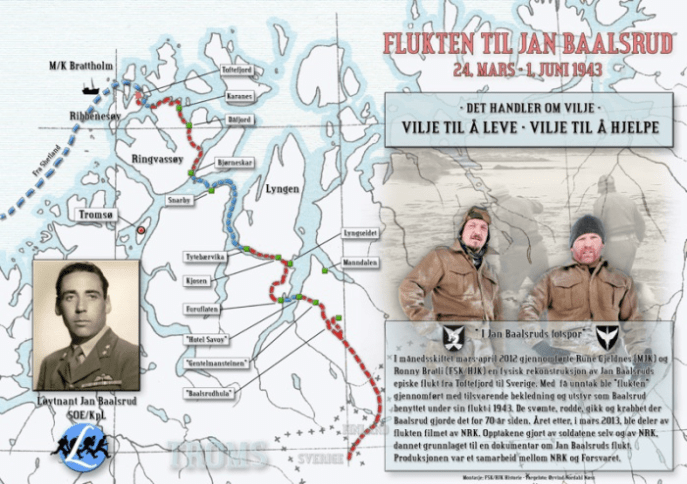
So begins Jan’s epic 68-day escape journey across artic Norway to eventual safety in neutral Sweden.  Actually, epic doesn’t even begin to describe it. Add heroic, superhuman and phenomenal and we get a little closer – but it is difficult to find the superlatives to truly do justice to what Jan Baalstrud endured over these 68-days.
Jan's Jrny

The Route of Jan’s Epic Journey


Evading capture was only one of his many challenges. The harsh conditions of the Artic mountains presented an even more formidable threat.  Caught in an avalanche, he survives a 300ft fall that leaves him concussed, hallucinating and snow-blind.  He suffers severe frost-bite and starvation. Unable to walk because of a gangrenous leg, he endures days on a mountain lying in a hole in the ice under a boulder – his “snow grave”.  His physical perseverance is phenomenal, but even more impressive is his mental resolve and determination – superhuman is what comes to mind.  What other word adequately describes the level of resolve required to methodically amputate his own toes to rid himself of gangerene while lying, wet and cold, under a rock? Or to doggedly maintain a daily routine of basic survival tasks when convinced that he has been abandoned?

Jan’s courage and bravery are without any doubt exceptional and deserving of fulsome admiration, even adulation. But it is those who help him – the housewives, fishermen and
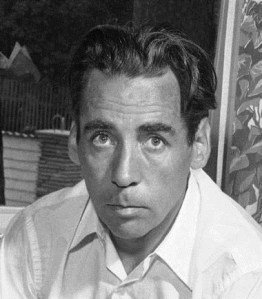
Jan Baalsrud

Jan Baalsrud

villagers mentioned above, the ordinary Norwegians on whose doorstep Jan appears – who truly deserve the accolade of ‘heroic’.  With the sole exception of the aforementioned shop owner, every single person who Jan seeks help from gives it willingly. They hide him, provide him with food from their meagre war rations, haul him in a stretcher up a mountain, drag him in a sled across a treacherous plateau – all the while putting themselves in mortal danger of being caught and executed and endangering their families. And when Jan reaches safety in Sweden, they remain with this danger still hanging over them like a sword of Damacles. For two more years they continue to live with the constant threat that an inadvertent word or an accidental comment might alert the Germans to their ‘treason’. Jan’s courage and bravery was motivated by a powerful desire to survive. The bravery of the men and women who ensured his survival was selfless. They had nothing to gain and everything to lose. Without doubt they are the real heroes of this amazing story.


And the most amazing thing? It’s NOT fiction – it all actually happened. These were real people who acted with astonishing bravery and selflessness to help a stranger who could not have survived without their help.  In this instance, truth is not only stranger than fiction but also much, much more wonderful.

David Howarth

David Howarth

The author, David Howarth, had a direct connection with the story. He was one of the commanding officers of the secret naval base in the Shetland Islands from which the boat that brought Jan and his ill-fated comrades to Norway embarked. After the war he re-traced Jan’s escape route with him and interviewed the people who helped him. This first-hand knowledge is evident throughout – and adds to the readers sense of witnessing inspiring real-life events.


Written in 1955, this was the third of 18 books on military history written by the English author, the others included Sledge Patrol (1951), Shetland Bus (1951), Thieves Hole (1954), Dawn of D-Day (1959), Sovereign of The Seas (1974), The Dreadnoughts (1979) and Nelson: The Immortal Memory (1988). We Die Alone was made into a movie “Ni Liv” (Nine Lives) in 1957 and inspired a 5-part Norweigan TV series in 2012.

The book retains a freshness and immediacy largely due to Howarth’s fast-paced, journalistic writing style. There are a few ‘time-warp’ issues that reflect attitudes that would not be tolerated today but were almost universally accepted at the time – e.g. some comments on the Lapps generate a ‘gulp’ in today’s reader – but these do not detract from the inspiring humanity of the story.

Read this book. It’ll restore your faith in human nature. And as we face into months of ear-bashing by Donald Trump’s hate-filled invective we need to be reminded that we have the capacity for empathetic heroism.
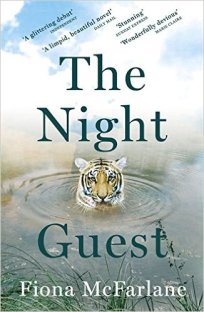
MCFARLANE’S DEBUT IS A HARROWING BUT GOOD READ, THAT LEAVES MORE QUESTIONS THEN ANSWERS

Standard

The Nght Gst CvrWe often lament about life in a perfect world. Well in a perfect world there would be no death, no old age, no hunger- or would there? Of course there would. After a while the place would get over crowded if that was the case. But would people have enough money, food? Would there be no homelessness, crime, cruelty etc. ?

If it really existed could we live in such a wonderful place? Wouldn’t we get sick of it after a while? Well we don’t have to worry about it, our world isn’t totally perfect. We have crime, hunger and war.  We have people who prey on the weak because they know they can, owing to the fact that our law is an ass in certain respects and so the indefensible get lost and fall between the cracks of our hulking, overburdened legal systems. This brings us on to this month’s book, it’s The Night Guest by Fiona Mcfarlane.

Ruth is an elderly widow living in New South Wales, Australia. She lives by herself in a small bungalow overlooking the sea and may suffer from the early stages of dementia as she thinks there’s a tiger loose in her house. This is possibly a convoluted memory from her youth growing up in Fiji. She often disturbs her son by calling him in the early hours of the morning to tell him she hears the tiger. One day a yellow cab pulls up outside the house and moments later Frida appears at the back door with a suitcase in tow, telling Ruth the government have sent her to look after her. Initially Ruth accepts this along with her sons. Over time certain strange things start to happen and then Ruth discovers Frida has been living in her spare room. Their relationship goes from one of initial acceptance on Ruth’s part to distrust and subtle hostility, not forgetting the all but non-existent tiger in the midst of this.

This is both an intriguing and harrowing book to read, from the start you really want to see where the whole tiger story line will go (it doesn’t), but then rather quickly it turns into an elderly abuse story line as certain things don’t really add up. The fact that Frida says that the government have sent her to be Ruth’s carer was the first alarm bell for me. Nowhere that I know of, especially in Australia, do the government send carers to elderly people’s private homes.  It would cost too much. Especially with the elderly population across the world increasing significantly owing to the increase in life expectancy.

At first you start questioning what’s going on between the two of them and whether anything untoward is happening. After a while though when things become quite obvious you feel helpless to what is going on, especially when Ruth is forced by Frida to withdraw a large sum of money from her account. You are hoping a friend, a neighbour. the bank or even her family will step in and stop this sham. It reminded me of the sexual assault public Service advert on UK TV recently; the young rapist is seen reliving the act again from behind a pane of glass and banging helplessly on it, yelling at his alternate self to stop.

The incident at the bank, was one of the main flaws that came up in the book group discussion, because I would have thought an elderly woman withdrawing a couple of hundred thousand Australian dollars from her bank would ring a few alarm bells, especially if she is presumed by her family to have early signs of dementia. But no, and this is the point at which things start to unravel on both sides.

Fi McFarlane 1

Fiona McFarlane


This is Australian author Macfarlane’s first of two books. The Night Guest was published in 2013 by Hamish Hamilton in Australia and in the UK by Sceptre in 2014, her second book The High Places – a compilation of short stories is due for publication in February 2016.

The book at times had resonances to Lord of The Flies, with Simon, Ralph and Piggy in the form of Ruth and Jack and the grown up boys represented by Frida and the island is the house.

The love interest, if you can call it that is a nice interlude and again you want it to lead toLord of the flies cvr a nice happy ending, but alas again you are left wondering is this just something brought on by either Ruth’s faltering memory or Frida’s possible drugging of Ruth to keep her quiet. The whole book is just like Emma Donoghue’s Room. It’s subject matter is something we’d hate to read about in a newspaper, but have to all too often. As a book though it is the basis of an interesting if at times uncomfortable read, but unlike Room, there isn’t really a happy outcome of sorts.

The book, does leave you with a lot of interesting questions, which led to a healthy debate among the book group especially when you ask yourself the question, is Ruth really suffering from dementia? Could the sons have done more, or are they guilty of neglect? But in the end the real judge and jury is the reader and so off you pop to your local book store or download it and make your own mind up.

BELFOURE’S WARTIME ESCAPADE WILL HAVE YOU SEEKING A HIDEAWAY TO FINISH THIS TAUT PAGE TURNER

Standard

The Paris Archtct CvrIt may be one of most romantic cities in the world, but with what has been visited upon the French capital in the past twelve months, you’d think I’d be turned off going there. On the contrary, this makes me more determined than ever to fan the flames of love in its various arrondissements, walking hand in hand along the banks of the Seine or sittiing outside it’s cafe’s and boulangeries drinking coffee and nibbling fresh flaky croissants while admiring the architecture. Thus bringing us on to this month’s book – it’s The Paris Architect by Charles Belfoure.

As Lucien Bernard the Architect of the title, rounds a corner of a street in Paris he almost bumps into a man running in the opposite direction. In the split second that it takes for the man to pass, Lucien notices that he is wearing the same cologne as himself. He hears a gun shot, turning he sees the man is lying dead on the pavement behind him, blood pouring from his head. He is a Jew.

This opening scene from “The Paris Architect” reflects the tone of the book.  Set in 1940’s Nazi-occupied Paris, the book explores the intersection of normal, everyday life with the terror of living-on-the-edge, where being in the wrong place at the wrong time could mean death, torture or deportation to a prison camp.

The book’s central character, Lucien, is a handsome young architect battling with the deprivations of occupied Paris – little work, scarcity of food, rationing. Self-centered and egotistical, as the story begins Lucien is frustrated that the war has deprived him of the opportunity to display his modernist architectural talents and, in the process, becoming rich and renowned, achieving the social status and acclaim that he, by his own lights, truly deserves.

On the morning of the shooting, Lucien is heading for a fateful meeting with a rich industrialist, Auguste Manet. He is expecting a commission to design an armaments factory for the German military. Manet’s proposition is, however, entirely different. He wants Lucien to incorporate a secret hiding place in an apartment that is to be used to accommodate a Jewish friend until he can be moved to safety.  Lucien’s horror at being asked to do such a dangerous task is only slightly assuaged by the very large sum of money that Manet offers. Even the indication that this would lead to the expected factory commission does little to persuade Lucien to take on such a suicidal job. The hook that reels him in is the architectural challenge. He envisages an elegant solution, an ingenious hiding place that no Gestapo search party would find…

So begins Lucien’s transformation. As his fascination for devising architectural solutions

Priest hide

Inspiration – A Priest Hole

draws him into a life-threatening web of secrecy and intrigue, Lucien’s arrogant self-confidence is challenged by tragedy and by exposure to the self-sacrifice and bravery of others. A very unlikely hero emerges.


Lucien is soon leading a double life – surreptitiously visiting apartments to design hiding places while also socialising with German officers to progress his factory proposals. As his life becomes more and more dangerously complicated – he becomes friends with a Wehrmacht officer, the Paris Resistance targets him as a collaborator, his mistress takes a Gestapo lover, he takes in an orphaned Jewish boy  – the tension and terror heightens.

And it isn’t only Lucien’s life that generates nail-biting tension. Balfoure’s description of the coldly casual brutality of Nazi killing of civilians is truly shocking, bringing home what it must be like to live under a reign of terror.

It also raises uncomfortable questions for the reader. What would we do if we were faced with a similar situation? Would we risk our life and those of our family to protect others from atrocity? Or would we adopt Lucien’s wife approach that “in wartime, Christian brotherhood takes a back seat to saving one’s own skin.”

Balfoure’s description of the sadism of the Gestapo and the grotesque consequences for those found helping Jews – and even those who are only living in the same apartment block – brings into sharp focus why it was that ordinary people in Germany and occupied Europe looked the other way and ‘allowed’ unconscionable atrocities to be carried out all around them. I, unfortunately, have to admit that I would do the same.

charlesbelfoure-headshot

Charles Belfoure

An architect by profession, this is Balfoure’s first book of two works of fiction, published in 2013, the other is House of Thieves published last year (www.charlesbelfoure.com). The idea for Lucien’s ‘hook’ is based on the actual incorporation of secret hiding places for persecuted priests in houses of Catholic sympathizers during the reign of Elizabeth 1st.    Balfoure’s own love of architectural problem-solving is evident throughout. Although spatially challenged, even I found his descriptions of the design of hiding places compellingly fascinating, making Lucien’s risk taking and subsequent transformation wholly believable.

Written with a true story-teller’s flair, the narrative unfolds at a fast, page-turning pace – until close to the end, which is disappointingly clichéd (written with a film deal in mind?).  Despite this one reservation, it’s a really good thought-provoking read.

_________________________________________________________________

We’d like to take this opportunity to wish all our readers and followers on the various social media a very happy New Year. Thanks for stopping by and for spreading the word. We hope you enjoy the book reviews that we’ve have left  beyond The Library Door  and will continue to leave over 2016. Adrian

ENRIGHT’S GREEN ROAD IS SO FAR OFF THE BEATEN TRACK, EVEN YOUR SAT NAV WOULD TELL YOU TO AVOID IT

Standard

green-road cvrA couple of weeks ago my Fiancée and I went to a local Tapas restaurant, we’d been given a voucher by a neighbour for rescuing their cat from being savaged by dogs in the wee small hours of a Saturday morning a couple of weeks previously. The cat subsequently died en route to a 24-hour emergency veterinary hospital. Anyway back to the Tapas restaurant, my Fiancée doesn’t get Tapas, as opposed to ordinary restaurants where you read the menu and order a dish for starters, main course and desert. Whereas in Tapas it’s basically order small dishes from all over the menu as often as you want until you feel full. Me I was brought up by a father who told me to go through life with an open mind and equally broad palate. My Fiancée on the other hand will never get Tapas and that’s fine, because that brings me to this month’s book. It’s The Green Road by Anne Enright.
Anne is a local author, well she was until recently, when  she moved from Bray further into south County Dublin. Like my fiancée and Tapas, I’ve never liked Anne’s work and probably never will. It may come down to the fact, that I believe there is a lot to being Irelands Inaugural Laureate for Irish Fiction then winning The Booker. There are bigger and better Irish writers out there who’ve never won an  award and are more deserving of this title – One swallow does not a summer make.

anne-enright-600

Anne Enright – On Bray beach


The book deals with emigration and the family and how it grows apart as time goes by. Rosaleen Madigan is an elderly woman living on the west coast of Ireland, her four kids have all flown the nest and made new lives for themselves, some far beyond these shores. One day she decides she’s going to sell the family home and divide the proceeds. The brood  are summoned home for one last Christmas, which leads to their various idealologies and ego’s competing for attention in this confined space. Then amidst this fractious atmosphere Rosaleen goes missing. Will they find in her in time, out there in this barren and unforgiving countryside on a stormy Christmas day? Will the children pull together in this crisis?

The Green Road isn’t a great book it’s an okay book, it reminded me of most of the middle of the road American drama’s you see on Hallmark TV, set in the Midwest about family’s gathering for thanksgiving. It’s people coming from far and wide to spend one day in each others company. We don’t like it, we do it because its tradition and we hope it’ll be all happy families, it’s usually a very poor attempt. That’s mainly down to the pressure to live up to the images presented on TV, magazines and newspapers.  Just like that, this story is a well worn one and it’s been done on film and TV much better, the characters are stereotypical , there’s a gay member of the family, a brother who is trying to find himself by doing charity work in Africa and a sister who does everything for everyone but never gets any thanks .

I may have read all the way through the book, that doesn’t mean I liked it, Imaking babies cover only it finished because she is or was a local author and I felt I should give her the benefit of the doubt. Hah! It was a waste of time; I could’ve easily thrown it down after the first couple of pages if I didn’t know her. The start is laborious and even though it picks up pace slightly midway, the ending is predictable.


This is Dublin born Enright’s ninth book of fiction, published in 2015 by Jonathan Cape. The others include My Portable Virgin, The Wig My Father Wore, The Gathering and Taking Pictures, as well as a collection of short stories called Yesterdays Weather and a book of non-fiction called Making Babies; you can guess what that’s about.

So take my advice, give The Green Road a miss. Take an alternative route to your literary enjoyment. Maybe even see if she can make a better effort on writing about motherhood. Better still go for  Tapas.

YOU’LL BE DYING TO PUT RAVEN’S PACY PLOT DRIVEN MASTERPIECE ON TO YOUR WISH LIST

Standard

Dying Wish CvrOne of the major ingredients for any new house purchase is always Location, Location, Location, so Phil Spencer and Kirstie Allsop would have us believe. The same can be said for thriller writing. Some of the best mystery stories in the past owe their success to the setting in general, even the setting for their pivotal crimes. Morse for example, really wouldn’t have worked as well, if it had been set in Glasgow for example. Nothing against Glasgow, Angels and Demons, owes its success to the backdrop of Rome and the election of a new Pope. The corridors of power in Washington, London, Moscow and the Kremlin, have for years been the biggest draw for readers. Parks are regularly used as the setting for crimes, Central Park features in numerous film and TV dramas, while Gerard O’Donovan’s book The Priest is set in around Dublin’s largest green space, Phoenix Park.  This month’s book is set among the lush green woodland of The New Forest in Hampshire in southern England. It’s Dying Wish by James Raven (www.james-raven.com) published by Robert Hale Books (www.halebooks.com).

According to the book, the New Forest covers around 200 square miles of English countryside, originally a hunting ground for the monarchy it is now one of the UK’s most popular destinations for day-trippers, campers and cyclists. It’s a patchwork of open heath and dense woodland, inhabited by its own breed of wild pony and various types of deer.

Hauntingly beautiful New Forest

Hauntingly beautiful New Forest

Over the years this area’s dark history has given rise to grim legends and withheld sinister secrets, but a few are about to come to the surface. When a local author Grant Mason, whose most recent work has been a series of books on walks around the forest, is taken ill at a book signing in the nearby city of Southampton, his dying wish is for his loyal assistant  to burn his house down. Shocked at this request, she contacts her friend Detective Chief Inspector Jeff Temple, who goes to the house deep in the New Forest to check things out and is attacked when he disturbs an intruder A follow up search of the property reveals an array of unusual objects including a stun gun, explicit photo’s, as well as a map of the new forest with crosses and names marked on it. What initially looks like an open and shut case, soon turns in to a series of missing persons cold cases. As temple and his team start digging at the various sites and discovering bodies, they also find graphic video evidence on a laptop that points to to the likely probability that Mason wasn’t alone. The team were already working on a missing persons case before this; the disappearance of a couple from Southampton. But there names weren’t on the map, so are they connected and if so where are they. The race is on to find the couple and stop Grant’s sexually depraved accomplice before more people are abducted and killed, All the while Temple and his team have their own various personal problems to deal with.

At just over two hundred pages long, Raven’s book doesn’t leave room for niceties its a real ‘wham bam thank you mam‘ hell ride from the start. This is the next best thing to having a sack put over your head , your hands tied and thrown in the back of a vehicle as it has you gripped from page one. This is thriller writing at it’s best, it’s a well thought out and original story set in a vast virginal landscape which would and should give any writer big juicy hunks of inspiration and James has harvested this beautifully.

This isn’t the first time that British author James Raven has broken new ground in original story-lines and settings, his

James Raven

James Raven

previous book Random Targets has Jeff and the team hunting a sniper whose taking pot-shots at rush hour traffic on Britain’s motorways. This is Raven,  a former journalist’s tenth book and his fourth featuring DCI Jeff Temple. The others are the afore mentioned Random TargetsRollover and Urban Myth, the next book featuring DCI Temple is Blogger and will be published in early 2016. His other books include After Execution, Red Blitz, Artic Blood and Stark Warning.

Temple himself is an iconic British detective cut from the same cloth as other modern fictional policemen like Tom Barnaby from TV’s Midsommer Murders, He is flawed and is affected by his personal life, especially in this book.  He’s no Jack Bauer, but he does take stupid risks on a number of occasions, leading to the proof that he is human and also bleeds as well as get battered and bruised not once but at least twice, which is good to see in a protagonist. It’s nice that a suspect can slip away every now and then owing to the fact that he’s knocked the hero unconscious, not through some stupid Hollywood fantastical excuse.

The story-line is not for the fainthearted, the descriptions of the depraved acts committed by Grant Mason and his accomplice are full in your face and gives the real feeling you’re in on the case with Temple and his team. It takes Fifty Shades of Grey to and new dark and depraved level. It left me feeling like I’d been hit with a fully packed rucksack and hiking boots.

So with the nights definitely closing in on us, this is the ideal book to read on dark windy evenings. Then after that I’d go get my hands on his previous books. Because Raven is proof that small, tightly written, plot driven books are cool.

STUFFY ENGLISH VALUES GET TURNED UPSIDE DOWN IN PETTIGREW’S LAST STAND

Standard

Major-Pettigrews-Last-Stand CvrMy partner  and I spent this summer in the delightful Devon village of Colyton, it’s skyline dominated by the steeple of St. Andrews, the village church. A place where you can stroll along it’s winding lanes from one side of the village to the other in 10 minutes and the world heritage site of the Jurassic Coast was just 15 minutes away by a restored tram line (www.colyton.co.uk). For the the two previous years we’ve holidayed in the Derbyshire village of Hayfield (www.visitpeakdistrict.com/High-Peak-Hayfield) the site of the mass trespass in 1932 on Kinder Scout as well as the birth place of Captain Mainwaring himself – Actor Arthur Lowe.

What attracts us to these  quintessentially English villages, is the way everything is so charming and petite, Pubs are quiet and homely and both villages give off a real feeling of community. Compared to the sprawling metropolis we inhabit for the other 350 days of the year, not to mention a love of all those quaint villages which are the setting for many British dramas and comedies. This brings us on to this months book, “Major Pettigrew’s Last Stand” by  Helen Simonson (www.helensimonson.com).

Edgecombe St Mary – a sleepy village in the Sussex countryside. Quintessentially English, it’s upper middle class inhabitants pride themselves on their impeccable manners. When some of the lower-class residents harass the Pakistani couple who have taken over the local shop the “upper echelons of the village… compensated for the rudeness of the lower by developing a widely advertised respect for Mr and Mrs Ali. …  ‘our dear Pakistani friends at the shop’”

Major Pettigrew, who has lived in Edgecombe St Mary since he was a boy, is no exception – “I was raised to believe in politeness above all”.

But the complacent, self-satisfied superiority of the upper echelons of Edgecombe St Mary is about to be challenged. And by none other than Major Pettigrew, one of their own!

Major Pettigrew is an archetypal product of the England that is Edgecombe St Mary.  The values of decorum, respectability and conformity have shaped his life. A 68-year old widower, he lives in a house that he, as the eldest child, inherited from his parents. That this might rancour with his brother  – or more especially his brother’s wife – doesn’t enter his mind. Primogeniture is, after all, what is. When the lord of the local manor starts surveying land adjoining Major Pettigrew’s house to build ‘exclusive’ new homes, the Major shuns his (female) neighbour’s approach of picketing and public protest in favour of a “stern letter to the planning officer” and “looked forward to the entire matter being resolved in an amicable manner between reasonable men”.  

Typical of his type, Major Pettigrew is socially insecure. Maintaining one’s place in the social pecking order is paramount. He rankles if addressed as Mr rather than Major or, worse still, by his christian name, Ernest. (Thankfully only Americans, who are way down in the Edgecombe St Mary pecking order, have the effrontery to do this!). An invitation from the local Lord is a coveted prize to be – casually – mentioned to envious others. Membership of the local golf-club, the ‘sine qua non’ for social acceptability, is jealously guarded – as the Khans, who have donated handsomely to the annual ball find out. “We are quite oversubscribed in the medical profession”.

So what then does Major Pettrigrew do to disturb Edgecombe St Mary’s snobbish complacency? He falls in love. With Mrs Ali, the recently widowed Pakastini shopkeeper.

Helen Simonson

Helen Simonson

For this plot to be anything other than corny – and it is far from that – it has to be written by someone with a gimlet eye for the nuances of English village life and a fondness for the idiosyncratic mix that is the well-meaning English gentleman. Qualities that the author, Helen Simonson, appears to have in spades.  Born and reared in England, she spent her teenage years in a village in East Sussex, so has first-hand knowledge of English village life. After college she moved to the US and has lived there since. It is this distance, both in time and in space, that provides the outsider’s perspective to the insider’s experience that characterises the book and brings it out of the realm of a corny, Woodhouse-style comic romp to a touching, insightful (and comic) human tale. Published by Bloomsbury (www.bloomsbury.com) in 2010 this is her first book, her second The Summer Before The War is due out in Spring of 2016.

Simonson’s insight is evident from the very first pages. The fateful crack in Major Pettigrew’s facade of social decorum occurs when, having just heard news of his brother’s death, he answers the door while wearing his deceased wife’s old floral housecoat (he was doing his weekly housework). On the doorstep is Mrs Ali, calling to collect newspaper money.  The combination of shock over his brother’s death, mortification at being seen in the housecoat and embarrassment for not having the money ready overwhelms even the Major’s inbred ‘stiff upper lip’.  He blurts out “My brother died”.  

So begins a human interaction, unmediated by social niceties, Eng Villagethat shatters the Major’s lifelong adherence to formulaic social norms. Acting outside the accepted behaviour of his group does not come easily to Major Pettigrew, however.

The novel describes his struggle to choose between a second chance at love with its inherent vulnerability, and the familiar, boring security of his habitual conformity.  Thankfully, Simonson’s description of the Major’s struggle does not take the form of dreary introspection and soul searching (what self-respecting Englishman has time for such nonsense?), but is played out in a series of often hilarious and sometimes poignant events that reflect some of the cultural and racial tensions of a changing Britain.

INITIALLY CONFUSING. THE GIRL YOU LEFT BEHIND ENDS UP FINDING THE RIGHT POSE TO TELL ITS TALE.

Standard

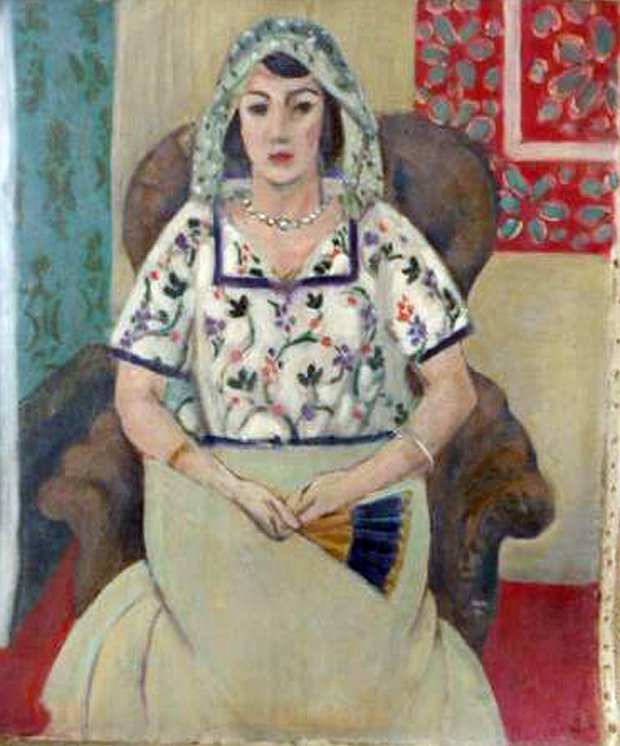
Girl You Lft Bhnd CvrThere a was story in the news recently about the claim by two Polish men that they know the location of  a mysterious Nazi Ghost train which disappeared  at the end of the second world war. The train which  is supposedly laden with gold, gems, art work and weapons was hidden by a special German unit fleeing the advancing Russian forces at the end of the war, when it was parked in a long forgotten tunnel in Poland and blocked up. Add to that the discovery, 2 years ago, of a horde of stolen art in the walls of a Munich apartment and the success of the movie The Monuments Men last year, you’d wonder why very little is heard about art being stolen during world war one. Quite simply the Treaty of Versailles catered for repatriation of stolen art, were as this wasn’t the case after WWII. One of the pieces found in the flat in Munich was “Woman in a Chair” by the French artist Henri Matisse, this could have been the inspiration for this month book, “The Girl You Left Behind” by JoJo Moyes (www.jojomoyes.com).

The book starts in France midway through First World War. Sophie Leferve is running her family’s hotel the Le Coq Rouge in the northern  French town of St. Perrone not far from where the battle of the Somme is raging. The town is under the control of the German army and it’s brutal rules and regulations. Shortly after arriving in the town the local German Commandant orders the hotel to be used as a mess for

Woman Sitting In A Chair by Henri Matisse

Woman Sitting In A Chair by Henri Matisse

his officers and one night after eating the commandant discovers a portrait of Sophie painted by her husband Edouard,  a well known artist,who is away fighting the Germans on the front. The commandant immediately falls for the painting. A couple of weeks later after hearing Edouard has been captured and held prisoner Sophie secretly approaches the commandant and attempts to trade the portrait for her husband’s safe return. But in an apparent  misunderstanding she is arrested and taken away to an unknown fate.

Jump forward ninety years to  London 2006 and Liv Halston a young widow is struggling to stay on top of her mounting debts and living in a large state of the art waterfront house designed by her late husband. In the master bedroom hangs the portrait of Sophie Leferve titled “The Girl you Left Behind”. While out on drinking session on her husbands anniversary, her bag is stolen. That’s when she meets Paul McCafferty an ex- new york cop and now a stolen art specialist, they fall for each other then one night she brings Paul back to her place and he discovers the painting in the bedroom. Paul’s company has been hired by the Leferve family to find the painting that went missing during the war. The star crossed lovers thus find themselves on opposing sides of a bitter custody battle for the painting. Can Liv retain ownership or will “The Girl You Left behind” make it back to France? What is the real story about how the painting ended up on the other side of the English channel and what ever became of Sophie? Will Liv and Paul’s relationship survive the court case?

My initial thoughts on the book were that it was a bit disjointed. The first part is a gripping story about a family surviving under the suffocating tyranny of German occupied France. This pulls you in from page one and then unceremoniously dumps you into the present day without so much as Delorian and a flux capacitor. For the first couple of pages after this transition I was lost, wondering had there been a printing error. But alas no, it was planned. What Moyes has tried to do is marry together an eerily accurate war story with a piece of “Chick-Lit” and  some day time TV court room drama thrown into the mix for good measure. But this  she does with masterful aplomb, that shows what a skilled seasoned writer can do with the literary ingredients of Ready Steady Cook.

The second part of the story does come across rather ‘Rom Comie’, owing primarily to romance being Moyes’s preferred genre. If it were made into a movie it would have Hugh Grant’s and Richard Curtis names all over it but after the cold hard realities of occupied life, this is a warm and humorous  tale, which does get interesting when the tug of war court room drama kicks in. Then you start rooting for Liv to win, but also secretly for her romance with Paul to survive. You have to feel sorry for Liv, she’s a real down on her luck young widow struggling to get over the loss of her husband. Despite starting out as a difficult transition , this quickly re covers to deliver a charming well blended tale stretching across a generation and two wars.

JoJo Moyes

This is the first book of Moyes’ that I’ve read, although I’ve been aware of her for a while, mainly because being an Everton supporter, I noticed she  shares her surname with one of our great managers. This is the ninth book of thirteen, the thirteenth “After You” is due to be published at the end of September 2015. The former journalist and Arts correspondent started writing in 2002 with her first novel Sheltering Rain, the others include Foreign Fruit (Windfallen – U.S.) 2003, Ship of Brides 2005 and  Me Before You 2012 of which her thirteenth book is a sequel.  Her big claim to fame is that she is one of a small group of authors who have won the coveted Romantic Novelists’ Association’s Romantic Novel of The Year Award twice.

So, if like me, the unrelenting news of about the ongoing migrant crisis in Europe is getting you down. Pop into your local  book store or download a copy of this book and lose yourself in a unique blend of genres from an acclaimed British writer.

BURIAL RITES IS A POWERFUL DEBUT NOVEL BY AN AUTHOR FROM DOWN UNDER, SET IN THE HARSH GREEN WASTES OF ICELAND

Standard

BURIAL-RITES CVRSitting out in the Atlantic almost aloof from the rest of the continent at the northerly tip of Europe, is the island of Iceland. Despite what the name suggests, Ice is scarce compared to it’s neighbour Greenland.  Another rarity in Iceland is Crime, according to a report by a global study on homicide published 2011 by the UN, Iceland’s homicide rate never went above 1.8 per 100,000 head  of population annually over a  ten year period between 1999-2009. Thus it took an Antipodean, to delve into the annals of Icelandic history to find a crime with an interesting tale. That’s this months book – Burial Rites by Hannah Kent (www.hannahkentauthor.com).

Iceland, 1828. A closed rural society governed from far-off Denmark. Two men are murdered on a remote farm and their bodies partially burnt. The shock vibrates throughout the whole country.  An example must be made of the murderers. They must be executed. One of them is Agnes Magnusdottir, a 33-year-old maid-cum-farmhand.

There is no executioner or executioner’s axe in Iceland. A blacksmith is commissioned to make the axe. A farmer must be trained to carry out the beheadings. Meanwhile, Agnes is lodged with a crofter’s family (there are no prisons in Iceland, either) – a family who does not at all welcome the idea of having a murderess in their midst.

Based on these actual events, “Burial Rites” tells Agnes’ story.

Historically, Agnes Magnusdottir was the last woman to be executed in Iceland for the murder of her employer and lover,

Natan Ketilsson, and a farmhand, Petur Jonsson.  The murders and the subsequent execution of Agnes and one of her co-accused, Fridrick Sigurdsson, are knitted into Icelandic history and folklore with Agnes generally being portrayed as “an inhumane witch, stirring up murder”. In writing this novel, Hannah Kent set out to “supply a more ambiguous portrayal of this woman”. In this she succeeds admirably.

Reconstructed from historical documents and re-envisaged, Hannah Kent’s Agnes was born the illegitimate daughter of a servant girl. At age six her mother left her with “A lie for a father. A head of dark hair.  A kiss. A stone so that I might learn to understand the

agnes-grave

Agnes’s Final Resting Place

birds and never be lonely”.  At age eight her foster mother died in childbirth and she was “thrown on the mercy of the parish….a pauper. Left to the mercy of others whether they had any or no”. At fourteen, the confirmation records of the parish describe her as having “an excellent intellect” – an intellect that Agnes subsequently decries as being responsible for her predicament. “If I was young and simple-minded, do you think everyone would be pointing at me? No. They’d blame it on Fridrick ….But they see I have a head on my shoulders, and believe a thinking woman cannot be trusted. Believe there’s no room for innocence”.

Be that as it may, it was undoubtedly Agnes’ intelligence that attracted the attentions of Natan Ketilsson, the murder victim.  Agnes fell in love when Ketilsson, a notorious non-conformist and freethinker, singled her out while visiting a farm where she worked because “he could not read me”.  Having become lovers, Ketilsson asked Agnes to move to his farm as a housekeeper. On her arrival, however, she realized that another servant girl, 15-year-old Sigga, was already installed as housekeeper – and in Nathan’s bed! Was it rage and jealousy at this that drove her to stab Ketilsson when the opportunity presented itself? Or, as she insisted, was it Fridrick that killed him and forced her (and Sigga, who’s sentence was commuted to life in prison) to set the fire to cover it up? We are left with this ambiguity.

While Agnes’ story is compelling, the way Kent unfolds it makes it truly absorbing.  We gradually glean all of this while Agnes is spending her last months working on the small-holding of District Officer Jón Jónsson, his wife Margrét and daughters Lauga and Steina.  In the cramped living space of their croft – where everybody, including Agnes and the farmhands, sleep in a communal ‘badsofa’ – little can be kept private. So it is that Agnes’ conversations with her confessor, Toti, a pastor nominated to “prepare her for her meeting with the Lord” are largely overheard.

Initially horrified, the family gradually soften towards Agnes, realizing that, far from being a dangerous criminal, she is very much a product of the harsh, subsistence-living, farming community that they share. Little-by-little, as Agnes displays her skills at farming and domestic chores and as they hear her story, their dismay dissolves, first into pragmatic acceptance “just as well we’ve an extra pair of woman’s hands about the place” and then to respect, compassion and kindness. Particularly poignant is the description of Margrét, the night before the execution, laying out her best clothes for Agnes to wear in the morning.

Throughout, the narrative is interspersed with vivid descriptions of the wild Icelandic landscape, the harsh weather and the hardships of the community’s subsistence existence. All of which serve to convey a bleak and unforgiving backdrop against which the humanity of the main characters shine.

Hannah Kent

Hannah Kent

By any yardstick, “Burial Rites” is an exceptional novel. Exceptional in its intelligent exposition of the characters and their interaction. Exceptional in its evocative descriptions of Icelandic landscape, culture and social history.  Exceptional in the sureness and confidence of the writing.

What makes this truly astonishing is that (1) Hannah Kent is Australian (2) this is her first novel and (3) she was 28 when it was published and – as you can see from her photograph – she looks 18. Eat your hearts out all aspiring writers (Don’t you just HATE her!). I suspect we’ll be reading a lot more from Ms Kent in the future – a wonderful prospect!

THE FATHER OF NORWEGIAN CRIME FICTION IS ON THE VERGE OF INHERITING A WHOLE NEW FANBASE

Standard

We Shall Inherit the Wind BF AW.inddDid you know that in the 2013 peace index – a measure of peacefulness among 162 nations according to 23 qualitative and quantitative indicators – Norway was ranked 11th, since then it’s slipped six places to seventeenth in the 2015 index. This is probably not surprising considering the rise in popularity of it’s crime fiction. Thus bringing us on to the second book of this month, it’s ‘We shall Inherit The Wind’ – by Gunnar Staalesen, published in June by Orenda books (www.orendabooks.co.uk).

Ten pages into this book I was thinking “this guy is copying Steig Larsson”.  The atmosphere, characters and settings were all reminiscent of Larsson’s “Girl with a Dragon Tatoo” Millenium trilogy. A quick Google search revealed that I was very wrong. If anything, it’s the other way ‘round. Steig Larsson was copying Gunnar Staalesen.

My mistake was one that no Norwegian would make. Hailed as one of the fathers of Nordic Noir, Gunnar Staalesen has been

Gunnar Staalesen

Gunnar Staalesen

writing successful detective thrillers since 1977 and is Norway’s answer to Raymond Chandler. His series of novels featuring the private investigator Varg Veum have sold millions of copies and spawned twelve film adaptations. However, only six of these novels have been translated into English – which probably explains why he is relatively unknown in this part of the world. If the calibre of ‘We Shall Inherit the Wind’ is anything to go by, that’s definitely our loss.

When we first meet Varg Veum he’s 65 and at the hospital bedside of his long-term girl friend, Karin (yes, girl friend – like Philip Marlowe, Veum has a problem with commitment!). She’s seriously ill and it’s all his fault. Flipping back in time, the story of how he has gotten into this predicament unfolds.

Although Veum has a rule against taking on marital investigations, as a favour to Karin he agrees to investigate the disappearance of her friend’s husband, Mons Maeland. Karin’s friend, Ranveig, is Maeland’s second wife, his first wife having disappeared, assumed drowned, over 15 years previously. Prior to his own disappearance, Maeland was evaluating a plan to erect wind turbines on an island in the rugged, scenic landscape of Gulen in the western fjords. Needless to say, this plan is vociferously opposed by local environmentalists, including Maeland’s own daughter, and supported by local businesses and politicians. Against this backdrop of feuding families and communities, Veum unearths more secrets than anyone involved wants.

While not as compelling or as gritty as ‘The Girl with the Dragon Tatoo’, this is an absorbing story with sufficient suspense and twists to engage and maintain the reader’s interest.  The characterisation of Veum himself is a big part of the story’s appeal. A non-conformist outsider, he says-it-like-he-sees-it, often inappropriately and to his own – and others – detriment.  But he’s no Philip Marlowe. There’s little black-and-white moralizing here. The complexities and nuances of situations and characters are explored and readers are often left to decide for themselves who, if any, are the good guys and bad guys.

Fjord_Norway_2

But the real mother lode of this book is not the plot, Veum’s characterisation or the nuanced approach to social and personal issues. What brings it out of the realm of yet another professionally executed detective story are the descriptions of the west Norway landscape and its communities. I’ve a fairly long list of places to visit on my bucket list and, up until now, Norway wasn’t on it. But Staalesen’s word pictures of the rugged, wild, bleak beauty of the Gulen area has made me re-think.  I would have loved if a map had been included in the book so that I could follow Veum’s journeys among the fjords and islands.

Equally beguiling are the portrayals of the ancillary characters living in this area. They inhabit west Norway in this book, but I’ve met them in the west of Ireland.  You thought that answering a question with a question was a unique characteristic of people from Kerry? If so, there’s a brilliant description of a Kerry woman living on an island in Gulen. Or maybe you thought that finding out that the person you sat beside on the bus to Connemara is related to your first cousin was a uniquely Irish experience? Well, they’ve imported this phenomenon to west Norway too.  I definitely need to go there – it’ll be just like home!

I have one quibble with Staalesen’s portrayal of Veum, though. In one scenario, Veum is sexually propositioned by an attractive, high-flying businesswoman who’s half his age. This smacks of tired old-fashioned male fantasy to me. Or is it a key difference between life in Norway and Ireland? One thing for sure, if it happened in Ireland it’s unlikely that the opportunity would be turned down!

This minor quibble apart, I’ll be looking out for the next two installments Where Roses Never Die and No One Is So Safe in Danger promised for 2016 and 2017 from Orenda Books . Will we found out what 190344 means?

Hat’s off to the translator, Don Bartlett. There wasn’t a moment where I was conscious of this being a translation from the original Norweigan. It read as if it was written in English.

THE UNINVITED IS A TERRIFYING READ WHICH STILL DELIVERS ALL THESE YEARS LATER AND SCREAMS OUT FOR A SMALL SCREEN ADAPTATION

Standard

The Uninvited CvrWhere were you in 1977? Okay so if you are under the age of 38 then it’s a redundant question, me I was in my last year of residing full time in the UK, before my Irish parents decided to return home to Dublin taking myself and my two sisters with them. It was the year of the Queens Silver Jubilee; people were celebrating with nationwide celebrations and street parties. Not to far up the road from where I was living in Buckinghamshire, a family in Enfield in North London where being terrorized by a malevolent spirit. While in South Wales another family where being terrorized an altogether different entity or entities. This is the subject of this month’s book; it’s The Uninvited by Clive Harold.

First published in 1979, by the W.H. Allen Publishing Company which eventually went on to become Virgin Publishing. The book tells the story of the Coombs family, who live on Ripperston Farm on the south Wales coast over looking St. Brides Bay between Pembroke and Fishguard. What started as a close encounter with a large glowing orb which chased Pauline Coombs home in her car one cold clear January night, escalated to shorting out numerous TV’s and a couple of cars, finally culminating in a numerous visitations by men in silvery glowing space suits. There are also ‘Men In Black’ who drove around in a mysterious large silver car  and the strange, almost hysterically funny,  frequent mass teleportation of nearly one hundred cows over a distance of almost mile. That’s not forgetting the radiation burns suffered by the family members and the abductions too. This all took place over the course of a year between January 1977 and January 1978.

The book is written by journalist Clive Harold who was commissioned by an English magazine in 1977 to write a feature on UFO stories to coincide with the release of the film, Close Encounters of the Third Kind. I came across the book last week while on a well deserved holiday in Devon. I’d brought a couple of books with me to read and review, but while casually perusing the bookshelves of our rented cottage in the town of Colyton, I stumbled upon this book. It was the blurb which caught me straight away, with its opening line “It began with a bright light high in the night sky…” and “This story is true, you’ll wish it wasn’t”. Now being a bit of a paranormal fan and a believer in the unexplained, it didn’t need much more to get me to pick it up and dive right in.

ClsEntctr2

This book is the scariest thing I’ve read in ages and had me jumping at the slightest noise, while reading it late at night in a deathly quiet house in the middle of the East Devon countryside. For all I knew I could have been 200 miles away in South Wales. One thing that occurred to me was, why has this not been adapted for TV like other strange occurrences from this time such as the recently aired Enfield Haunting on Sky, starring Timothy Spall and Matthew McFadden. Having read this book, I’m convinced it’s an ideal candidate for a TV adaptation.

As for the Author Clive Harold, my research claims he wrote other books, but there is no record anywhere of any other book. As to what happened to Clive, there are uncorroborated reports that he was at school with HRH Prince Charles and that they met up when the prince visited the offices of The Big Issue in 1997 where  Clive was working as a seller.

Pauline coombs and daughters

Pauline Coombs and her two daughters Layann and Joanne, looking out of a radiation burned window – image from book

Also very little is known of what became of the Coombs family – Billy, his wife Pauline and their four children, Clinton, Kieron, Layann and Joanne in the intervening years. It’s over 35 years since the events of this book and they come across in the book as being rather innocent and publicity shy for fear of being made laughing a laugh stock of.  Their names and images pop up on UFO and Unexplained forums and sites to this day but as to their whereabouts, that’s almost as big a mystery as to who or what visited them and their neighbours in 1977.

There are two types of people in the world, the believers in the unexplained and the skeptics, If  you are a believer like me, then you’ll immediately go on to Amazon to buy one of the few remaining copies out there. While the skeptics may scoff and walk on by.  However, those liberal and open-minded persuasion will enjoy this well written and utterly convincing story from yesteryear, which takes a very serious and non judgmental look at a topic which even today produces evidence which begs the question is there life beyond the stars and have we been visited by aliens?

So if you suffer from nightmares easily, this may not be your cup of tea as this will keep you awake long after you’ve put it down or in my case finished it  in one sitting. Once you have, then definitely  phone home to make sure everyone is okay.