
 One of the joys of being English, is whichever foreign country you may be visiting, the urge to apologise on behalf of the actions of your nation is strong. Throughout history we have oppressed, enslaved, conquered, pillaged, waged holy crusades and generally stuck our noses into all manner of societies. Even to this day it provides a rich source of material for various TV programmes. The History Channel currently has a lighted-hearted series hosted by the comedian Al Murray entitled, ‘ Why Does Everyone Hate The English?’.A brief look at the history books should enlighten anyone.
I raided my own somewhat spotty knowledge of history when presented with this month’s book for review, its The Black Prince, by Adam Roberts, published by Unbound (www.unbound.com ) on the 4th October and being featured here as part of the Random Things Black Prince blog tour.
Adapted from a screenplay by Anthony Burgess a British comedic author, whose best known work is A Clockwork Orange. Adam Robert’s novel is set during the reign of Edward the Third and part of the Hundred Years War. This isn’t a period I’m familiar with, my school learned history apparently having moved from the Norman conquest directly to Henry the Eighth, so I was interested to learn what I could about the Black Prince and the war for France.
Beginning at Cressy, the book takes the story forward using a large cast of characters. The titular Black Prince, a foot soldier called Black George, priests, clerics, villagers, miners and gentlewomen. Interspersed among the prose are news bulletin style story breaks, poetry and sections described as,’ camera eye’, which I initially took to be part of some kind of news footage but now think is more of a psychic scrying type of phenomenon. Its hard to know where screenplay and novel unite or differ. There are some modern images such as the Pathe cockerel from 20th Century newsreels, which the author refers to. Its all very Guy Ritchie.
Poetry aside, and I know ballads were a form of oral news-feed in medieval times, but I have no time for poetry in novels, and a slight excess of religion which is also to not to my taste; the style changes made it, in my opinion, more appetizing to modern tastes and less of a dry historical account. Intermittently following the fortunes of characters from differing walks of life gave the story depth, thus you get a glimpse at the events from lots of angles. There were perhaps too many different stories as sometimes the narrative felt in-cohesive and meandering? History very rarely records the stories of the foot soldiers and bit players of life and so it was good to see their short, often brutal, existences detailed.

Adam Roberts
As for its Brutality, this is not a book for the fainthearted or squeamish. When we talk these days of being chivalrous we think of good manners and kindness. In medieval times it referred to a system of behavior knights and highborn ladies should adhere to. There was much talk of chivalry in the book but one could be horrified by the wanton cruelty and disregard for life. No mercy is shown, nor quarter given. To me the characters seemed the opposite of chivalrous. One of the lords says,” A fine word chivalry. It means appropriate to the chevalier. And what is a chevalier? A man on a horse.” Whilst we may have been deluded by accounts of King Arthur and his knights, written as romanticized tales long after the events, I think the level of barbarity and graphic violence may shock some readers.
This the 16th book by English author, academic and critic Adam Roberts (www.adamroberts.com), his others a mix of science fiction, collected short stories, non-fiction, parody and academic works, include the prize winning Glass House (2012). While his most recent novel was The Real Town Murders (2017). He is the professor of 19th Century literature at Royal Holloway, University College London and currently lives in the South East of England.
The Black Prince of the title, Edward of Woodstock is the is the son of Edward the Third and therefore the Prince of Wales. He never becomes king as he died before his father. He won his spurs in his first battle at the age of 16. Pursuing an English claim to reign over France his army marched across France waging war and laying siege to towns. Known as the Black Prince, his name is linked historically to cruelty. Most notably in his sack of the town of Limoges, where it is said he had the entire population of the city was killed, more than three thousand people. However, recently a letter written by the Prince was discovered in a Spanish archive. It was written three days after the sack of Limoges and details the prisoners taken and reduces the estimated death toll to nearer three hundred. So maybe Edward of Woodstock has undeservedly been cast as an evil figure in history. Whatever the truth is this novel makes you realise that if war didn’t claim you, plague or poverty may still.
This book will be a good read for those who like their historical fiction raw in tooth and claw or grew up on the children’s books “Horrible Hostories”, personally I don’t see it being a recommended text for schools however!
Reviewed By Georgina Murphy
To see what the other reviewers thought of the book, find their websites on the poster below and go and visit them.

 Wishes are an amazing facet of life. They help us get through tough times, allowing is to believe in and live for something in the future that will make us happier. There are different ways of wishing, some people wish upon a star, others make one on blowing out a candle or pulling apart the wishbone of a chicken.
 being How To Be Brave (2015), The Mountain In My Shoe (2016) and Maria In The Moon (2017). She lives In Hull with her family and when she’s not writing, she can be found working front of house at The Hull Truck Theatre, where her first play “Afloat” was performed in 2012.
 While preparing to write this month’s third book review, I discovered that the New Zealand National Badminton team were once called “The Black Cock’s” but had to change the name after a year due to complaints. It also reminded me that I start my new badminton season this week, after the summer break.
 Melbourne myself, New Zealand is somewhere I want to visit, and this book paints a picture far more beautiful and tranquil than the west of Ireland and Yorkshire moors at times. In Overkill, Symon has proved she can create more terror in this little piece of heaven, then the all to often relied upon back drops of bustling American or international cities.
 For centuries we have been fascinated by the idea of there being a double of ourselves out roaming the world somewhere. More recently we have attributed the German word Doppelganger and attached a supernatural element to the phenomenon. Your biologically unrelated twin, previously referred to as a ‘fetch’ is also sometimes referred to as your ‘evil twin’. Nowadays with the advances in technology, it is possible to use facial recognition software to search the internet for your ‘twin stranger’ as websites such as


 According to the Canadian author John Ralston Saul, “In European tradition, rivers are seen as divisions between peoples. But in Aboriginal tradition, rivers are seen as the glue, the highway, the linkeage between people, not the separation. And that’s the history of Canada: our rivers and lakes were our highways…”. Without Rivers and lakes, Canadians would never have found the sea and what lies beyond the horizons, or for that matter, the beautiful Gaspe Penisula on the southern shores of the St. Laurence river.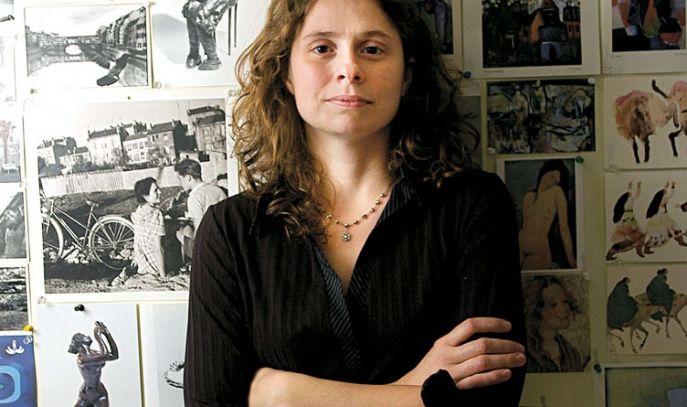
 middle aged detective attempting to deal with his mid-life crisis , marital problems and the investigation. He’s unique in that one really wonders how many Mexican cops there are in Montreal? I did feel for him and the way he was treated by the locals. He also, it appears, will be a recurring character. Maybe he’s supposed to be the main one in this book, although this isn’t really clear. But I understand Bouchard is working on her next book which will also be set is the Gaspie Region and will also feature Morales.
 When H.G. Wells published his novella The Time Machine in 1836, time travel was still in the realms of fantasy. With the development of nuclear and quantum physics over the past one hundred and eighty years, the idea of travelling back and forward in time is perceived to be closer than ever. If, it hasn’t already been achieved in some small aspect, by a government or corporation.
 of Native Americans to try raise a new American army, but nothing is mentioned of whether they succeed or if Von Stueben and the Nazi’s do. I can only assume Fernely is planning a second book, with a conclusion where a new America under German rule is formed and the outcome of World War Two is altered or maybe he’ll introduce another group of time travelers from the future lead by the allies. These I would look forward to, but if there is no such thing then I’m very disappointed.
 In twenty-four hours’ time, my husband Adrian and I, will be on the road heading for Devon, in the South west of England. It’s the home of cream teas and the accompanying fiercely fought battle of cream on jam or jam on cream? This part of England is also steeped in Arthurian legend. Our base for our annual wedding anniversary break is Ilfracombe, an hour or so’s drive up the coast from Tintagel Castle, the reputed birthplace of King Arthur, he of the the knights of the round table legend. Which is quite apt as this month’s book is about one of the most famous knights of the round table. The book is Lancelot, by Giles Kristian, published by Bantam Press (www.penguinrandomhouse.co.uk/publishers/transworld/bantam-press) on the 31st May.

 According to the lyrics to the 1981 John Denver song “Some Days Are Diamonds”, some days are diamonds, some days are stones, some days the hard times won’t leave me alone. But after reading this month’s book, whenever you think you’re having crap day, you’ll realize that your days are ten times better than those of this month’s author. Also, you’ll learn to find good things in even the darkest situations.
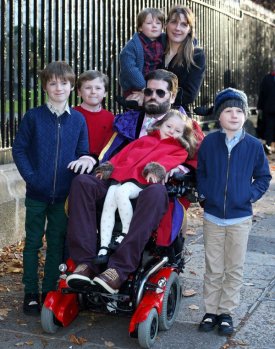
 If like me you’ve been residing in the northern hemisphere for the past six months, you are probably tiring of the long drawn out winter we are currently experiencing. Even now, as I write this in the latter part of April, I’m still wearing a padded jacket and gloves in the mornings when heading to work or going out in the evenings. We are, at this stage in the year, sick to the back teeth of the Beast From The East, The Pest From The West and The Son Of The Beast, three storms that have dumped large amounts of snow and freezing temperatures across the UK and Ireland in the past ten weeks. Here is Ireland at the height of the cold snap in February; the country shut down for nearly a week and there was a run on bread!!!!! Yes, I kid you not. Unlike our Nordic neighbours and our north American and Canadian cousins, we are not good in snow. While our Icelandic neighbours, to the north, experience snow and sub -zero temperatures on a regular basis. This brings me to this month’s book review, its White Out by Ragnor Jonasson. Published Orenda Books (

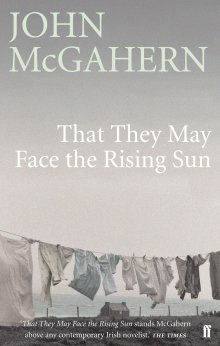 Every year in March sees one of the biggest events of the global calendar, this is of course St. Patrick’s day, who is the patron saint of Ireland and all things Irish. So, while more and more countries celebrate the 17th of March by turning rivers, large iconic buildings and instantly recognisable monuments green; it also a time to reflect on what Ireland has given the international community. One of its biggest exports apart from Guinness and Arran jumpers is literature and recently the book club had the chance to read another well-known Irish writer. This month’s book is, That They May face The Rising Sun, by John McGahern, published by Faber & Faber in 2002.
 the library door