
 It is believed in the west that gold, cocaine and platinum are some of the most expensive commodities on the planet but actually in Asia there is something even more expensive than all three of them; ground down rhino horn. The current market price is estimated at $60,000 per kilogram. As for the number of Rhinos poached, 1,175 was the number in South Africa in 2016 according to Al Jazeera. Poaching in South Africa has increased by 8000% between 2007 and 2017. Its not only the rhinos who suffer. In 2014 there were 56 ranger deaths reported worldwide as a result of being killed by poachers. Of that number 27 were in South Africa and it is estimated that the actual number of rangers killed there is three or four times that. The trade in rhino horn is the subject for this months second book review. Its ‘Dead Of Night‘, by Michael Stanley and was published in June 2018 by Orenda books (www.Orendabooks.co.uk)
Dead of Night is the story of Crystal (Chrys) Nguyen, a Vietnamese-American journalist searching for the truth behind the disappearance of her friend and potential love interest ,Michael, who has disappeared while researching a story for the National Geographic on the poachers and their South African and Vietnamese contacts. Despite constant warnings that ‘these are very dangerous people’, she decides to travel to South Africa to write up the unfinished article and, hopefully, to find and save Michael.
Her first port of call is a rhino farm, Chrys’s host is a crotchety old white rancher who has put his fortune into developing a rhino reserve and organizing anti-poaching posses. He believes that the horn which he has stockpiled from ‘shaving’ the animals in his reserve should be sold legally to flood the market and reduce prices, incidentally making a fortune which would save his finances. While at the farm ,Chrys witnesses the torture and killing of poachers and she begins to wonder if they have been killed to deter poaching or to cover up another secret. Her journey to find Michael takes her from South Africa to Vietnam and into direct confrontation with the police, governments, NGO’s (Non-Governmental Organisation) and the poachers.
This is a fast-paced action story with a strong plot, believable characters and lots of enjoyable twists and turns.
The book is timely, as we become more aware that humans are driving so many species  to extinction. The WWF Living Planet Report published in October claims the animal population on the planet has declined by 60% between 1970 and 2014 . Along with the assertion by some people that our impact over the last few generations may be compared to the four great extinction events in global history, the last of which famously wiped out the dinosaurs.
Our heroine Chrys is a traditional female super-hero of a type that is rare nowadays, in an all-male world of gangsters, police and shades in between. I have become tired of the endless stream of seriously mixed up, and usually alcoholic, detectives in modern crime thrillers across all media, so Chrys is refreshingly straightforward. She has a back story of course, and her own hang-ups, but she never descends into despair or criminality. I also like the fact that she is a journalist, not a detective. She can shoot if she needs to, but it does not come naturally to her.
The rest of the characters, all men, are predominantly white, as well as satisfyingly ambiguous and we are not sure until the end who has compromised themselves in this murky world, or why they did so.
The descriptions of the killing of Rhinos for their horn are horrific. Sometimes, however, I feel that the narrator is less worried about the killing of innocent people in the crossfire between gangs and police.

Michael Stanley (Michael Sears & Stanley Trollip)
This the seventh book by Michael Stanley who is in fact a two-man team, of Michael Sears and Stanley Trollip (www.detectivekubu.com). This is the first book not to feature their rotund Botswana Police detective David “Kubu” Bengu, A couple of which have been very well received on this blog previously, although I have not read any of them myself.
If I have a quibble, it is about the settings. On their website, the authors mention having spent time in other African countries but do not mention South Africa or, for that matter, Vietnam. These are the main export and import countries for illegal rhino horn, but the authors have made little attempt to add local colour or context. The game estate and the police in South Africa come across more like Kenya or even Zambia, without South Africa’s complex layers of former Bantustans, conflicting political groups or urbanization. South African is also useful to the plot because of the widespread use of English and the occasional conversations in Afrikaans to add mystery at some points. Similarly, Vietnam comes across more like corrupt corners of Indonesia or Philippines, without distinctively Vietnamese characteristics, though this setting does allow for the Vietnamese-American heroine to understand overheard conversations unbeknownst to the locals.
At one level this might not matter – after all this is just the setting for a thriller. However, I am always annoyed when thrillers which use Ireland as a convenient location, then get it wrong, so I imagine that South Africans and Vietnamese will feel the same about this one.
If you like thrillers, then this is a a good read, tense and well written, which I would certainly recommend downloading or picking up a copy next time you’re in a book shop.
Reviewed by Robin Hanan
 We’ve come a long way since Alexander Graham Bell summoned his assistant via a early telephone from the next room. Data from the GSMA, the body representing worldwide mobile network operators, shows Two-thirds of the world’s population are connected by mobile devices. By 2020, almost 75% of the global population will be connected by mobile phones. But with the development of the smart phone, there are a few draw backs, for one we are less reliant on our memory to recall important numbers. I can still remember life without a mobile and think it strange how our life seems to fall apart nowadays if we misplace it. As well as that, there’s another thing the development of the smart phone hasn’t managed to over come, the miss-dialed number. This easily done thing is the catalyst for this months book. Its Good Samaritans by will Carver and published by Orenda books (www.orendabooks.co.uk) on the 10th November.


 Every decade has its memorable TV crime shows, the seventies had Starsky & Hutch, The Sweeney and Hawaii 5-0 to name a few. The eighties had more than its fair share, such as Cagney & Lacey, Magnum and Knight Rider. Some left us with a catch phrase, like “Book Em Dano” or Regan shouting in a thick London accent, “You’re nicked !!!”, while others left us with a new sense of style. Magnum for example, made bushy mustaches and Hawaiian shirts all the rage, while one other programme of the eighties left us with white linen jackets , matched with crew necked t-shirts and a strange hankering for wearing no socks. Yes, it was of course, Miami Vice. Florida and it’s TV series play a part in this months second review, Palm Beach Finland by Antti Toumainen, which is published by Orenda Books (www.orendabooks.co.uk) on October 18th.

 One of the joys of being English, is whichever foreign country you may be visiting, the urge to apologise on behalf of the actions of your nation is strong. Throughout history we have oppressed, enslaved, conquered, pillaged, waged holy crusades and generally stuck our noses into all manner of societies. Even to this day it provides a rich source of material for various TV programmes. The History Channel currently has a lighted-hearted series hosted by the comedian Al Murray entitled, ‘ Why Does Everyone Hate The English?’.A brief look at the history books should enlighten anyone.

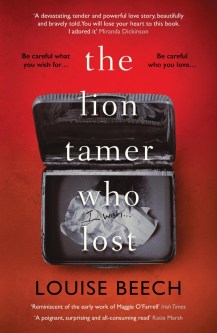 Wishes are an amazing facet of life. They help us get through tough times, allowing is to believe in and live for something in the future that will make us happier. There are different ways of wishing, some people wish upon a star, others make one on blowing out a candle or pulling apart the wishbone of a chicken.
 being How To Be Brave (2015), The Mountain In My Shoe (2016) and Maria In The Moon (2017). She lives In Hull with her family and when she’s not writing, she can be found working front of house at The Hull Truck Theatre, where her first play “Afloat” was performed in 2012.
 While preparing to write this month’s third book review, I discovered that the New Zealand National Badminton team were once called “The Black Cock’s” but had to change the name after a year due to complaints. It also reminded me that I start my new badminton season this week, after the summer break.
 Melbourne myself, New Zealand is somewhere I want to visit, and this book paints a picture far more beautiful and tranquil than the west of Ireland and Yorkshire moors at times. In Overkill, Symon has proved she can create more terror in this little piece of heaven, then the all to often relied upon back drops of bustling American or international cities.
 For centuries we have been fascinated by the idea of there being a double of ourselves out roaming the world somewhere. More recently we have attributed the German word Doppelganger and attached a supernatural element to the phenomenon. Your biologically unrelated twin, previously referred to as a ‘fetch’ is also sometimes referred to as your ‘evil twin’. Nowadays with the advances in technology, it is possible to use facial recognition software to search the internet for your ‘twin stranger’ as websites such as


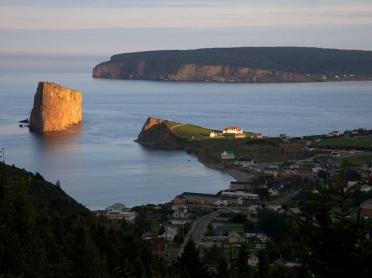
 According to the Canadian author John Ralston Saul, “In European tradition, rivers are seen as divisions between peoples. But in Aboriginal tradition, rivers are seen as the glue, the highway, the linkeage between people, not the separation. And that’s the history of Canada: our rivers and lakes were our highways…”. Without Rivers and lakes, Canadians would never have found the sea and what lies beyond the horizons, or for that matter, the beautiful Gaspe Penisula on the southern shores of the St. Laurence river.
 middle aged detective attempting to deal with his mid-life crisis , marital problems and the investigation. He’s unique in that one really wonders how many Mexican cops there are in Montreal? I did feel for him and the way he was treated by the locals. He also, it appears, will be a recurring character. Maybe he’s supposed to be the main one in this book, although this isn’t really clear. But I understand Bouchard is working on her next book which will also be set is the Gaspie Region and will also feature Morales.
 When H.G. Wells published his novella The Time Machine in 1836, time travel was still in the realms of fantasy. With the development of nuclear and quantum physics over the past one hundred and eighty years, the idea of travelling back and forward in time is perceived to be closer than ever. If, it hasn’t already been achieved in some small aspect, by a government or corporation.
 of Native Americans to try raise a new American army, but nothing is mentioned of whether they succeed or if Von Stueben and the Nazi’s do. I can only assume Fernely is planning a second book, with a conclusion where a new America under German rule is formed and the outcome of World War Two is altered or maybe he’ll introduce another group of time travelers from the future lead by the allies. These I would look forward to, but if there is no such thing then I’m very disappointed.
 In twenty-four hours’ time, my husband Adrian and I, will be on the road heading for Devon, in the South west of England. It’s the home of cream teas and the accompanying fiercely fought battle of cream on jam or jam on cream? This part of England is also steeped in Arthurian legend. Our base for our annual wedding anniversary break is Ilfracombe, an hour or so’s drive up the coast from Tintagel Castle, the reputed birthplace of King Arthur, he of the the knights of the round table legend. Which is quite apt as this month’s book is about one of the most famous knights of the round table. The book is Lancelot, by Giles Kristian, published by Bantam Press (www.penguinrandomhouse.co.uk/publishers/transworld/bantam-press) on the 31st May.

 the library door