
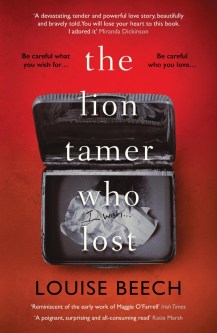
 Wishes are an amazing facet of life. They help us get through tough times, allowing is to believe in and live for something in the future that will make us happier. There are different ways of wishing, some people wish upon a star, others make one on blowing out a candle or pulling apart the wishbone of a chicken.
It is often said; be careful what you wish for. As we found out last week. For a couple of months now myself and my wife have played with an idea about adding to our furry four-legged brood, by getting another cat. Well a month ago, we found one and it arrived last week. Now we have a fur ball lightning bolt who seems to have been crossed with a free runner and a football hooligan. This month’s book also features cats, big ones and a story about long held wishes and what can happen when they eventually come true. The book is “The Lion Tamer Who Lost” by Louise Beech, published by Orenda Books (www.orendabooks.co.uk), on the 30th September.
Ben and Andrew meet by chance in the local library. Ben is there to write an essay for university and Andrew is doing research for his book. What follows is an intense relationship which takes over both their lives, but no sooner has it begun then Andrew is struck down by Leukemia and a simple blood test reveals more than just love and lust between the two men. Because of this they part company and Ben, driven by the bigoted views and the wandering crotch of his old man, follows a promise he made to his dying mum to go to Africa to help at a lion reserve. Andrew also made a wish when his was a young boy and keeps it in a silver box. Despite the miles between them and Ben’s relationships with a lioness called Lucy and Esther a fellow volunteer, he can’t forget his feelings for Andrew. Six months on Ben and Esther’s relationship forces them home to where they must make some life choices together. But what of Andrew? has he moved on? Will he be happy to see Ben and can Ben also be upfront with Esther and his family about his sexuality?
This is the second of Louise’s books that I’ve read, the other being her debut novel, How To Be Brave. What I realised having read both, is that she has this amazing power to take simple stories and make them into heart-warming, emotionally driven tales that stay with the reader well after you’ve put down the book.

Louise Beech
Whether she’s describing the view of witnessing an African sunrise or the disparity between different generations of working-class English families, every character and scene is so vivid and believable you can’t but feel you are there or say to yourself, “yes, I’ve been in a situation like that.”
A prime example can be found in her first book, which had an annoying little child as the main character in it. You do eventually warm to her character and to the difficulties she was facing, as she comes to terms with a diabetes diagnosis. This is thanks to Louise’s talent which proves she is a writer with immense skill far beyond the four books she has produced.
Diabetes is also a theme running through this book, with Andrew being the one dealing with his body’s wayward sugar levels. This comes down to the fact that Louise’s own daughter is a diabetic and her experiences come through n both books, having not read the others I can’t say if its a theme in all her books. In the Lion Tamer Who Lost, she gives you two strong males who are very much in love and weaves an emotional story of the bond between two gay men and shows no matter how hard you try, once you’ve met your destined mate, nothing is going to come between you. Well almost nothing…
Yes, like her debut novel, this book, really tugged at my heart strings and I dare any male out there, not to feel some twinges while reading it.
As for its length, at a tad over three hundred pages, it’s light and easy to read, although some of the chapters could be a bit confusing as they jump back and forth between the main characters and various times. There is a lot going on in the book: gay love, heterosexual relations and inter family relationships. At times, it does come across like a bit of a kitchen sink drama, with shades of an episode of Channel Fours “Queer As Folk”, but Beech never lets it get too in your face.
This is English Author Louise Beech’s (www.louisebeech.co.uk) fourth book, her others being How To Be Brave (2015), The Mountain In My Shoe (2016) and Maria In The Moon (2017). She lives In Hull with her family and when she’s not writing, she can be found working front of house at The Hull Truck Theatre, where her first play “Afloat” was performed in 2012.
So, if you are looking for loving crafted, heart-warming and page turning read to welcome in the darkening evenings of the approaching winter, go pick up a copy at your local book shop or download a copy. Then afterwards read Louise’s other books and prepare to be taken on a magical tour through the wonderful imagination and writings of one the North of England’s rising literary stars.
This book was reviewed as part of a Random Things blog tour, see the poster below for the other reviewers and visit their blogs to see what they thought.

 While preparing to write this month’s third book review, I discovered that the New Zealand National Badminton team were once called “The Black Cock’s” but had to change the name after a year due to complaints. It also reminded me that I start my new badminton season this week, after the summer break.
 Melbourne myself, New Zealand is somewhere I want to visit, and this book paints a picture far more beautiful and tranquil than the west of Ireland and Yorkshire moors at times. In Overkill, Symon has proved she can create more terror in this little piece of heaven, then the all to often relied upon back drops of bustling American or international cities.
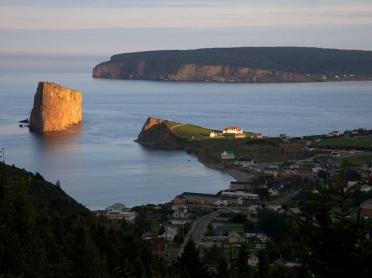
 According to the Canadian author John Ralston Saul, “In European tradition, rivers are seen as divisions between peoples. But in Aboriginal tradition, rivers are seen as the glue, the highway, the linkeage between people, not the separation. And that’s the history of Canada: our rivers and lakes were our highways…”. Without Rivers and lakes, Canadians would never have found the sea and what lies beyond the horizons, or for that matter, the beautiful Gaspe Penisula on the southern shores of the St. Laurence river.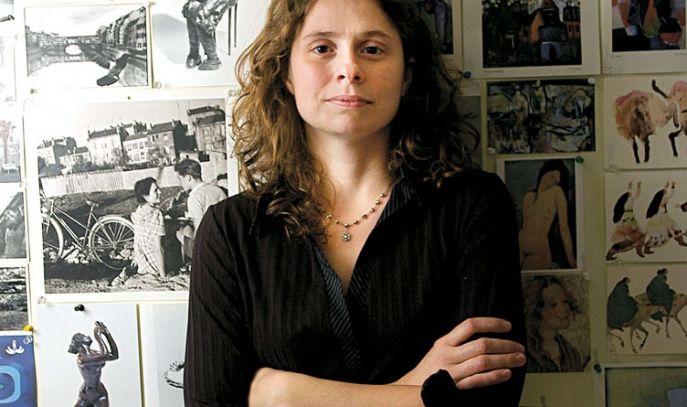
 middle aged detective attempting to deal with his mid-life crisis , marital problems and the investigation. He’s unique in that one really wonders how many Mexican cops there are in Montreal? I did feel for him and the way he was treated by the locals. He also, it appears, will be a recurring character. Maybe he’s supposed to be the main one in this book, although this isn’t really clear. But I understand Bouchard is working on her next book which will also be set is the Gaspie Region and will also feature Morales.
 If like me you’ve been residing in the northern hemisphere for the past six months, you are probably tiring of the long drawn out winter we are currently experiencing. Even now, as I write this in the latter part of April, I’m still wearing a padded jacket and gloves in the mornings when heading to work or going out in the evenings. We are, at this stage in the year, sick to the back teeth of the Beast From The East, The Pest From The West and The Son Of The Beast, three storms that have dumped large amounts of snow and freezing temperatures across the UK and Ireland in the past ten weeks. Here is Ireland at the height of the cold snap in February; the country shut down for nearly a week and there was a run on bread!!!!! Yes, I kid you not. Unlike our Nordic neighbours and our north American and Canadian cousins, we are not good in snow. While our Icelandic neighbours, to the north, experience snow and sub -zero temperatures on a regular basis. This brings me to this month’s book review, its White Out by Ragnor Jonasson. Published Orenda Books (

 According to the poet James Shirley, “There is no armour against fate….” It’s only really in science fiction series like Dr. Who, for example, as we witnessed again over the festive period, can the main character regenerate. Certain religions such as Buddhists, Sikh’s and Hindu’s believe in re-incarnation. In reality most of us feel that death is the final act and as I write this piece there are people in hospital wards or at home for whom that final act is quite close, or who have been told that is a lot closer than they might have hoped. This brings us on to the second this month, its The Man Who Died by Antti Tuomainen, published by Orenda Books (www.orendabooks.co.uk ) in November 2017.


 Do you know what links Carrie Fisher, Vincent Van Gogh and Ranald McGhie? No idea?You’re probably asking yourself who Ranald McGhie is? Never mind what links them all. Well they all suffer from Bipolar Disorder, a mental affliction, which according to the Health Service Executive in Ireland affects 1 in 100 people. Researching a list of people with bipolar disorder for this article, draws up at least 59 other well-known faces, currently and historically, who may have been affected, including Abraham Lincoln and Charles Dickens.

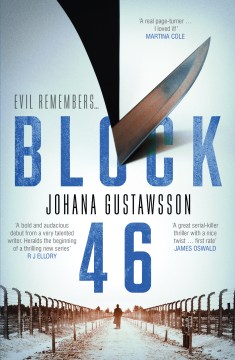 Great things come in pairs they say, hands, eyes, ears. More practical things include comfy shoes; or slippers that you yearn to slip into after work and the soft white pillows which take you to the land of nod each evening. Then there are things that you wished didn’t come in pairs, but usually have a habit of doing so, such as buses and taxis.
 The British Isles and Ireland are pockmarked with moorland and bogs, from as far south as Dartmoor to the Yorkshire Dales, Rannoch Moor in Scotland and The Burren in the West of Ireland. All through history, as well as in literature, these vast tracts of desolate land have fascinated us. Whether it’s as the roaming area of the fabled Hound of the Baskervilles in Sherlock Holmes, the setting for a doomed love affair between Cathy and Heathcliff on the Yorkshire moors, the hunting grounds of the reputed beasts of Bodmin Moor or as burial grounds for the Saddleworth Moors victims,the moorlands of Britain and Ireland are notorious for their role in the darker side of life and literature. So they are a great setting for this month’s book. Its “Six Stories” by Matt Wesolowski, published by Orenda Books (

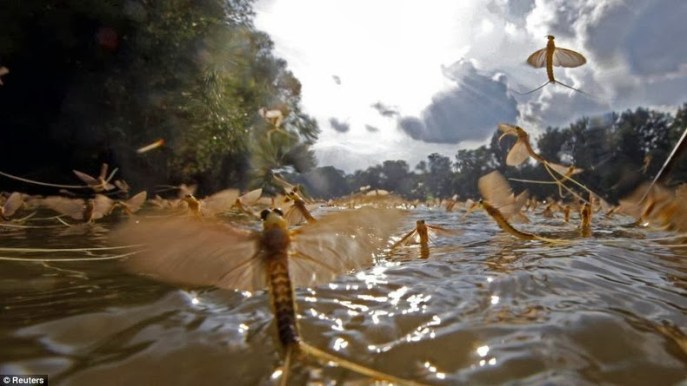
 One of the main rivers in central Europe is the Tisza at one stage called “The Most Hungarian River“ for despite now also flowing through Hungary, Ukraine, Romania, Slovakia and Serbia at one stage it flowed entirely though the kingdom on Hungary. Along it banks you will find numerous forms of wild life among them is the Mayfly. It was the Swedish – Finnish journalist Heidi Avellan who coined the phrase ‘The Mayfly Effect’, to describe a movement or an event which harnesses the right social current at the right time.
 I was in the UK’s second city recently at an event in the NEC, when I was informed by a sign on the wall of some of the well known people who have come from Birmingham. The likes of Ozzy Osbourne, Leona Lewis were mentioned, while the literary world wasn’t referenced. The West Midland’s capital has produced such luminaries as J.R. Tolkien, James Barlow, Bill Odie and Barbara Cartland. When it comes to bounty hunters though… They’re a bit thin on the ground, until now. This month’s book is written by a former bounty hunter, who’s a Brummie. The book is Deep Down Dead by Steph Broadribb and was published in January by Orenda books

 the library door