FOWLER GOES FROM SCI-FI TO SCI-FACT FOR THE SUBJECT MATTER OF COMPLETELY BESIDE OURSELVES

Standard

Completely bsde coverThey fuck you up, your mum and dad. They may not mean to, but they do. They fill you with the faults they had and add some extra, just for you…”  

Philip Larkin’s pithy observation on parenthood is now so accepted as a truism that a story of a young adult coming to terms with childhood trauma runs the risk of falling into the “also ran” category – at best adding a slightly different perspective to a well-trodden (over exposed?) literary path. Not so last months book group read “We Are All Completely Beside Ourselves” by Karen Joy Fowler.

When we meet the narrator, Rosemary, she’s in her early twenties in her 5th year in college. She’s changed majors several times, is unlikely to graduate in the foreseeable future, has been arrested (for a minor misdemeanor) and resents having to spend Thanksgiving with her parents – who are still paying all her expenses. So what’s new? Sounds like the typical, annoying, “because I’m worth it” university student that can be found in thousands on any campus in the Western world.

As Rosemary’s tale unfolds we gradually realize that her childhood challenges really are out of the ordinary. But then her father was an ambitious academic psychologist. In this, her grandmother’s low opinion of psychologists as people who “conducted studies around the breakfast table, made freak shows of their own families, and all to answer questions nice people wouldn’t even think to ask” gives us an early forewarning of what’s to come.

For the first five years of her life Rosemary was a central subject in one of her father’s research projects. Living in a large farm with her parents, older brother and twin sister, graduate students observed and recorded all aspects of her development – and compared it to that of her sister, Fern. Was it any wonder that sibling rivalry was heightened to the extent that she strived to do better than Fern at everything? Her language skills were significantly better than Fern’s, so Rosemary talked incessantly. She copied and tried to outdo Fern at the activities Fern was better at – dancing on tables, climbing trees, sliding down banisters. And when Fern did something truly shocking, Rosemary told.

She told knowing that Fern would get into trouble – but she couldn’t have foreseen the consequences. Rosemary was sent to her grandparents for a visit and when she returned the family had moved house and Fern was gone. Her brother, Lowell, made it very clear who he thought was responsible – “If only you had just, for once, kept your goddamn mouth shut”.  The research project was abandoned, but the fall-out was to define the future of the whole family.

Karen Joy Fowler

Karen Joy Fowler

This is American writer Karen Joy Fowler’s (www.karenjoyfowler.com) 5th novel, published in 2013 it was shortlisted for the 2014 Man Booker Prize. But she is best known for her 2004 book “The Jane Austen Book Club”, which was subsequently made into a movie starring Emily Blunt, Maggie Grace, Amy Brenneman and Hugh Dancy. Her other books are “Wits End”(2008), “Sister Noon”(2001), “Sweetheart Season”(1996). She’s also published four collections of short stories and started her career writing Science Fiction short stories.

There is a twist to the book that I won’t reveal here. Partly because of the “spoiler alert” convention but also because what makes the book truly compelling is that the story is presented as unexceptional, normal – Rosemary and Lowell’s normality. For all children their family environment is what normality is. It is onlyJane Austen Bk grp as we grow up that we realize that it just might not be universal. By unfolding the story from Rosemary’s perspective as she navigates early adulthood, Joy-Fowler draws the reader into Rosemary and Lowell’s normality. So we understand Lowell’s ill-fated quest to find and avenge the injustice done to Fern. We empathize with Rosemary’s inability to trust her own judgment and her disinterest in the ‘normality’ of student life. Joy-Fowler’s genius is in enabling us to really ‘walk in their shoes’ – and in doing so question some deep-seated perceptions, assumptions and prejudices of our own.

This book is a truly compelling and thought-provoking read. Even if at times some of  the subject matter maybe a bit upsetting for a few and will have a huge bearing on who you recommend it to, as we found out at the meeting.


Go back

Your message has been sent

Warning
Warning
Warning
Warning

Warning.

THE BUDDHA IN THE ATTIC IS TARDIS-ESQUE, BUT INSIDE IS A BIG STORY FROM OTSUKA

Standard

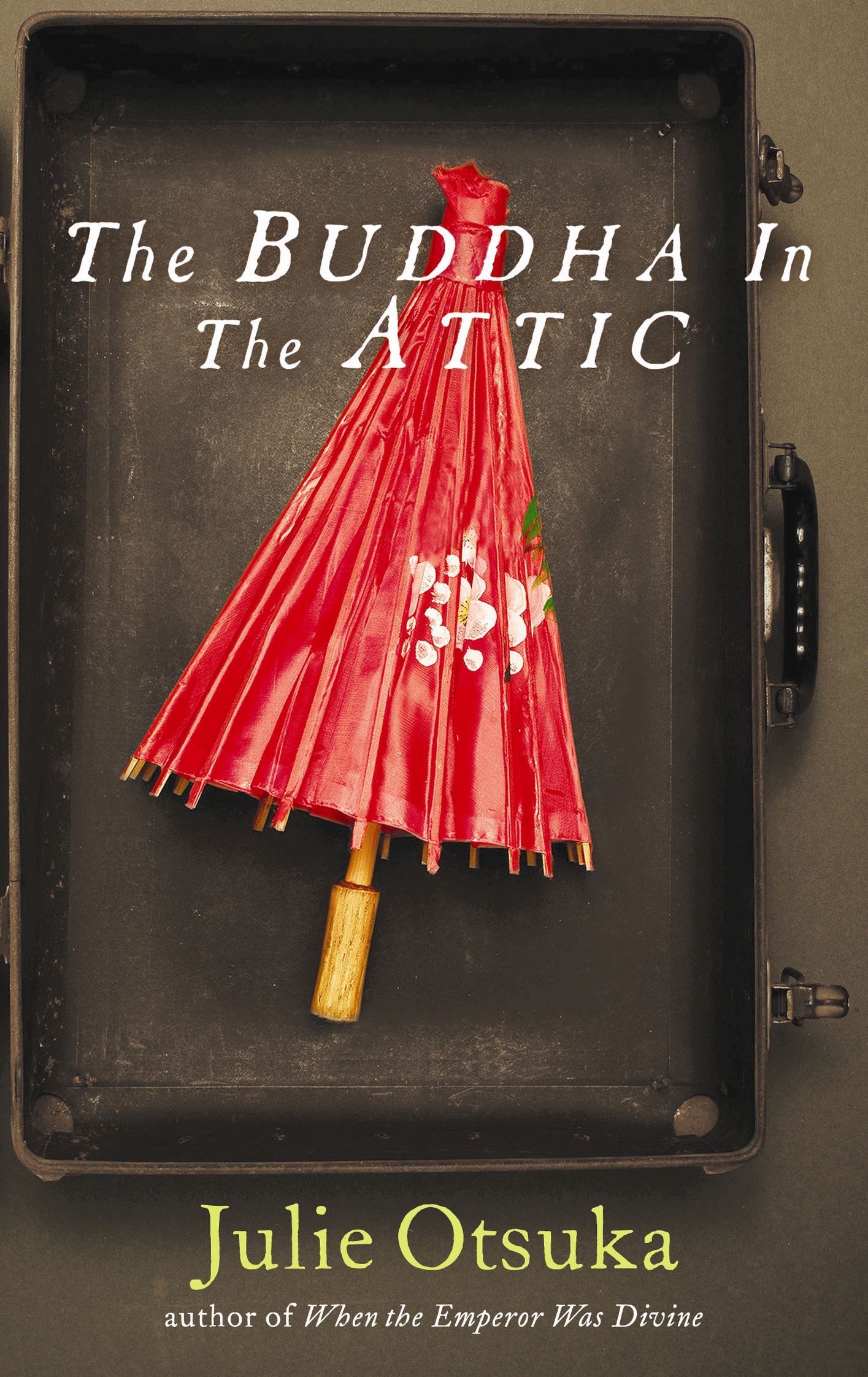
buddha CvrThe opening lines of the song “America” by Neil Diamond  go, “we’ve been travelling far without a home, but not without a star… Free we huddle close, hang onto a dream…. Never looking back again, they’re coming to America..”.  America is a big boiling pot of many different nationalities, the Irish, Mexicans and Italians to list of some of the larger groups. Among the other assorted nationalities are the Japanese. The difference between the Japanese and the other immigrant groups is that their homelands never attacked America, a few Irish Fenian’s tried to invade the British ruled Canada from America in 1866, but that was a rather fool hardy attempt which was put down quickly. As for the Italians they may have fought against America during World War II, but they were never seen as a perceived threat. Whereas the Japanese who emigrated to America made lives and integrated, only for it to be taken away from them when Pearl Harbor was attacked and that’s where last months book group read takes us. The book is “The Budda In The Attic “ by Julie Otsuka.

The book tells the story of a group of non-English speaking Japanese women who arrive in America between the two world wars, primarily as Picture Brides an early form of Sex trafficking.

These women never knew their husbands; they just embarked on the arduous trip clutching a grainy black and white photo of their betrothed (hence the term) and the promises of love,

Picture Brides Arriving California 1910

Picture Brides Arriving California 1910

happiness and riches. Of course what met them when they arrived was just as promised for some and a violent, abused, put upon hell as well as back breaking slavery for others.  From there they had to start from scratch, initially learning the language and the customs. After a while they started businesses, raised families and lead new lives, but with world war two comes internment and then what…?

Good things come in small packages, and this can be especially said of this book, the whole book is small at only one hundred and twenty nine pages long, it’s a novella. I’ve read longer IKEA manuals, but none of those have been  as great as this little bundle of joy.

The characters are also small, owing to the fact that you never actually get to follow one character, all in all the book is a reportage of what happened to this group, but it is told beautifully and wittily. The only thing big about this book is the packet steamer they sailed on and the vast new world they found themselves in on arrival, not forgetting the big warm contented feeling this book leaves you with after the last page.

The staccato style of writing is very poetic and reads very easily, if at some points it feels repetitive, this is all part Otsuka’s excellent way of telling the story of many in a condensed but very informative way, mixing heart wrenching tales with just the right amount of humour to take the edge off it. Which allows the reader to get a very detailed picture of what different immigrants experienced during their voyage across the pacific, then on arrival and subsequently during their lives. Amidst the book group discussion it came to me that the style of writing reminded me of the Johnny cash song “The One On The Right Is On The Left” its the tale of a successful folk group which is destroyed by political instability. The chorus goes ”Well the one on the right was on the left and the one in the middle was on the right and the guy on the right was in the middle and the guy in the rear. Burned his driving licence…” The thing is in each chorus the guy in the rear does something different. Which is just how Otsuka’s story telling comes across.

Julie Otsuka

The Buddha in the Attic is Japanese American author Julie Otsuka’s (www.julieotsuka.com) second book published in 2011; nine years after her first book “When The Emperor Was Devine”. Where as Buddha in the Attic deals with the Picture brides arrival and subsequent lives up to internment, her first book deals with the actual internment. Both books have won numerous awards including the Asian and American Literary Award and the Langum Prize for American Historical Fiction. As well as that both books are prescribed reading for “Freshmen” in numerous colleges across America.

So if you’re looking for an excellently written book that traces the path of the Japanese in America from there early beginnings as mere sex slaves to hard working members of community and their eventually internment and the mistrust it cast over them, this is right up your street. I just don’t know what Alex Haley would have done if some had suggested that he condense “Roots” into one hundred and twenty nine pages.

JOYCE AND HAROLD FRY SET THE PACE FOR THE YEAR AHEAD WITH AN OUTSTANDING READ

Standard

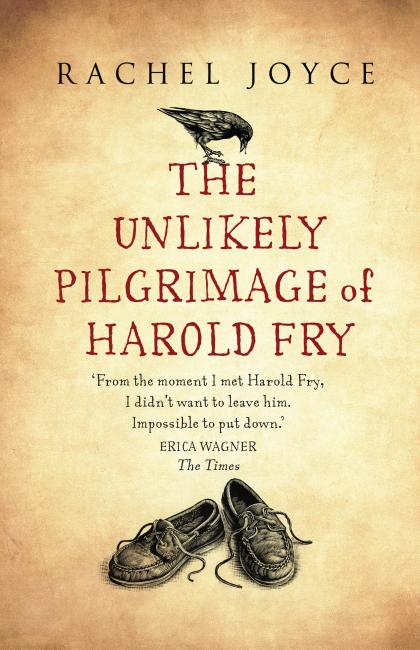
Harold Fry cvrWe are all at different stages on the road of life, some near the end, others at the beginning, a few of us in the middle and some stuck not knowing where to go next. Then there are the real journeys we take every day, like the commute to and from work, the journey on the road to recovery from illness. Then there’s the journey’s we want to do when we retire or take a career break, such as going on a cruise, travelling round Australia or walking the Camino Way. Now that’s something I have on my Bucket List.

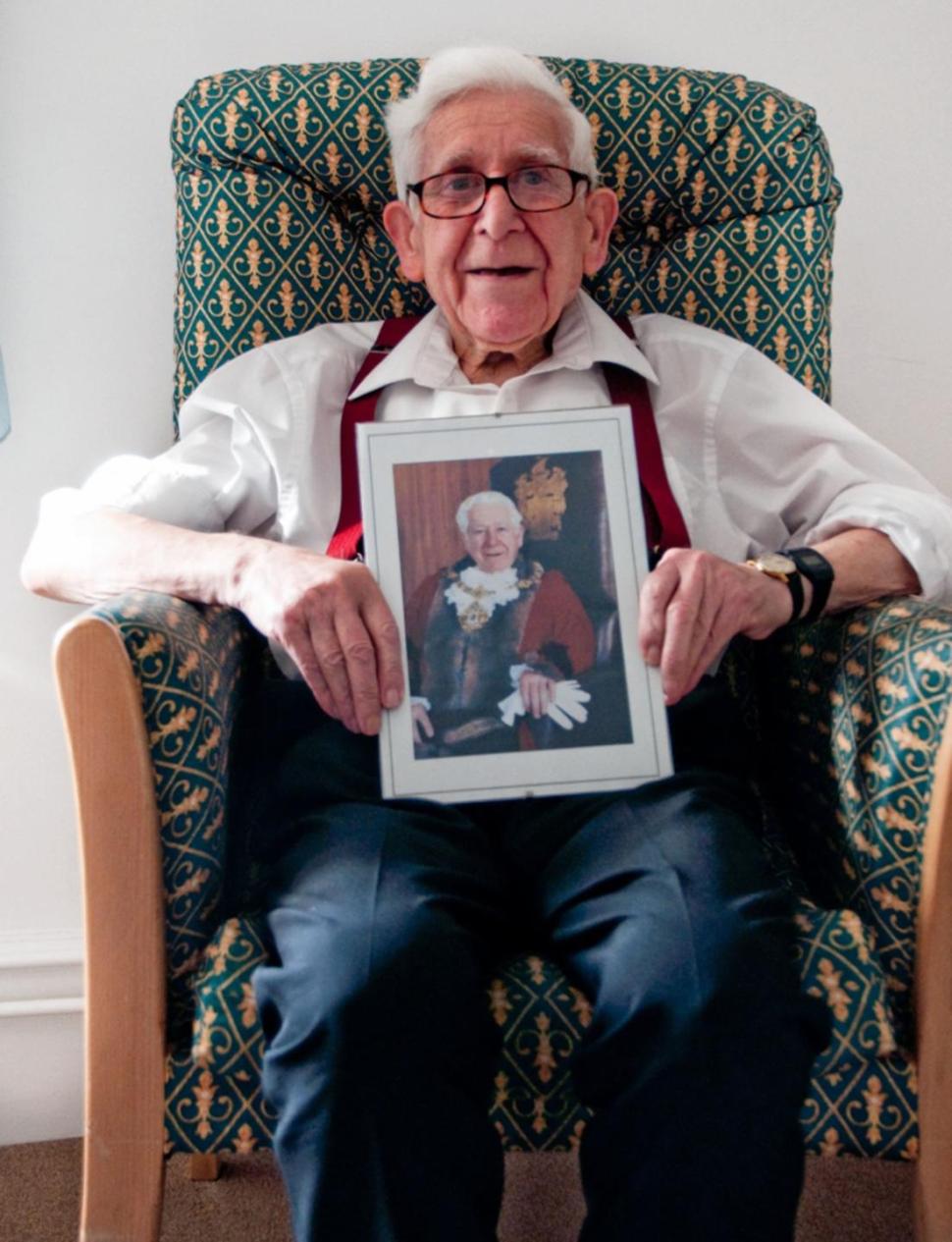
Then there are the Pilgrimages – religious journeys to places like Lourdes, Mecca or Sri Pada. Then there’s the personal

Bernard Jordan

Bernard Jordan

pilgrimages, as was  the case in June last year when D-Day veteran Bernard Jordan, who after being told by staff at his care home in England that he couldn’t attend the 70th anniversary memorial services in Normandy. Snuck out and made his own way there. Mr. Jordan sadly died at the beginning of January. This brings us on to this month’s book, The Unlikely Pilgrimage of Harold Fry by Rachel Joyce.

Harold is on a pilgrimage too, just like Bernard Jordan. One morning in his home in Devon Harold receives a letter from a woman he used to work with, but hasn’t seen or heard from in about 20 years. Its postal address is a hospice in Berwick – on – Tweed, at the other end of the country. Queenie Hennessy is dying of cancer, she just wants to say goodbye. Harold writes a letter back to her and walks to the end of the road to the post-box, but then he decides to walk to the next one and then the one after and before long he’s phoned the hospice and asked them to tell Queenie not too die, as he walking to her. But Harold is not dressed for a 627 mile hike; he’s wearing loafers on his feet, ordinary trousers, a shirt and a windcheater. He has no mobile phone or compass, all he knows is that he must walk to save Queenie, because he owes her.

On this impromptu mission of mercy, he meets a wide and varied cross section of British life; he also becomes an accidental hero and a celebrity, a modern day prophet of sorts with a group of followers and not forgetting a dog he befriends along the way too. But then there’s Maureen, Harold’s wife. Their marriage has grown stale; they’re just living together because it’s the easiest thing to do. Maureen’s also on a journey but at least she has their son David. But what will happen when and if Harold reaches Scotland? Will he come home? Will he and David reconcile? Will Harold save Queenie?

From the moment I picked this book up I knew I’d like it, you will too. The story telling is rich, helped greatly by the excellent Illustrations that form a masthead for every chapter, as well as the description of everyday British life which are picture perfect, even the uniqueness of things like Maureen having to get out her driving shoes. Who still has driving shoes? To me it’s a generational thing; I don’t think any of my generation would own a pair of driving shoes, owning slippers is stigma enough. A sign you’re getting into your dotage, although if you are fastidiously tidy and house proud you might slip into a pair when you walk through the door, but personally I think a thirty-fifty something person answering their door in slippers is a bit odd.

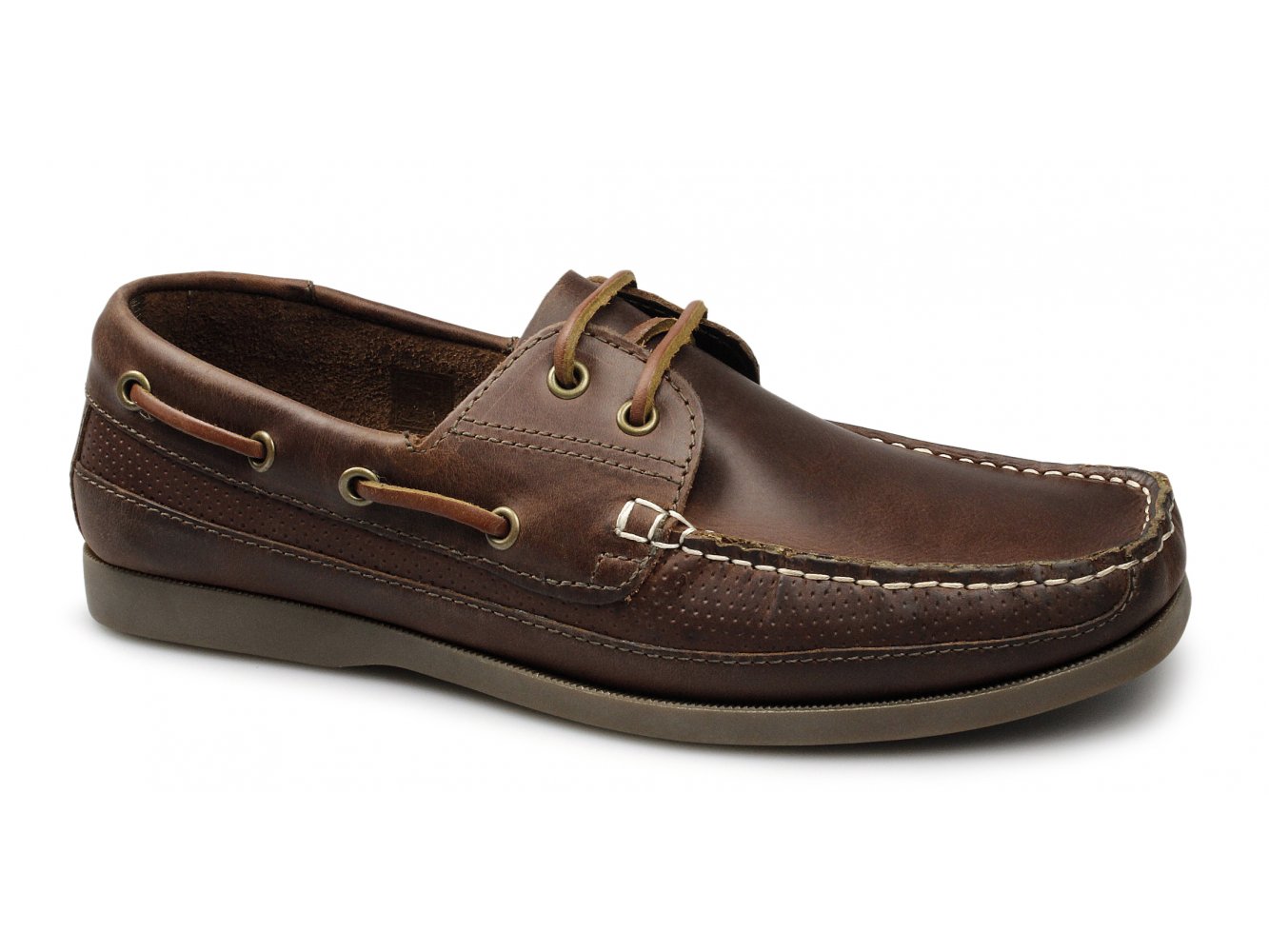
As with Harold, you can almost feel yourself walk every step with him, as well as  feel his pain from the multitude of blisters and the aches and pains a man unused to walking any distance let alone 20-30 miles a day, whose also in his sixties would feel. If Boat shoesyou saw the recent Channel Four documentary, “Walking the Nile” with the explorer Levinson Wood and the state his feet got into and he was wearing the correct footwear, you don’t need much help from Rachel Joyce’s descriptions to imagine how bad Harold’s get and he’s only wearing “Boating Shoes” or “Dubes” as they are referred to on the Southside of Dublin, after the manufacturer Dubarry.

The story itself poses quite a few questions all the way through, this is one of the many reasons you are compelled to go on this journey with Harold. They become quite apparent after a while and are beautifully resolved near the end. Things like what does he owe a woman he hasn’t spoken to in 20 years that he feels compelled to set out on a walk of this magnitude on a whim? Why he and Maureen are sleeping in separate rooms? What caused the split between him and his son David?

Then of course there’s the big question, will he actually save Queenie? How sick is she really? All we’re told is that she has cancer. But due to medical advances, not all cancers have the finality hanging over them that they once did. On the other hand I did find myself hoping that she survives, because I’d grown to love Queenie, thanks to Joyce’s depiction of her and how she and Harold met when she joined the Brewery, working as an accountant under their misogynistic boss “Napier”. How they regularly travelled the country together visiting pubs. the way Queenie complemented the loner Harold on his car and the way she dressed and carried herself. This even gets you wondering was there something going on between them…

Rachel Joyce

Rachel Joyce


This is English author Rachel Joyce’s www.rachel-joyce.co.uk  first book, but Since being first published in 2012 by Doubleday, she has now written three. The second called “Perfect” and  as I write this review her third a sequel to this one called “The Love Song of Ms Queenie Hennessy” was published in late 2014 and is now on the bookshelves. Apart from that she has written over twenty original radio plays for BBC radio four and is a former actress with the world renowned Royal Shakespeare Company.

The book is crammed full of character and characters, from the girl serving behind the counter at a petrol station, to the Eastern European doctor who can’t get her qualifications recognized, so works as a cleaner. Plus the bedraggled group of followers who join him half way along his trek and start to disrupt and takeover Harold’s pilgrimage, they too, like Harold are on a journey to find themselves. The only characters in the book who don’t seem to give too much of their story away or at least leave you wondering what their journey is, are the charming dog who tags along with him then just as quickly leaves him for a little girl at a bus stop and Harold and Maureen’s widowed next door neighbour Rex. Then there’s Queenie who is waiting mysteriously in a Scottish hospice, you really want to know where’s she’s been for the past two decades.

So if you have a journey to make and want something emotional, heart-warming and engrossing to pass the time or if you just need to delve into a really good book, throw this in the case, pick up a copy from your local book store or download it for the kindle. Because this is the best way to kick start a great year of reading ahead.

Finally, while I read the book there was a song that stuck in my head and had me humming it constantly, not not the Persuaders “I Will walk 500 Miles“, but Oleta Adams “Get Here”…

Go back

Your message has been sent

Warning
Warning
Warning
Warning

Warning.

LAURA PROMISES A HAIR RAISING TALE BUT FIRTH DELIVERS A DIRE PIECE OF BUNKUM.

Standard

Laura cvrIts about this time of year that animal charities and welfare organisations plead with us not to give animals as presents, because an animal is for life not just for Christmas. But every year in the days and weeks after December 25th their shelters and veterinary practices are inundated with the results of weak-willed and irresponsible parents, who gave in to the demands of their kids. Who up until the 24th December, think every cute kitten or puppy is a must, but by midday on Christmas day the reality is it can’t compete with a doll or a computer game, which has no responsibilities attached and can be left down and picked up at will. Well with this months book, I feel a bit like this and more importantly I’ve been sold a pup. The book is Laura by Anne Firth.

This is the second of two books that I was invited by Austin MacAuley Publishing to select for review from the range on their website (www.austinmacauley.com)  earlier this year. What appealed to me was the blurb both on the website and on the back of the book when it arrived. The blurb states: Laura Blakeslee is a promising law student. When she picks up a part-time job with the Manley brothers, she thinks Henri, Robert and William are no more then a quaint bunch of bachelors. Yet their offices have a grand staircase leading to a STRICTLY PRIVATE notice? If it’s just for storage why is it out of bounds? Also why is the largest room in the offices left unused? Is it also connected to the mysterious “Robert’s Boys” coming in to care for the beautiful, but hidden back garden? All three Manley Brothers have secrets, but little does Laura know that their father has the deepest secret of all. Unwittingly she has stumbled on a trail that will lead to a mysterious island in Bermuda, a ghost story, a love story and the woman whose bracelet she wears.

bermuda289

Bermuda

What I got was the first two hundred pages of a three hundred page book filled with Laura shagging her way across Canada and then the south of England, before she even comes anywhere near the Manley brothers and their weird hot chocolate filled lives. It’s peppy at the start but then gets puerile after that. The book is more like Fifty Shades meets Sex and The City in the Home Counties and a poor imitation of Fifty Shades at that. The book is pure suburban erotica, not set in any sort of reality. When Laura finally settles down with her husband Tom, they have it away like rabbits almost every night as well as consuming wine like a pair of alcoholics, which as we all know is not going to help him in the bedroom dept, let alone her. It comes across all jolly hockey sticks and quite Enid Blyton-esque, although there wasn’t as much sex in Ms Blyton’s work.

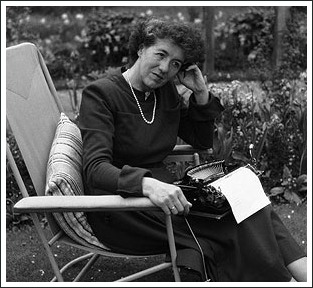
enid blyton writing

Enid Blyton

The book is divided into three parts, but the first one and a half are totally useless and by the time you get to any sort of mystery, then there’s a fifty page preface to go through at the start of part three. Anne Firth may have thought she was drawing out the suspense, but you have to have built some sort of suspense first before drawing it out. In this instance she was just prolonging the agony.

At this stage, as I write the review, I’ve got three quarters of the way through the book and its still hasn’t delivered on any real mystery or ghost story. So having lost all Interest in this tawdry piece of bunkum, I’ve given up. The best thing Anne can do with this book is rip out the first two thirds and republish Laura as a novella.

This is Firth’s first novel and going by it, she might want to consider going back to her roots(excuse the pun) running  a successful hair and beauty business in the south of England or seek some new wise council on how to write your first serious piece of literature. Yes, a few successful actors have started their careers by making the odd pornographic flick just too make ends meet, but very quickly they have moved on to bigger and better things and have tried to bury their sordid past. Porn stars never win Oscars.

In the literary world, trying to use sex to sell your first novel is not on either As I’ve said earlier it’s worked once – all eyes’ are now on EL James to see what she’ll do next, people have tried to copy her success but this topic is a one hit wonder. Why not start by writing children’s stories, plays or even TV and radio dramas. Then if you think you have a penchant for eroticism by all means inject some into to your various works, but not bury the first serious piece in it.

___________________________________________________

I’d like to take this opportunity to wish all my followers on Word Press, Facebook,Twitter and LinkedIn a Happy and Prosperous New Year for 2015 and I look forward to bringing you more book reviews over the next twelve months. Please spread the word about The Library Door to your friends and family.

Feel free to leave a comment on any of the reviews. If you are an author or a publisher and want to send me a book for review you can contact me by twitter @apaulmurphy  or apaulmurphy@gmail.com.  

Media organisations can also contact me at the above, if interested in having me provide reviews for magazines, newspapers or contribute to radio or TV programmes.

Adrian

Go back

Your message has been sent

Warning
Warning
Warning
Warning

Warning.

A LAUGH OUT LOUD HIT FOR SIMSION, BUT IT HAS NOTHING DOWN UNDER.

Standard

Rosie prjct CvrRemember how when we were growing up we were always told never to make fun of people who were less well off than ourselves, had a stigma, disability or were over-weight. This never seemed to apply on TV Sitcoms and the like, such as the Carry On movies or more recently Little Britain, which went all out to send up those with disabilities or  weight issues. Then there’s the current US hit comedy the Big Bang Theory which makes fun of highly intelligent people who are on “The Spectrum”.

The term “The Spectrum” refers to the Autism Spectrum or Autistic Spectrum; which is used to diagnose a range of five conditions classed as Nuerodevelopmental Disorders, one of which includes Asperger Syndrome. People with Apergers often display high levels of intelligence, very bad social skills, nonverbal communication and restricted and repetitive patterns of behaviour and interests. Hence Savants and academics at the top of their fields are often said to be “On the Spectrum”. The 1988 Film Rainman highlighted this side of autism, although it wasn’t meant to be funny, it was amusing. If the Australians’ had made a similar movie it might have been something like this month’s book, The Rosie Project by Graeme Simsion.

Published in 2013 by Penguin Books, the book tells the story of Don Tillman a highly intelligent genetics professor in Melbourne. Don’s hit a bit of a mid life crisis, he’s single, has tried all the usual routes, online dating, blind dates, personal ads,  chatting people up in bars – which is difficult for Don, given his limited social skills – all to no avail and with disastrous results(see the Apricot ice cream fiasco). So Don decides to take a more scientific approach to dating. He draws up a questionnaire “The Wife Project”, which again leads to hilarious results.  Gene his promiscuous boss, whose own life project is to shag a female from every nation on the planet and one of only two of Don’s close friends he has (the other being Claudia, Gene’s long suffering wife) then sends a mature student called Rosie  to him, resulting in a misunderstanding when Don believes Gene has put her forward for “The project”. He is roped into helping Rosie find her real dad, despite writing her off as totally unsuitable as a mate, but something begins to evolve through their close scrapes and weird escapades, including Rosie’s modicum of success in de-stigmatizing Don and making him slightly more socially adept, Don starts to realise she is the most beautiful woman he has ever met. But will his rather glaring and outlandish foibles get in the way of true love?

Hold on to your hats and don’t blink. Why? Because this is the funniest book I’ve read this year and if not, then it must share the mantle with The Collected Works of A. J. Fikry by Gabrielle Zevin (See previous review). But where that was a heart tugging, sentimental tale of star crossed lovers with the innocent humour of a small child thrown in for good luck, The Rosie Project is a straight out of the blocks, side splitting laughter fest. From the first page to the three hundred and twenty seventh, Professor Don Tillman will have you eating out of his hand and almost cracking a rib with the laughter. I’ve often said the that you know you’re reading a great funny book when your giggling and failed attempts to control hysterics in public cause other commuters on a train to give you funny looks, this book left me in this situation on a number of occasions.

Whether it’s the descriptions of the previous dating experiences,Big bang theory his idiosyncrasies such as having his meals, alcohol consumption and every hour of his day planned, judging everyone he meets by their BMI,  his and Rosie’s first date when Don gets embroiled in a fight over a jacket and single handedly immobilizes two bouncers, or that he memorises the recipe for almost every cocktail ever made in 48 hours so that he and Rosie can pass themselves off as waiters to collect DNA for “The Father Project”, you will never again meet a person like Don Tillman and the weird and wonderful characters in his life.

Rosie is no wilting wall flower, while the creators of The Big Bang Theory have tried to saddle the male cast with equally straight laced high achievers; Rosie is no regular girl next door. She works in a gay bar and dresses like a biker, while studying psychology. At first you’d think these two are chalk and cheese, but then you realise they are just right, who else is going to be able re-wire the oddly wired Professor Tillman, but a savvy street-wise ‘Sheila’.

As for the other characters, Gene is straight out of the British sitcoms of the seventies, bed hopping his way through the UN, while marking his conquest with a flag on a map in his office. It reminded me of Adrian Mole and how he measured the development of his manhood and kept track of it on a chart in his bedroom supposedly tracing rainfall in the Norwegian forests. There’s the Dean who realises Don is special, but while trying to accommodate him has to keep the University running smoothly round Don – which isn’t easy.

Graeme Simison

This is Australian author Graeme Simsion’s first work of fiction, in another life he was an IT consultant who wrote a book in 1994 on Data Modelling, which is now in its fourth edition. As I started reading this book his second work of fiction The Rosie Effect, was in the bookshops.

The book its self  started life as a screen play and as Graeme says himself at the back of the book, it only  became a novel first because “..It’s cheaper to get a book published then raise money for a film”.

Here in lies one of its only flaws, it’s not Australian, nowhere in the book do you get any feeling that it’s Australian, the speech Not Australian imageand dialect doesn’t come out in any of the characters. Yes the characters mention Australian places and street names, but like any script it’s just words on a page until an actor brings a character to the part. This is the second Australian book I’ve read in the past year and a half after Murray Bail’s “Eucalyptus”, which oozed Aussie charm and character from every pore and you could literally taste the hot dry barren outback. As a result this comes across like a RomCom film script, something ideally suited to Hugh Grant, Ricky Gervais or Steve Carrell, but a damn good one at that.

This was a sentiment echoed by the book group at our last Rosie effct Cvrmeeting when we gathered to discuss it, overall they loved the book, a few of us got through the book so quickly we actually went straight on to the sequel “The Rosie Effect”, but like most sequels, it tires quickly and only just manages to keep you to the very end with its modicum of new material. Whereas The Rosie Project is a great piece of original work, the sequel feels very much like a rehash of most American sitcoms, as the story moves to the States.

So, with the Christmas season fast approaching and if you find yourself looking for away to quietly digest the third day of turkey salad sambo’s or pass the time on a long journey home, pop into the nearest bookshop and snap up a copy or download it  and laugh all the way to the New Year.

Go back

Your message has been sent

Warning
Warning
Warning
Warning

Warning.

ELLIS’S FIRST BOOK IS MORE DAMP SQUIB THAN WET & WILD

Standard

WetnWild cvrI generally like pet shops because they conjure up images of fantastical emporiums that are meant to enthral you with the wide and variety of cute living breathing products they stock. For me, as an animal lover, I do sometimes feel uncomfortable passing pet shops. Yes, they are a necessity for food, collars and other assorted consumables as well as sometimes needless accessories, not forgetting the procurement of a new family member when the previous incumbent has gone to a better life.

But in a way they hold the same appeal as animal rescue centres, if I enter one and stay longer then necessary I’d feel the overwhelming urge to take every creature home, well almost everyone. I hate seeing the various occupants staring longingly out the window, tormented by unruly young kids who pay little or no heed to signs on the windows saying “Don’t Knock!” while on the other side of the glass, the poor creatures wait for their lottery numbers to come up and some person to come in and take them away to what we hope is a better life.

I was delighted when publishers Austin Macauley www.austinmacauley.com asked if I’d review a couple of there new titles. One of the ones I chose was this month’s book Wet & Wild by David Ellis, the title and the cover design are what attracted me to the book, as well as the blurb about it on their website .

The story centres on the lives of a few of the occupants of the aptly named pet shop Wet & Wild, along with its rather unusual owner Roderick and his equally unique assistant Brian. Roderick is a shapeshifting bi-sexual and between jobs actor who regularly freaks people out with “Shimmering” between the two entities who inhabit his body. Brian is a regular Dr. Doolittle who has an uncanny knack of communicating with animals through a series of groans, whistles and growls but the real stars of this novella (it has less then two hundred pages – I’ve read bigger IKEA manuals) are Jeff, a rather over enthusiastic electric Eel; Cyril, an overfed cat with Vulcan–like mental powers; Bruno, a Tibetan Terrier with a mysterious past and Gecko pads on his feet, which lead him into all sorts of strange places. Then there’s Frank, a Chameleon who likes to get down and boogie and finally Ebenezer, a time travelling goldfish.

Published earlier this year, this is English author David Ellis’s first book of fiction. In a recent interview he admitted thatauthor-david-ellis since finishing it he’s written a number of short stories and novellas over the past year and a half. This isn’t the first foray into the world of publishing for the ex doctor and researcher who has previously written books on medical computing and using computers to compose music, as well as co-writing a book and software to teach medical students anatomy.

From the opening lines of this book I got the distinct feeling it was going to be like Douglas Adams book, The Hitchhikers Guide to the Galaxy. The way the book starts and ends, the  tone of the narrator is similar to that of THGTTG and  a note on a fish tank in the last chapter says “ Roderick, so long and thanks for all the goldfish…”.

The opening chapter is about Brian, it is very funny and compelling as a result I assumed he would be a major feature throughout or even the main character… Nada, after that, he gets sidelined which is very disappointing. From then on you quickly realise that the book is just a group of seven short stories loosely stitched together by a very flimsy story line which, with a little more work, could be very good.

Roderick is an interesting enough character, who reminds me of a cross between Dustin Hoffman’s Mr. Magorium and one of the X Men. He’s unusual in the fact that of the two entities inside him, one is gay and the other straight, which could lead to some very funny situations, but like most of this book it’s not exploited to it full potential. This book is also full of gay characters and undertones. There very few heterosexuals, those characters that are straight are mere support cast but you can understand why it has this theme when you read authors bio at the front and discover that Ellis himself is gay.

Tibetian terr

The author’s note at the back goes someway to explain the ideas and inspiration behind the storylines and characters, but again it doesn’t really do anything to a book that on the outside looks promising but is let down by an author trying to cram too many great ideas into too little space. Another one hundred and fifty to two hundred pages more and we might have got a much better read. Another amusing thing to take from this read was that the sight of me reading a book called Wet & Wild in the office led a very innocent Italian intern to presume the subject matter was similar to fifty shades.

So on a whole I was very disappointed by the book, the idea is original, if not a slight tweaking of The Little Shop of Horrors theme, but there are some major storylines inside which with a little more time and development could have made this book even more enjoyable. Ebenezer the time travelling goldfish for one feels like an after thought as his chapter at the end lasts thirteen pages compared to an average of thirty for the others. As for humour, yes it’s funny, but as its just a short book, it felt more like I was reading a couple of  pages of one-liners when again it’s potential is that it could be up there with the likes of James Herriot.

Go back

Your message has been sent

Warning
Warning
Warning
Warning

Warning.

THERE’S NOTHING STUPID OR SILLY ABOUT THE GAMAL, JUST A DARK WITTY IRISH NOVEL BY TALENTED NEW WRITER

Standard

The_Gamal_MMP_lower_resOne of the many scourges of society these days, if not the most harrowing, is suicide. It often leaves more questions than answers and despite being seen by some as the cowards way out or a desperate call for help, deep down you know at the heart is a poor soul who just can’t see any solution to their troubles, no matter how much help they get.

Ireland has one of the highest rates of suicide in the European Union, 554 were recorded in 2011 alone, according to the Central Statistics Office.  It is especially prevalent among young men, who are five times more likely to take their own life.  In the past couple of months alone Ireland has been rocked by two tragic incidents of “Murder Suicide”  in Sligo and Cork, where in each case an older brother has taken the life of their siblings before taking their own life.  So it was quite Ironic that the book group met up in the middle of Suicide Awareness week which ran from the 8th-14 September to discuss this month’s book, The Gamal by Ciaran Collins.

The book tells the story of Sinead and James two talented kids living in the County Cork village of Ballyronan who meet in school when James’s family move back into the area. They quickly develop a friendship strengthened through their love of music and singing and eventually become childhood sweethearts. James is an accomplished pianist and sportsman, while Sinead is a gifted singer, who both dream of escaping their boring rural community for the bright lights of Dublin. However, they are also from different sides of the tracks and are derided by their peers for their talents and dreams when their backs are turned. James is protestant and his family live in a castle on edge of town which been passed down through the family. Sinead is catholic and lives with her abusive alcoholic parents. When James gets accepted into college in Dublin they believe their dreams are about to come true, but Sinead’s dad is diagnosed with cancer and she is guilt tripped into staying at home, while James goes onto Dublin. It’s then that the malicious local young adults, who they thought were friends, start to increase their deviousness. In the end their scheming and narrow-mindedness leads to a rape and a modern Shakespearean tragedy.

The Gamal is the first novel by Cork born writer Ciaran Collins www.ciarancollinsauthor.com, who has written a number of plays before this and is a school teacher in his spare time. The book was published by Bloomsbury www.bloomsbury.com in 2013 and won the Rooney Prize for literature in the same year. The award was set up in 1976 by Dan Rooney the owner of the Pittsburgh Steelers football team and the former US Ambassador to Ireland and is awarded to emerging Irish writers under the age of forty.

ciarancollins

The Gamal in the title is the narrator Charlie McCarthy who is a close friend of both Sinead and James’ as well as someone who feels somewhat instrumental in the final act. He’s rather slow, thus the nickname. Gamal is short for Gamalog, which is Irish for idiot or simpleton, although there are quite a few Irish terms for stupid or slow people.  As the book goes on we discover that Charlie also suffers from PTSD (Post Traumatic Stress Disorder) and that the book is actually a project set by Charlie’s therapist to help him overcome the events of the past five years. The local youths who are the real instigators of the events that occur are also known by nicknames, which are like badges of honour. There’s “Teesh” short Taoiseach – Irish for chief, Dinky, Snoozie, Racey, and The Rascal.  At times it sounds like a modern version of the seven dwarfs. The story highlights the rural and social divisions which still exist in Ireland and what really happens when the devil makes work for idle hands and closed minds.

When I bought the book and thumbed the first few pages I thought it was a self-help book, because at regular intervals the paragraphs have headings. But once you get into this book, the quirky style of the narrative draws you in and holds you, to deliver an enthralling story.

From the very start you realize that the ending isn’t going to be nice, when Charlie describes finding a body under a local bridge and shows you photo’s of the supposed bridge. But Charlie meanders all over the place, really going around the houses in an attempt to tell the whole story. Yes, part of you urges him to just get on with it, but he’s such a loveable rogue, that he really does have you eating out of his hand. But also this comes down to Collins superb plotting.

This book came across as an Irish Adrian Mole, because in all senses it is a diary and its style is all the same even down to the pictures clumsily printed and drawn through out, to help Charlie with his story and please his therapist Dr. Quinn. But also it had remnants of The Butcher Boy by Pat McCabe, owing to the malice that simmers under surface and with the local colloquialisms it drew me back to City of Bohane by Kevin Barry, which you’ll find previously reviewed in this blog.

In Rural Ireland for years there were always really two religions, The Church and GAA, but now that the church is in serious decline, The GAA is the real main stay for the community and life revolves around the local club. Relationships are formed and broken; kids follow their parents and grandparents into the football, hurling, camogie or handball teams. This is depicted beautifully in The Gamal.  The pecking order is decided by strongest player on the pitch, socially he is the alpha male too and god help anyone who upstages him, like James.

But to give it its due this book is a fantastic read, that should be on the reading list of everyone who likes a dark tragicadventures-of-huckleberry-finn__oPt tale told with a large infusion of modern Irish humour and wit. This book had me laughing and smiling all the way through, despite knowing at the back of my mind that it wasn’t going to end well and even when it did, you were still left with a bit of mystery to keep you guessing. Collins has managed to marry the innocence of Huckleberry Finn and dark tragedy of The Field, with the characters and humour of The Quiet Man and the riveting plot of a court room drama.

If this book proves anything, it’s the old adage never trust the quiet ones so if you fancy a dark and well written quirky Irish novel from a talented newcomer then get yourself down to your local bookshop or download a copy ASAP.

Go back

Your message has been sent

Warning
Warning
Warning
Warning

Warning.

ZEVIN AND FIKRY’S COLLECTED WORK’S PROVES TO BE THE MOST HEARTWARMING AND EMOTIONAL BOOK OF THE YEAR

Standard
Drawing of Original Bray Book Shop

Drawing of original Bray Bookshop

Every town or village needs a humble book shop, a small one off, non chain affiliated outlet where one can browse like you’re in a library and not feel like you’re in a  railway station or airport terminal. Even in the large cities, everyone should seek out a place like this where they can buy a book and also chat to the staff about things they’ve read or where the staff member can recommend books without feeling they’re holding up a queue of irate shoppers. Yes, some of the larger stores are trying to recreate this charm by opening up in-store coffee shops but this just tends to end up being frequented by giggly students on mobiles, latte ladies and business types on laptops which takes away from the quiet, almost monastic feel, of a quaint haven of literature.

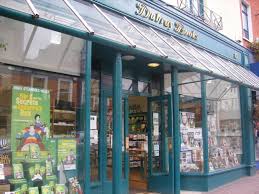
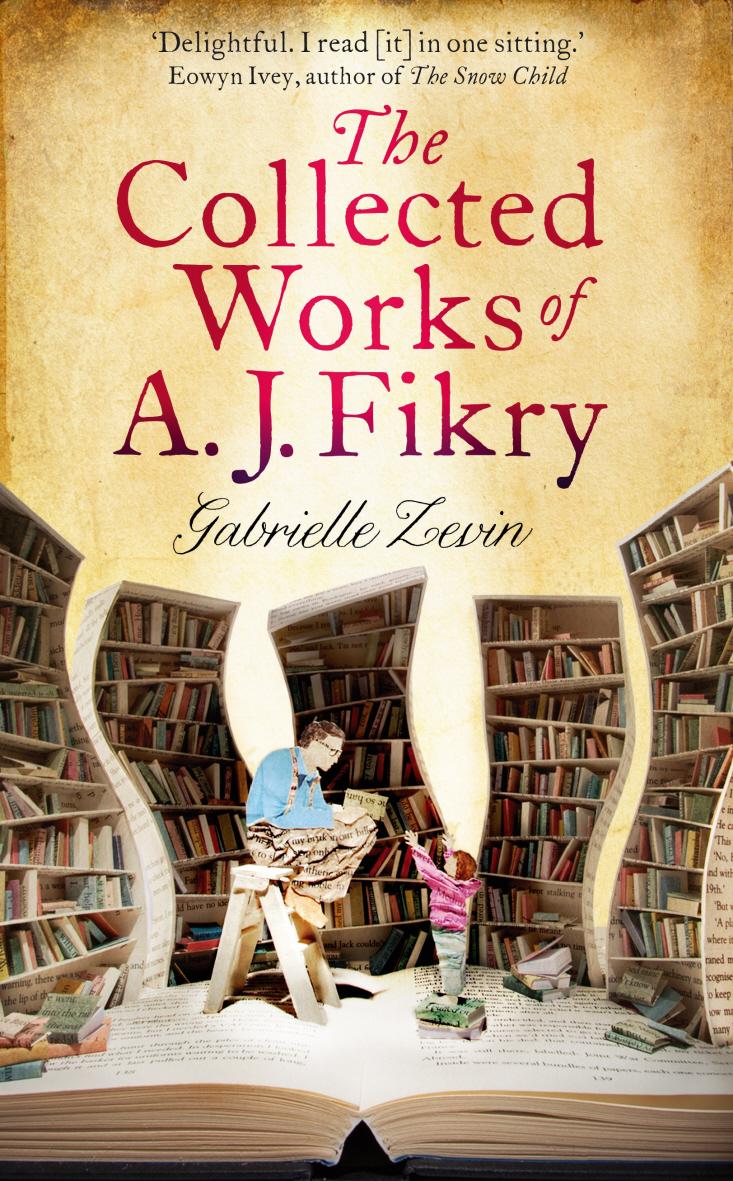
When I moved to Bray 36 years ago it had one bookshop in it called The Bray Bookshop, to this day I can remember its racing green front and the large windows on either side of the main door. Inside it was pokey, but still you felt the moment you entered it was a world away from that outside. The counter was up by the door and you were always greeted by the person behind as you entered or left, usually old Mrs Clear or one of her family, even if you didn’t buy anything.  Since then the business has been developed by her daughter and son-in-law, moved to a larger premises on the main street and also grown into Ireland’s largest independent chain of bookstores with 9 stores across the country and a name change to reflect the nationwide coverage, now known as Dubray Books (www.dubraybooks.ie). But the charm hasn’t left the larger premises on Bray main street, it maybe brighter and carry more stock and also do a selection of cards too, but the staff still talk to you like you’re in a two person bookgroup and even on Christmas week one feels like you’ve entered a  monastery bar the constant swish of the double doors at the front. This month’s book is centred around a book shop similar in style and ambience to the original Bray Bookshop, its The Collected Works of A.J. Fikry by Gabrielle Zevin.

Dubray

Dubray Books branch in Bray today

The story centres around the main character A.J Fikry the owner of a book shop on Alice Island, a fictional island off the coast of Massachusetts, loosely based on Nantucket. Life for ‘The Island Book’s owner is in a downward spiral after the death of his wife. Things go from bad to worse when he has a run in with Amelia a single and quirky book rep and then after consuming a bottle of wine one night he is helped into bed by the ghost of his dead wife only to wake up next morning and find the house cleaned and his prized possession a first edition of Tamerlane by Edgar Allan Poe has been stolen. Then a couple of nights later, as he is shutting up shop, he discovers a baby girl called Maya has been left in the book store with acllcted wrks cvr note attached asking him to take care of her. He enlists the help of his sister-in-law, Ismay and her wayward author husband Daniel, as well as the islands police Chief, Lambiase. This , he manages, without very much encouragement, thanks to the bundle of joy that is Maya. How will A.J. cope when Maya has to go into care of Social services? What will become of her? Will A.J. find love again?  Will the book store survive the arrival of a newborn and the winds of change?

Published by Little Brown in March this year, this is New York born Gabrielle Zevin’s (www.gabriellezevin.com) eighth book. More accustomed to writing for young adults, she’s written two books for adults in the past, Magarettown (2005) and The Hole We’re In (2010). Her young adult books include Elsewhere (2005), Memoirs of a Teenage Amnesiac (2007), All These Things I’ve Done (2011), Because It Is My Blood (2012) and In The Age Of Love And Chocolate (2013). Gabrielle is a graduate of Harvard and the screenwriter for the cult hit Conversations With Other Women – starring Helena Bonham Carter, she first got into writing after sending a strongly worded letter to her local paper about a Guns & Roses concert which lead to a job as a music critic.

Stories involving animals and or children tend to bring a lump to my throat, I knew from the moment I saw the cover and read the blurb on the back, that at some stage, I was going to need a tissue. This is a well written story which tugs at the heart strings from the moment Maya makes her entrance, to the emotional ending. Also it had me laughing hysterically at the antics of the main characters and also the support cast of Lambiase, Ismay, Daniel and the various other residents from the island who come to the shop regularly. This book is also  ripe for adaptation as a RomCom, ten to fifteen years ago it would have had Meg Ryan and Tom Hanks names written all over it, nowadays, Hugh Grant maybe with Drew Barrymore again, or Amy Adams and any number of potential leading men.

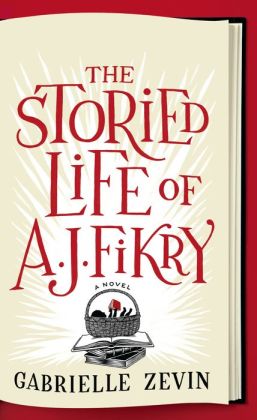
stried life of AJ FkryThe chapters in the book are named after or at least dedicated to famous books, such as Lamb To The Slaughter and The Bookseller by Dahl as well as The Celebrated Jumping Frog Of Calaveras County by Mark Twain. Which I though strange at first until nearing the end I realised I wasn’t so much reading a story as a list of suggested reading material by Fikry for Maya or even a living will.


This has to be one of the best books I’ve read this year and is written by a smart witty young author, who knows how to plot a story and to keep the reader turning the pages right till the end. Even though it was a moving and memorable read to me, maybe to some of it could be seen as a bit sacchariny. There are a couple of plot twists which make you sit up and go wow and made the lower lip wobble slightly, such as the discovery of who Maya’s real dad is and also the depiction of a tragic road accident.

It’s an easy enough read at just over two hundred and forty pages long and closer to a novella then a standard book. This doesn’t take away from a truly satisfying and homely story. The blurb describes it as being a book for those who loved The Guernsey Literary And Potato Peel Pie Society and The Book Thief, while I see it more for those who loved Marley and Me and Secret Life of Bees. What the blurb doesn’t describe is that  the marketing people in the US saw fit to re title it The Storied Life of A.J. Fikry or maybe our marketing guys over here in Europe, thought the title needed to be a bit more high brow.

So there’s not much else to say but get down to your local bookshop and snap up a copy of this book. You won’t have to leave a newborn in the children’s section, just get friendly with a member of staff and leave some hard earned cash on the counter.

Gabrielle Zevin

Gabrielle Zevin


Go back

Your message has been sent

Warning
Warning
Warning
Warning

Warning.

LUPTON AND SISTER FIND SUCCESS FIRST TIME OUT, WHILE GALLUCCI NEEDS MORE TIME TO FIND HIS FORM.

Standard

sister-rosamund-lupton-ebook-e6e66You’ve got to hand it to the budding novelists of this world; it’s a little easier to get published these days with the advent of kindle and eBooks. You just write the book and it put up on Amazon and see if you can sell any outside of your family and friends or even be discovered by a publishing company. There are still those traditionalists though who get out there and write a couple of chapters and then post or email them round the myriad of publishers and literary agents and await the results of the publishing lottery. Which is awash with reams of confidence sapping rejection letters. Others like the first of this month’s two authors, cut their teeth in other media first.

Rosamund Lupton (www.rosamundlupton.com) was a copywriter and book reviewer, before winning the Carlton Televisions New Writers Competition and being accepted on to BBC’s new writer’s course. In 2010 she had her first book Sister published by Piatkus (www.piatkus.net) since then it’s won awards such Best First Novel at the 2011 Strand Magazine Critics Award as well as the Richard and Judy and WH Smith Readers Choice Award. It’s also been translated into thirty languages.

Sister tells the story of Beatrice an English interior designer now living in New York, whose wayward sister Tess goes missing. Bee jumps on the first plane home and sets about trying find out how and why her sister and soul mate just suddenly disappeared off the face of the earth. The more she discovers about her sister’s personal life the more she realises that despite their weekly Trans-Atlantic phone calls, she didn’t really know her sister that well. With the authorities, her family and Tess’s friends having accepted she’s gone for good, Beatrice throws herself headlong into Tess’s life. Almost taking on her Tess’s persona, by portraying her in a reconstruction and living in her flat. All the while the search for answers takes her on a precarious journey.

Rosamund-Lupton_1910569b

This was my choice for the June meeting of the book group; I first read it back in 2012 and had held it up my sleeve like a sneaky ace for the past year and a half. From the very first page to the very end, the book lives up to the hype on the covers and. It is excellently written and Lupton’s plotting in masterful. She treats the reader like Beatrice’s shadow and you go on an eerie and compelling journey from the get go right to the very end, when she hits you square in the eyes with totally unforeseen ending.

What I remembered from my first time reading it was that I was commuting daily by train from home to work on a journey of about forty five minutes. Some books made the journey drag, but others like this had me stepping on a DART in south county Dublin and what felt like ten minutes later despairingly closing it and having to wait an agonizingly long time to get back to it in the evening.

The other members of the book group also thought this book was brilliantly written and had them finishing it in double quickGONE_GIRL time, while one member who couldn’t make it begged us not to post anything about the ending on social media or emails as she was just finishing it while on a trip abroad and didn’t want us to spoil the ending. It got what I would call in the world of book groups, a standing ovation almost and the last time a book of mine got that was three years ago when I presented them with Room by Emma Donoghue. A few found Beatrice slightly irritating, but loved the plotting and story and also a topic of discussion throughout the meeting was the comparison between Sister and Gillian Flynn’s Gone Girl.

The genetics storyline isn’t new but it’s well written and shows some great research, but as she admitted herself in an interview in the back of the book, the medical side was easy due to being married to an obstetrician.  As for advice from Lupton to other first time authors, “Go for it!! And if you meet rejection just keep on it…” she admits she could have papered a small room with rejection letters before getting her first break in scriptwriting. But that’s something she won’t have to worry about from now on. Since publishing Sister her second novel Afterwards was released in 2011.


big_img10The other type of first time authors are  the ones that, after the number of rejection letters swamps the whole house, making dinner parties awkward, decide to turn their back on the industry. They go down the self publishing route. My second author this month did a variation on that. He approached Iguana Books, (www.iguanabooks.com) a Canadian publishing company which according to their own website encourages the author to “Pitch In” with covering the cost of getting the book ready for the market, by crowdfunding.  This is the act of seeking small contributions from a group of people, usually over the net.

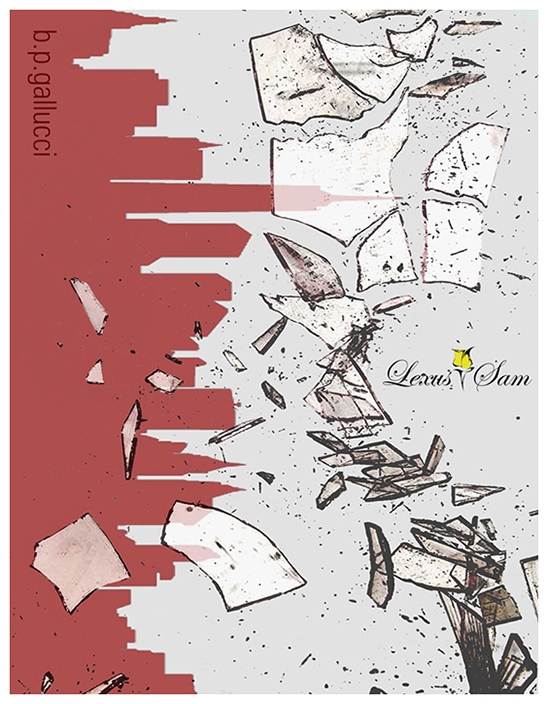
BP Gallucci (www.bpgallucci.com) is a cat lover and Torontonian born and bred, who’s been writing stories since he was in kindergarten; his first book which was published this year is called Lexus Sam.

The book tells the story of an amnesiac, who calls himself Lexus Sam, but is convinced this isn’t his real name. Currently living in a New York apartment he gets the feeling that he might not be a local because of intermittent flash backs of a life on the West Coast. His apartment is rented out to some guy called Adam Williams and the picture on his drivers licence is the same guy he sees in the mirror every morning, but he thinks it’s all a charade. In his flash backs he also sees a girl called Sarah, so to help him discover who he is he employs the services of a shrink who tries to aid his memory through hypnotic regression, But Lexus questions the doctors motives and as the past merges with the present, he must fight to discover the truth about his past and the mysterious Adam Williams.

If you think the summary above sounds like the marriage of four Matt Damon movies, then you’re not far wrong. Sent to me by Gallucci after we hooked up on Twitter,  the book its self feels like the reworking of more then just a couple of movies, a whole video store worth to be exact. There is no beginning of sorts you are just thrown into the story and mostly I found myself flailing to find direction.

I’m all for getting the reader into the story but you must allow them to get a feeling of where it might be going.Unless it’s set in a life raft, but even then, you  imagine an island, finding a flare gun, even the hint of an engine in the distance. This book just seemed to be occupied by a series of random stereotypical characters and some vague well worn plot. Halfway through, I couldn’t give a damn if he never got his memory back, hey he has an apartment, money to buy pizzas… life’s good.

First time books are rarely instant bestsellers, but it’s like passing your driving test, some do it first time others on their second, third for fourth go . Look at Dan Brown for example it was only after The Da Vinci Code  his fourth book was a bestseller that Digital Fortress, Angels & Demons and Deception Point start making money. Even before that he wrote a number of clunky humorous self help books, one under the pseudonym Dannielle Brown and the other under his wife’s name. Also it took John Le Carre three books to find international acclaim with The Spy Who Came In From The Cold.

BP Gallucci

So, I’m not knocking Gallucci’s ability(especially not a bloke with all those “tats”), just the fact that this first attempt at writing a compelling piece of fiction needs a bit of work. Which I’m sure he will do and who knows down the line, he’ll be up there with the best of them.

So if you want a good summer read get up close with Sister and leave the lost boy where you found him.

Go back

Your message has been sent

Warning
Warning
Warning
Warning

Warning.

TWAN ENG’S AWARD WINNING HISTORICAL NOVEL GETS BOGGED DOWN IN THE GARDEN

Standard

garden of evening mists cvrRecords estimate somewhere between 3 and 10 million people of various nationalities lost their lives in Japanese prisoner of war camps between 1937 and the end of the Second World War. If you thought the Nazi’s had the market cornered in the mistreatment of POWS, then you were wrong.  The Japanese were equally brutal, if not far more depraved. They  worked their charges literally to death, by getting their prisoners to work in mines, fields, shipyards and factories on a diet of about 600 calories a day and in extreme heat as well as  mosquito and disease ridden conditions.

The worst conditions were those experienced by POW’s forced to build the Burma-Thailand railway. Prisoners of war and Asian labourers worked side by side to build the 260 mile railroad by hand. They were expected to work from dawn to dusk, moving earth, building bridges, blasting through mountains and laying track.

With the 70th anniversary of D-Day having just past, the The-Railway-Manexperiences of those prisoners have all but been over shadowed and forgotten, except for maybe re runs of the 1980’s BBC Drama Tenko and last years Critically acclaimed movie The Railwayman starring Colin Firth and Nicole Kidman, and books like this months book group read The Garden of the Evening Mists by Tan Twan Eng.

The book tells the story of a Yung Ling a retired Malaysian judge who is a survivor of the Japanese POW camps.On her retirement she seeks solace in the Malayan foot hills where she plans to build a memorial Japanese garden to her sister who didn’t survive the camps. She needs some help and is pointed in the direction of the Garden of the Evening Mists and its creator Arimoto, once the gardener for the Emperor of Japan and a man who possess extraordinary horticultural skill. She accepts his offer to take up an apprenticeship under him, thus beginning a journey that bring her past and present together.

This is Penang born Twan Eng’s second book, his first was The Gift of Rain and was published 2007, it was long listed for the Man Booker Prize. The Garden Of Evening Mists published in 2012 was shortlisted for the 2012 Man Booker prize  and won the Man Asian Literary Prize 2012 as well as the 2013 Walter Scott Prize for historical fiction. He worked as a solicitor in a Kuala Lumpur law firm before becoming a full time writer; he’s a martial arts expert who divides his time between Cape Town and Kuala Lumpur.

Tan_Twan_EngEverybody has a minimum page rule, after which if the story hasn’t grabbed you by then, it’s time to put the book down because life’s too short. For me it’s fifty to one hundred. I gave this book one hundred and ten pages, and with only three hundred fifty in the whole book that’s very generous. Take into account the fact I had two three hour windows when I had nothing else to do but read it owing to travelling on a ferry back and forth across the Irish Sea. This book still failed to hook me and that’s alright because nobody’s going to like every book they read.

The other members of the book group all agreed that the first third of the book is slow but after that it warms up and delivers a nice story. But for me I had better things to do, like watch seagulls, other ferries and white horses or enjoy a complimentary massage, yes they actually have that on certain ferry crossings on the Irish Sea.

My partner said I shouldn’t post a review because I didn’t finish the book, but I recently read a restaurant review by Tom Doorley of the Irish Daily Mail where he went to one restaurant in Dublin and left after waiting forty minutes to be served and only getting water and bread. He still wrote his review, hence why I have one here.

caution_slow_moving_vehicle_sticker

I’m not saying you shouldn’t try this book, but if you do. You have been warned, the start needs a lot of patience. Rather like the Heron on the front cover. Better still, get your hands on  a copy of The Railwayman.

Go back

Your message has been sent

Warning
Warning
Warning
Warning

Warning.