
 In most countries around the world, democracy or the formation of its power structure revolves in some way around the “Estate System”. Primarily limited to the four estates, those representing the Parliament (Legislature), the Judiciary (legal/ justice system), the military and police, the press, business and finally the consumers or people. But then, in some countries and as the inspiration for quite a few political thrillers, there is the Deep State. Those parts of the government or clandestine powers, working for or against the state, in a covert fashion for their own or others ideals or the ideals. This brings us to this month’s 1st book review, its the aptly named Deep State by Christ Hautry and is published in hardback by Simon & Schuster (www.simonandschuster.com) on the 23rd January.
A year after leaving the US Military, Hayley Chill lands a job as an Intern in the west wing of The White House. Much to the annoyance of her fellow much younger and connected interns, the Virginian native and product of life with little opportunities, starts to make an impression on the Chief of Staff and the President. Shortly after her arrival, she discovers the Chief Of Staff dead, when she arrives at his house one morning with his daily briefing. Unbeknown to the killers they’ve left a vital clue behind and Hayley discovers it, but with the FBI’s lead investigator not entirely believing her story, Hayley is unsure whom to trust. Her boss’ death also brings to the fore other players in the West Wing’s febrile office politics, in the form of his deputy, a woman who has her own ideas about climbing Washington’s greasy pole and keeping Haley away from the spotlight. But when she unwittingly realises that a member of the secret service she’s dating is involved and has to kill him to save her own life, Hayley discovers the conspirators are buried within all facets of the government and threat isn’t stopping at the Chief of staff, but aims to take out the person sitting behind the Resolute desk, the President. With the pool of people she can trust with this knowledge diminishing rapidly, can she stop the conspiracy before they stop her?
It’s been years since a thriller has got me as excited and pumped as this one did. The first one to ever do that was Archer’s “Shall We tell The President”, when I read it almost thirty-five years ago. Albeit, there have been a few in between that have also got my pulse racing like Hauty’s current offering.
I think what really got me engrossed in this story was the idea of a lowly intern in Washington discovering a plot to kill the President and the race against time to stop it. Previously both in film, TV and literature it’s been someone with a bit more power, a military/ naval officer, or an FBI/Police detective. Yes, the pace in the book is frenetic and even though Hayley is basically the US Military’s answer to Katie Taylor, you still feel worried for her and her vulnerabilities, because we the reader know ,what power her opponents wield.
The plot itself may not be original – most political thrillers have a threat to the life of the US president in them, leaving this reviewer wondering what would it be like to read a thriller which puts the Chinese or Russian Presidents life in danger? Why does POTUS get to have all the fun? But in the light of the Russian interference in the last US Election, the plot is topical and gets you again wondering if like the Manchurian Candidate, what types of dark forces are at play behind the scenes and under the surfaces of Washington, London and Moscow, even Beijing.
Hauty’s style of writing is some of the best I’ve read in a while, it comes across as very complete and shows love for all his characters, whether they are good or bad. Every part of the story and the back history as well as the future of every character is rounded off to the last minute, unlike some books where the support cast just drift off after they’ve served their purpose. Hauty’s have their lives mapped out, even to the point where wife of one character is described as dying of a heart attack 15yrs to the day when she last made love to her husband…

Chris Hauty
This is American Screenwriter Chris Hauty’s (www.chrishauty.com) first novel. He’s worked for every major film and TV studio and collaborated with stars such Jessica Alba and Mel Gibson. The book was written in the summer of 2018 in the Rare Books and Music room of The British Museum. He lives in Venice, California with his Triumph motorcycle and a feral cat.
This book is littered with plot twists throughout but just as you think you’ve got a handle on this story Chris drops a piano on the reader, which then decides to roll down the hill over you again for good measure. So my advice is, if you are looking for book to get you through some Coronavirus enforced isolation, or want to start making a list for your summer holiday reads, this book needs to be at the top of your list and no matter what else you forget, don’t leave this until you’ve read every page of this amazing book.
Reviewed by : Adrian Murphy
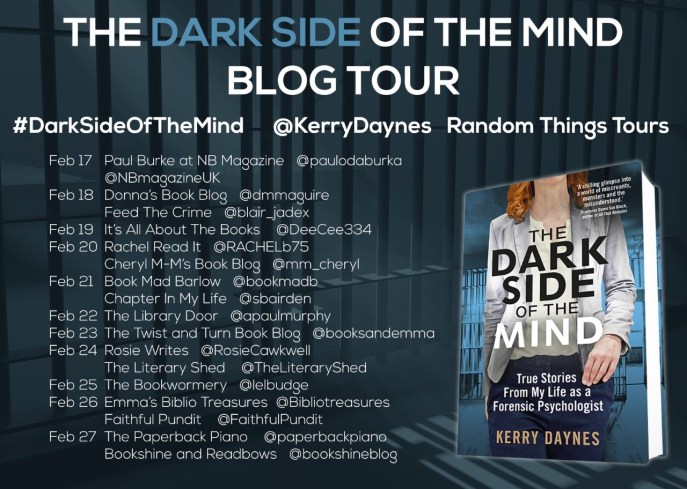
This book review is part of a Random Thing Blog Tour, to see what the other reviewers thought visit their blogs listed below. Then if you get a copy comeback and tell us what you thought, we’d really appreciate the feedback.

 Don’t we all love a mystery? There’s a huge public fascination with unsolved disappearances and crimes such as the disappearance of murder suspect, Lord Lucan, and the racehorse, Shergar. Every notable anniversary the stories are rehashed with new theories. There’s also a large cohort of conspiracy theorists out there contesting historical events like the moon landing, the assassination of John F Kennedy, with outlandish ideas and what ifs.

 There’s a great public interest currently, in true crime and in the psychology of the serial killer, with a proliferation in TV programmes such as Mindhunter, the Smiley Face killers, Catching a killer and podcasts like Serial. Sky have recently launched a True Crime specific channel so they must anticipate this is a fascination that’s not going to go away anytime soon. There’s also a greater awareness of mental health issues. This was highlighted at my workplace recently and in a series of posters, my favourite was a thought provoking straight line with a line intersecting it about a quarter of the way long. It read ‘people’s lives’ along the whole line and ‘what you know about them ‘ along the quarter section.
 I was only reading yesterday about the plight of American author Jeanine Cummins, whose new book American Dirt has been nominated as an Oprah’s Book Club choice. As a result, it has brought her to the attention of far right ill-educated armchair activists, who threatened to disrupt a proposed American book tour and thus forced its cancellation. Because they say the author is “Too White” to be able to write a book about south American emigrants trying to get into the United States. In a tweet to Jeanine, I gave her my support and pointed that out if these bigots had put any thought into their arguments they’d realise some of the most successful writers have very little experience of their subject matter and stated that Lee Child was never a military policeman and that Hannah Kent is Australian, but that it never stopped her from writing a successful book on an old Icelandic murder and followed it up with a book on an Irish murder, both decades old. Did the Irish and Icelandic diaspora rise up in arms and protest, no!

 I’m a great fan of TV detective drama. The longer, two-hour episodic versions please me most. Currently I’m loving ‘Endeavour’, an ITV production, which is a prequel to the much loved ‘Inspector Morse’. I much prefer them to one-hour series, where everything is neatly wrapped up in a short time. You can very rarely guess ‘whodunnit’ in the longer dramas but in the one-hour stories, things sometimes seem a little contrived or you can guess at the start. It’s a pet hate of mine that I don’t like detective stories where we hear the murderer’s thoughts or worse, are introduced to them at the beginning. I love the reveal, the twist and the wow factor of the final denouement, especially where the odd subtle clue has been there all along!

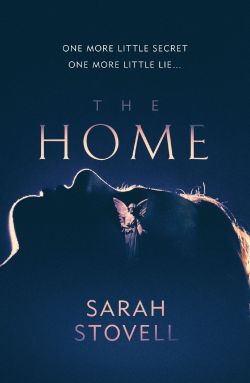 The Italic typeface is a cursive font used to denote someone speaking or highlight a foreign word or phrase. It takes its name from the fact that calligraphy inspired typefaces were first designed in Italy and were invented to replace the old Chancery style of writing. Nowadays we all usually use the default of Calibri or san Serif, when writing an email or composing a word document, as I do with the drafts of these reviews. It may look nice for presentation purposes to intersperse a piece with Italics, but you can have too much of a good thing, as it seems in this months second book review, which is The Home by Sarah Stovell and published by Orenda Books (www.orendabooks.co.uk).

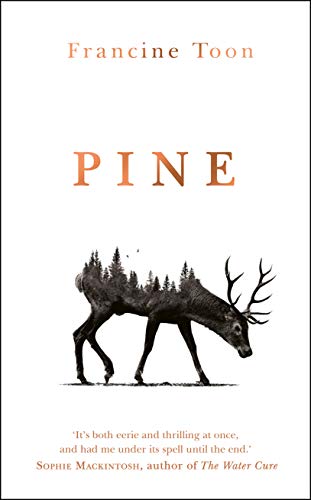 In my twenties and thirties, I spent pretty much every free moment in Scotland. I was a bit of a Scotland-ophile. I think I knew more about the history and folklore of Scotland than of England. I was therefore surprised not to recognise I was in Scotland during the opening pages of this months second book review, but instead thought the book was set in some remote American state.The book is Pine by Francine Toon and is published by Doubleday (

 Over the past few weeks Australians have been praying for rain in their fire ravaged continent, while in the northern hemisphere, we’ve been praying for a white Christmas for the past four weeks or more. Neither party got much of what they wanted. Although I did find myself wading through snow over Christmas and it was all down to the first book review of the new decade. Its Shamus Dust – Hard Winter, Cold war, Cool Murder by Janet Roger and Published by Matador (
 Beverly Hills Book Award, as well as Fully Booked’s Book of the Year and made NB magazine’s top ten. She trained in Archaeology, History and Eng. Lit. and has a special interest in the early Cold War. She currently leads a nomadic existence, admitting to never staying in one place for a minimum of six weeks and at most three months on the rare occasion.
 With Christmas less than a month away, we’ll all become more acutely aware of the pressure placed on us by TV and social media, to be of good cheer and surround ourselves with large gatherings of friends and family. But in doing so we overlook the people in society who are more vulnerable, who are left with a greater feeling of loneliness, depression and in some tragic cases feeling suicidal at this festive time.
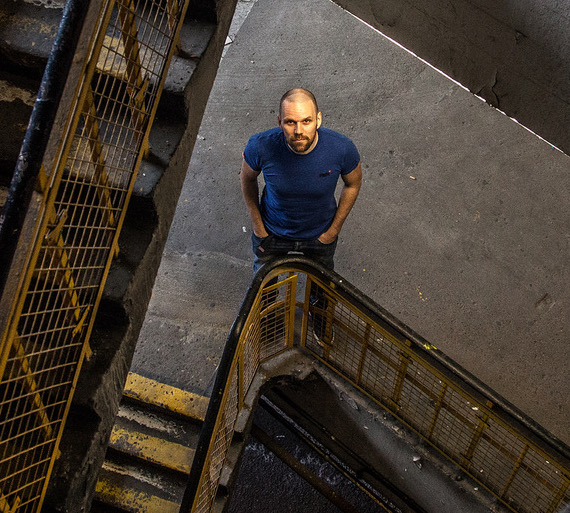
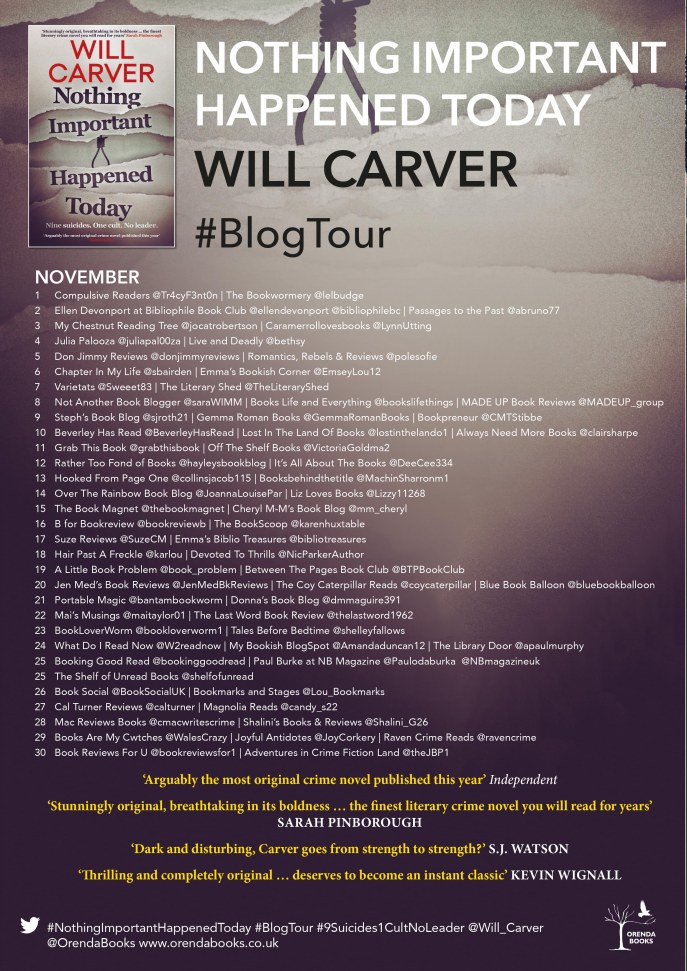
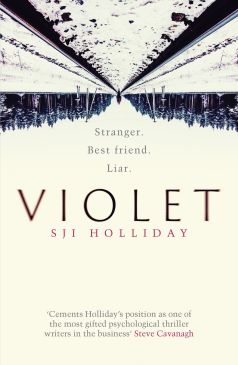 I never had a gap year. Where I grew up, if you were lucky enough and smart enough you went from college to university, or like me, directly to a job with an apprenticeship and a professional qualification at the end. The rest of my year went on the ‘dole’ or into youth employment schemes. I suppose it was the era before gap years really became trendy. I can certainly see the benefits of a little worldly experience before you settle down to work and study.
 the library door