FEARS FOR MY FUTURE HEALTH LEAVE ME MISSING OUT HEALEY’S DEBUT

Standard

ezbth-missng-cvrIn 2015 The world Alzheimer’s report stated there are currently 46 million people worldwide suffering from some sort of dementia related illness and that figure will double each year going forward. Like cancer or any other large global illness, we all know someone with dementia and to be honest with those figures, it’s a scary thought that anyone of us reading this piece could fall victim to it. That brings me onto this month’s second book, its Elizabeth Is Missing by Emma Healey, published by Penguin in 2015 (www.penguin.co.uk).

Maud forgets things, the cup of tea she made earlier, what she went to the shops for. Even where she lives and her own family, are at times, strangers too her. But one thing Maud does know is that her friend Elizabeth is missing. How? Because there’s a note in her pocket. No matter who she tells, even the police – no one believes her and they just tell her to forget it. Whatever else she may mentally let go of, Elizabeth’s disappearance isn’t one of them. Maud is in her eighties. So, she isn’t just pushing against everyone else in her search for the truth about her friend’s whereabouts, she’s also trying overcome the cloying effects of her illness. On top of that, there’s the mystery surrounding what happened to her sister 60 years ago, can Maud work out the clues in her rolling ship of a memory? Is Elizabeth even missing? Did her sister ever return?

I read a lot of books, as you can gather and if you’ve read most of these reviews you’ll be aware that I have a fifty-page rule. If the book doesn’t get me by fifty pages then I put it down, as life’s too short to read bad books. This book, I had to put down not before fifty pages but at one hundred and eighty-six!!!! Why? Because the writing and storytelling was so compelling, I got upset. Maybe I was at a low time in the year, this was strange because when I picked it up and started reading it, I was on a week’s holiday in the Algarve with my new wife, enjoying blue skies and temperatures of 30 degrees in late September. But for some reason I got all worked up about dementia and started to wonder what would happen if I got dementia and how I would cope with it? Silly isn’t it?

I’ve read other books that have upset me in the past and as I said then, I’ll say now. It’s not a sign of failure, but of success on the authors part and here Emma Healy has
images

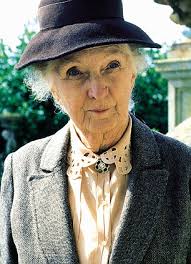
Miss Marple – aka Joan Hickson

succeeded in getting the reader into the shoes, or more appropriately, the disheveled mind of Maud. If Agatha Christie had given Miss Marple Alzheimer’s, herself and Maud would be almost alike.

In those one hundred and eighty-six pages that I read and from what I ascertained from friends and acquaintances who have read the full two hundred seventy-five. Healey keeps you on the edge of your seat and at times your heart in your mouth, with worry and concern for our heroine as she goes about trying to solve the two mysteries.

This is British writer Emma Healey’s (www.emmahealey.co.uk)  first novel and was inspired by her grandmother. She grew up in London and studied art in college. In a recent interview in The Times, she admitted that at sixteen she contemplated suicide, but that art saved her. After working in libraries, universities and bookshops around the UK she eventually settled in Norwich in 2010, to complete her MA in Creative Writing and never left.  Elizabeth Is Missing won the Costa First Novel Award in 2014 and was shortlisted for the Desmond Elliot Prize in 2015, there is currently no news on her next book.

The only bad mark against this book is that there is a lot of jumping back and forth between present day and post world war II Britain as Maud tries retrace the final movements of her sister and recount run-ins with her shifty brother-in-law. Mixed with the constant disruption caused by her faltering and decimated memory it can get a bit confusing. Maybe it’s planned that way? As well as that, there is a rather dark comedic element to Maud’s predicament which at times serves to lighten the mood of the book.

emma-healey

Emma Healey

I never apologise for wearing my heart on my sleeve and letting my emotions get the better of me. I’m not alone in letting thoughts of our own mortality rise to the surface, but to quote James Shirley in Death The Leveller “There is no amour against fate…”. We must just get on and enjoy life as best we can.

What I read of it, this was a lovely book and as other reviewers such as Debra Moggach and Emma Donoghue have claimed, it is a haunting and unsettling read that will stir and shake you. So, if you can lock your fears of mortality and the future in a metaphorical steel casket for a while, then go out and buy or download a copy of this book.

*********

From myself and the other contributors to the Library Door, we’d like to take this opportunity to again thank you for visiting the site over the past year and hope you’ve enjoyed reading the reviews as much as we have writing them. Thank you to the publishers who keep my postman busy – especially Karen in Orenda books who continually surprises us with regular parcels. If you are an author or publisher and you’d like to send us copies of your latest releases you can contact me  on twitter @apaulmurphy  or by email at apaulmurphy@gmail.com . We hope you had a great Christmas and wish you a very happy New Year.

Adrian Murphy
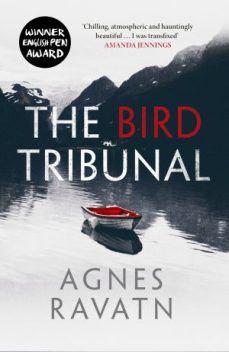
RAVATN’S TRIBUNAL IS A TINDERBOX OF SEXUAL TENSION AND INTRIGUE

Standard

thebirdtribunalcvrThere are numerous collective nouns used to describe a gathering of birds that have rather sinister inferences. Take a parliament of owls, a murder of crows or an unkindness of ravens for example. Then there are the animals associated with the judiciary, I’m referring to a kangaroo court and until recently having lived in Ireland for the past 38 years or so I thought I’d seen every tribunal conceivable, until I read this month’s book. It’s The Bird Tribunal written by Agnes Ravatn and published in 2016 by Orenda Books (www.orendabook.co.uk)

After a scandal involving her and a superior, TV presenter Allis Hagtorn tries to rebuild her life by going into exile as a home help and gardener for the mysterious and brooding Sigurd Bagge, working and living in his house on a remote Norwegian fjord. Everything about this new life seems like a jump from the frying pan into fire as she contends with his almost teenage like moodiness and the caustic remarks and stares of the neighbours, especially the woman in the local village shop. Also, what of his wife, who is mysteriously absent. Is she away working? Travelling? Dead? or has she left him? If she’s dead, did he murder her and if so, will Aliss be next? Add to that the question of what Sigurd is doing inside his off-limits bedroom all day and how long will her exile last?

In these ever time starved lives we lead it gets harder and harder to find space to read a book. Usually it’s on the commute to and from work if you use public transport.  Maybe you snatch a couple of minutes at bed time before your body succumbs to fatigue and drags you under for 6-8 hours? There’s always audio books too. So, normal sized books which have on average about 300 pages really have to be very good to compete with everything else in your life. Smaller books which just about get above the Novella moniker are great finds and if well written pure gold… That where we find The Bird Tribunal. At one hundred and eighty-five pages Ravatn and her translator Rosie Hedger deliver a fantastic page turner inside what is basically a literary matchbox.

agnes-ravatn

Agnes Ravatn

From the moment you turn the first page till you close the back cover, Ravatn slowly cranks up the momentum in this brilliantly written psychological thriller to where the book is positively exuding mystery and sexual tension, something I haven’t found in a Scandi Noir book in a while. If this is 50 Shades in Scandinavia, then the desperate housewives and yummy mummies of the rest of the world who almost beat each other black and blue to gobble up as much of the virile Mr Grey, in his almost 900 plus pages over three books, have seriously missed out.

As for the characters, both are rather sketchy. They come across as being merely thrown together. Little is said of Aliss’s application process,  whether this was by way of a card in a supermarket noticeboard or some obscure online discovery. Maybe a friend of a friend mentioned Sigurd was looking for help. This adds to the style and pace of the book, the less one knows the more the reader can use their imagination to suggest how these two found out about each other. Again, this adds to the overall mystery of the book along with the fantastic descriptions of the isolated but beautiful location.

While the Bird Tribunal of the title is basically a kangaroo court which is shown in flash back when Sigurd is abducted by a group of people at night who are all wearing bird masks. They want him to atone for something that happened in the past. The book also delves heavily in to Norse folklore with the main characters discovering their liking for Norse history and gods.

This is 33-year-old Ravatn’s fifth book, the Norwegian born author is also a columnist onbbc-book-at-bedtime the weekly Nynorsk newspaper Dag Og Tid. Her other books were Week 53 (Veke 53)2007, Standingstill (Stillstand) 2011, Popular Reading (Folkelesnad) 2011 and Operation Self-Discipline (Operasjon Sjisiplinold) 2014. the Bird Tribunal was made into a successful stage play in 2015 and is also being made into a film. On top of that it was announced at the beginning of December the book will be BBC Radio 4’s Book At Bedtime  between January 23rd – 29th.
It is often a complaint of the book group that the average sized books we read are missing the touch of an excellent editor. Here we are shown by another great Norwegian writer that great stories don’t need to be hidden inside a plethora of padding in large tomes.  So, if you are looking for something to read by the fire over Christmas or during your precious reading time over the dark winter months pull on your best Scandinavian jumper and get into this cracking and little read from Agnes Ratvn.

DARK, SMOULDERING AND CHILLING IT MAYBE. BUT JONASSONS THIRD BOOK SETS OFF MY LITERARY AQUAPHOBIA

Standard

black-out-cvrCan you remember where you were between the 15th-21st April 2010, yes I know its a long time ago, but go on try to remember…If I said Eyjafjallajokull… No, I’m not swearing at you, but that word or similar sounding expletives were on the tip of quite a few European tongues that week in 2010.  That was when a little known Icelandic volcano, until then that is, decided to erupt and the ensuing ash cloud grounded the European air traffic system, stranding over 10 million people worldwide and costing the airline industry $1.7 billion in lost revenue. That volcano, yes the one no one with out a large bottle Brennivin inside them can pronounce, plays a central role in this months second  book, titled Black Out by  Ragnar Jònasson  published by Orenda Books (www.orendabooks.co.uk) in July 2016.

When  man is killed at a remote cottage in Northern Iceland.  Detective Ari Thór Arason a troubled and complex small town policemen  and his colleagues start to investigate the crime. Was the man the intended victim? What kind of man was he? Why was he killed? Throw into the mix a reporter with secrets of her own, along with the convoluted lives of the investigating officers, their relatives and former lovers and you have a complex plot that’s even murkier without the added bonus of the ever present ash cloud.

This was my first foray into the series and almost my first exposure to Nordic Noir. Noir is certainly the word. As a lover of thrillers both crime and psychological since my early teens, somewhat foolishly I took this book as holiday reading on a sunny beach holiday. Not a good choice. This book needs a dark winter evening, in front of a roaring fire, with something stronger than cocoa, maybe Brennivin, the Icelandic Schnapps often referred to as the Black death.

Set during the 24 hour light of an Arctic summer you might think this book would inspire

eyjafjallajokull

Eyjafjallajokull erupting in 2010

you with wonderful descriptions of the Icelandic scenery. However, this is the period of the volcanic eruption and ash cloud . The cloud is shutting out the sun in Reykjavik and making life depressingly claustrophobic for the Icelanders who have endured the dark winter. I found this coloured the whole book. It was unremittingly dark and depressing. Not surprising for crime fiction you might say but even the parallel character plots were depressing. The most interesting character for me was Isrun, a young reporter. Her character is pivotal to moving the plot forwards and the representation of the cutthroat world of TV news, whilst not original, seemed realistic.

Everyone was miserable, suicidal or just downright nasty. When I say ‘everyone’, there were a lot of characters and a lot of threads, at least one of which, seemed to me unnecessary.  However as this is the second of a series of linked novels, I appreciate some characters and storylines may be revisited and fleshing out of characters and laying the base of future plots could be required. I lost patience with the book several times but picked it up again and was eventually rewarded with the ‘hook’ which finally ignited my interest half way into the book. For myself, a hint of this or the reveal itself coming a little earlier would have invested me much more.  Maybe Noir fans prefer the slow burn? I certainly found it confusing, having to turn back or reread to work out who people were etc. Not a book I’d recommend for the Kindle so!


This is Ragnar Jónasson’s (www.ragnar-jonasson.squarespace.com) 3rd book to be translated into English, his  debut novel Snowblind was published to crital aclaim in 2015 followed closely by Nightblind in the same year. There are two more english translations scheduled for publication in 2017, they atre Breathless and Ruptiure.

r-jonasson

Ragnor Jonasson


Before beginning to write his own stories,  Jónnason translated Agatha Christie novels into Icelandic and founded  a crime writers festival in Iceland. I was hoping for some hint of Christie here. Reviews of ‘Snowblind’ referenced Jonasson as a modern Christie.  He has obviously spent a long time honing his characters and plot lines for a series of books. I could also easily see a TV series. I was hoping to dip my toe into Nordic Noir with this book but in the end I found it too cold and bleak to take the plunge into the whole Fjord.

But if series like Fortitude (which didn’t get me either) are your thing, then get your togs or thermal swimsuit on and dive right in.


Reviewed by Georgina Murphy

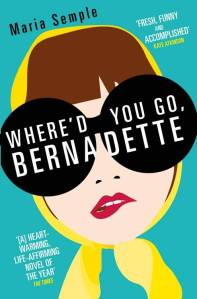
WE LOSE A LOT MORE THAN THE MAIN CHARACTER IN SEMPLE’S SECOND BOOK

Standard


whered-you-go-bernadette-cvrThere’s a lot to be said for the quirkiness of the residents of Seattle, hey look at Frasier Crane.  Lets not forget that in real life Jimi Hendrix was born there.  It might also have something to do with the amount of coffee they consume, thanks to it being the birthplace of Starbucks. Add to that, each year they have an annual No Pants Light Rail Ride day, where they are encouraged to take off trousers and skirts and show off their underwear on the daily commute, and we thought mum’s doing the school run in their  PJ’s was OTT.

Seattle is also home to one of the largest IT hubs outside of Silicon Valley, being where the Amazon and Microsoft Head Quarters are situated. The MS facility alone has something in the region of 40,000 staff working there, spread over 17 buildings on a campus covering 500 acres, so much so it needs its on private bus network called the Microsft Connector to enable it’s staff to get to and from work. Its on board these buses and this campus as well as the Seattle environs that most of this months book take place, its Where’d You Go Bernadette by Maria Semple (www.mariasemple.com), published by Little Brown & Company (www.littlebrown.com) in 2012.

Now, I like my humour witty – quick, incisive and accurately honed to the unexpected target. And I like my satire served with an undertone of viciousness.

Maria Semple’s  humour (she wrote for “Arrested Development”) is very much in the tradition of farce: slapstick, ‘wacky’ and laid on thick.  Her satire relies on over-the-top rants and exaggerated caricature that have as much bite as a soggy cracker.

So I HATED this book! I could – and probably should – stop there. But I feel the need to explain this extreme reaction. Actually, that’s not true. The real reason is that, having read the book, I want to have a good rant to get it out of my system!

When we first meet the book’s protagonist, Bernadette, she’s living the life of a semi-recluse with her daughter and husband in an almost derelict house on an overgrown lot in Seattle. An architect by profession, Bernadette has forsaken work to devote herself to her daughter, Bee, who was born with a heart defect. Bee is now fifteen, a straight-A student and more than capable of looking after herself. She has to. Bernadette, poor pet, is incapable of doing anything. For 75c/hr she has outsourced virtually all every-day activity to an Indian online personal assistant, to whom she gives personal and family information, including banking details. Bernadette’s husband is a Microsoft ‘guru’ – a level 8 corporate VP – with a commensurate large salary. Her daughter is “a pure delight. Her love of learning is infectious, as are her kindness and good humour”. Both of them love Bernadette dearly.

seattle-skyline

So Bernadette’s life is hell.  She has to put up with ordinary people.  She even has to interact with some of them. She disparagingly refers to other mothers at Bee’s private school as ‘gnats’ and treats them accordingly – swotting them out of her way. One of the main reasons Bernadette doesn’t like leaving the house is “because I might find myself face-to-face with a Canadian………..to Canadians everyone is equal ………..The thing Canadians don’t understand is that some people are extraordinary and should be treated as such”. Other reasons for Bernadette not leaving the house include infuriating 5-way street junctions, having to wait at traffic lights, having to step over “runaways, drug addicts and bums” on the way to shop in Nordstrum. What an imposition! How dare they BE there!

Bernadette is, of course, a genius. (We know this because she’s won a genius prize!!). And her genius is being suffocated in the mediocre, social-climbing, Microsoft shallows of rain-sodden Seattle.

What’s my problem? This is a fantastic set up for brilliant biting satire! And it could be. Except that Semple wants us to IDENTIFY with Bernadette!! To empathise with the trials and tribulations she endures by having to stoop to doing anything mundane – like living a life. We’re expected to applaud Bernadette’s oh-so-superior dismissal of the pretentiousness of the ‘gnats’, her ridicule of her husband’s granola-eating, bicycle-riding lifestyle, her disparaging of Microsoft, the people of Seattle and – well, everything.

Now, don’t get me wrong here. I enjoy ridicule of middle class pretentiousness, social climbing and the ‘dairy-free, gluten-free, whatever-comes-into-my-head-free’ attention seekers. Some of Semple’s pithy lines even generated a smile or two. But derision of these traits is so much a part of the ‘look-how-smart-and-different-I-am’ supercilious pretentiousness of the exact same social-climbing middle class that it packs as much satirical punch as a dairy-free wheatgrass smoothie does taste.

There is a point about halfway through the book where Bernadette’s long-suffering husband gets so alarmed and pissed-off by her behaviour that he arranges to have her committed to a psychiatric institution (or ‘loony bin’ as Bernadette herself describes it).  It’s then that Bernadette disappears. What a pity! The ‘I-am-so-exceptional-that-it’s-the-world’s-responsibility-to-do-what-I-want’ Bernadette in a loony bin? Now THAT would have been worth reading.

But, no, Bernadette evades her persecutors, travels to the Antarctic and ‘finds herself’ in a project to build a station at the South Pole – a place she particularly likes because she could put her hand “on the South Pole marker and declare that the world literally revolved around me”. Bee and her much-derided husband, Elgie, track her down and they all live happily ever after. Time for me to reach for the sick-bag.

OK, rant over. I, unlike Bernadette, must return to the real world where not everyone shares my tastes or opinions. And in this instance, very few do. Even in my own bookclub I was in a small minority. Most thoroughly enjoyed it. Hilarious, entertaining, clever, quirky and touching were some of the adjectives they used to describe it.  A scan through Goodreads reviews (and there are lots of them) shows an abundance of four and five-star ratings with only a small sprinkling of one-stars from cranks like myself. Not for the first time, I have to acknowledge that my funny bone is in a different place to many others. If you enjoy “Arrested Development” – and I understand that quite a lot of people do – you will likely also enjoy this book. So go for it!

But I retain a small personal fantasy. At the same time as Bernadette escapes to the

maria-semple-ralphey

Maria Semple & Ralphy

Antarctic, avoiding committal to the looney bin, Semple’s writing style changes. Up to Bernadette’s disappearance the plot-line is presented at a fast ‘rat-at-tat’ pace in the form of emails, notes and texts. After her disappearance it changes abruptly to a descriptive presentation of Bee & Elgie’s sleuthing.  The tone also shifts from ranting diatribe to warm-fuzzy emotion.  Even those in my bookclub who thoroughly enjoyed the book found this unexpected shift disconcerting – and liked the first part considerably better than the second.

So, my fantasy. Could it possibly be that Semple wrote the first half with the intention of putting Bernadette in the loony bin, but did an abrupt swerve to avoid alienating a large swathe of her target market?

Total fantasy, I’m afraid. Semple is a pro. She cut her teeth as an LA comedy writer in the ‘90s and noughties. As well as Arrested Development, she also wrote for the other highly successful comedies Ellen, and Mad about you and for Saturday Night Live.  Her writing resonates with a large audience. Where’d You Go Berenadette  is her second book her first was This Ones Mine published in 2008, while her third novel, another comedy also set in Seattle called Today Will Be Different, has just been published.

Bernadette was a year on the New York Times Bestseller List and a feature film – rumoured to star Cate Blanchett as Bernadette – is in the pipeline. No stars for guessing that I’m unlikely to be heading to see the movie. Unless… (fantasy alert)…. there’s a change of script … Bernadette ends up in the loony bin… Please!!

Reviewed by Clare O’Connor

GROTHAUS’S DISSATISFACTION WITH SOCIETY LEADS TO AN EPIPHANY OF A DEBUT.

Standard


epiphny-jns-cvrModern day human trafficking has its origins in the African slave trade, the first law against slavery didn’t come into effect until the British parliament passed an anti-slavery bill in 1807.  After the African save trade was stopped there was the white slavery, which concentrated on the exploitation and international movement of  women and girls for use in the sex trade. Now a days it accounts for an estimated 75-80% of all human trafficking and of that 50% of victims procured for the sex trade are children, which brings on to this months book. Its Epiphany Jones by Michael Grothaus (www.michaelgrothaus.com) published by Orenda books (www.orendabooks.co.uk ) in March 2016.

Boy can Michael Grothaus write! In this, his debut novel, he shows that he can do it all. Explicit sex, nauseating violence, page-turning thriller, tender romance, heart-breaking loss, pitch perfect characterisation – it’s all here. But the ‘piece de resistance’, the outstanding gem, of this novel is Grothaus’s empathetic and insightful portrayal of Jerry, it’s narrator and main character.

When we first meet Jerry he’s working as a Colour Imaging Specialist for the Art Institute of Chicago. Translation – he spends his day in a dingy basement digitally adjusting colours on reproductions of the Institute’s paintings.  The job is “one step above a peon and a thousand levels below anyone who matters”. He got the job because Roland, a co-worker, is a friend of his mother.

Jerry’s personal life is also pretty typical of the average twenty-something first-world male. He lives alone amid the debris of his unwashed clothes, is sex-obsessed, lies about having a girlfriend and suffers from bouts of depression. But life has thrown Jerry an extra curve-ball: psychotic hallucinations. At times Jerry – and the reader – doesn’t know if what he’s seeing is real or imaginary.

When Roland is murdered and a Van Gough painting loaned to the Art Institute turns up in Jerry’s apartment, his mundane life takes a turbo-charged swerve into the unknown. Enter Epiphany Jones.  A darkly ominous outsider who lives by her wits and has a direct line of communication to God. Jerry first assumes she’s an hallucination – he’s seen her before in a recurring dream. She turns out to be all too real and is convinced that Jerry, and only Jerry, can help her to find and rescue her daughter from sex slavery. Bizarre – but Epiphany can prove Jerry’s innocence so he has little choice but to play along with her.

What follows is a fast-paced thriller that brings us on a tail-spinning journey through the very dark world of child sex trafficking. Grothaus does not spare us. Graphic violence; nauseating exploitative sex; victims murdered, broken and depersonalized by vicious cruelty.  Stuff that I would usually run a mile from. But Grothaus’s narrative style is compelling. A truly talented scene-setter (he has a degree in filmmaking), he hooks you in by expertly sketching a sympathetic character and then, wham! Hits you in the solar plexus. But, unlike the vast majority of sex-and-violence writing that comes across as warped fantasy, when Grothaus causes your gut to wrench and the bile to rise, he also has brought your brain to the very clear understanding that this awfulness does happen. IS happening – in your city, likely only a few kilometers away.

slavery-hands

How does Jerry fare in all of this? Well, Jerry remains very much Jerry. Grothaus deftly avoids Jerry morphing into a competent, capable, adult. And this is the clue to Grothaus’s ability to get the reader to keep reading through some pretty harrowing material.  We’re already emotionally invested in the ‘hanging-onto-sanity-by-his-fingertips’ Jerry, so we have to see how he actually does hang on to his sanity in this grim world.  He grows up a little, but he largely remains the same confused, bewildered anti-hero that we first meet. His stratagems and schemes to get out of the mess he’s in invariably fail. He constantly digs more holes for himself. Only to be dragged, usually unwillingly, out of danger by street-wise Epiphany.

Interestingly, Epiphany’s character doesn’t change much either. But as we learn her back-story and see her navigate the tides of the sex-trade underworld our perspective changes. This is not the world for a trusting, approachable character who plays by the rules. Believing that you have an all-powerful God on your side is a very valuable mind-set in this nasty territory.

I do have a few quibbles, however. Grothaus packs too much into this one book. He could have brought everything to a conclusion much earlier. One half of the book is set in the US and Mexico, the other half in Portugal & Cannes. I got the distinct impression that Jerry was brought to Portugal largely because Grothaus wanted to use location material he had from visiting there. The thriller plot also stalls for several chapters while Jerry falls in love with a local girl. The writing is still very good and the characterizations were more than enough to hold my interest. But I thought I was reading a different book.

And the Cannes section? Here Grothaus’s characterisation skill falters and the plot-line frays more than a little. He doesn’t quite ‘nail’ the narcissistic, self-aggrandising scumbags of the movie business who assume an entitlement to destroy the lives of others to fill the gaping hole that once held a soul. And the working out of the plot dénouement becomes far, far to complicated. I’d need a 3-D model of the mansion it takes place in to follow it! It might work on film, but not on paper.

But none of this takes away from the absolutely wonderful portrayal of Jerry – the inadequate mess who tries so hard to get things right and, despite (often self generated) knockbacks and pretty tough odds, keeps trying. I still get teary-eyed about how he blamed himself for his sister’s death. I want to shout out “It wasn’t your fault, Jerry – you were only a kid”. That’s how much Michael Grothaus reeled me in.

michael-grothaus

Michael Grothaus

Grothaus’s writing ability really shouldn’t come as any surprise. He’s an established journalist known for his writing about internet subcultures in the digital age  and with roots in the film industry. He also knows his topic, having spent years researching sex trafficking. True to the mantra ‘write what you know’, he even worked in The Art Institute of Chicago.

In an Irish Times article he wrote earlier this year, he described his motivation for the book “…you write a first-person debut novel about a guy who has a porn addiction and some readers are just going to think it’s autobiographical. I get that. I do. But what those same readers are right about is the anger. That dissatisfaction Jerry feels? That comes from me – at least part of it. And it’s that dissatisfaction, I believe, that is essential to being a good writer…. Dissatisfaction, used wisely, fuels action. It’s what gets you in front of your keyboard to write that story that holds a mirror up to society so it can see itself as it truly is..” .

His first book is a really good read – I’m recommending it to every teenage boy I know (Jerry as a role-model – Yes!). Let’s hope there’s lots more to come.

Reviewed by Clare O’Connor

STANLEY AND TROLLIP REAP THE REWARDS OF A DEADLY HARVEST IN THIS DARK AND ORIGINAL PROCEDURAL FROM BOTSWANA

Standard

deadlyharvest-coverAccording to the Forbes 2000 list of 2015, the top three pharmaceutical companies in the world were, Johnson & Jonson followed closely by Pfizer and Novartis, together they were worth $722 Billion. It’s feasible that as I write this or you read it, quite a few of your neighbours, members of your family, maybe even you the reader are on one of their medicines. In certain parts of the world, usually below the equator and in under developed countries but not excluding some developing nations, large swathes of the population prefer to rely on another type of medicine. That prescribed by a witch doctor. They don’t make the money that their 1st world counterparts do but they have an equally big following, god like in some instances. In most cases the difference between these witch doctors and your Novartis’s and Pfizer’s is that your local pharmacy doesn’t ask you to supply the raw materials for the cure yourself. This brings me to this month’s book, its Deadly Harvest by Michael Stanley (www.detectivekubu.com) published by Orenda Books (www.orendabooks.com ).
Set in the vast central southern African country of Botswana, one of the continent’s most stable and democratically successful nations. It is the continent’s largest producer of diamonds and also home to some of largest and lushest game reserves. We witness the abduction of a number of young girls in townships around the country’s capital Gaborone. The police in these outlying areas are under resourced and at times not bothered to expend precious energy in the unrelenting heat, to look for school girls who have wandered off. A couple of months after the disappearances Assistant Superintendent David “Kubu” Bengu of the Botswana CID is approached by his newest member of staff Samantha Khama, a cocky young female detective. She asks for permission to look into the cases, as she grew up in one of the townships. To keep her quiet, occupied and out from under his feet he gives her permission. A couple of days later she’s back with clues, which suggest they maybe have been abducted for “Muti” which is traditional medicine. Then, when a senior police officer and a government minister are killed Kubu and Kharma realise they are dealing with the possibility of serial killing Witch Doctor. Will they find the victims in time? Catch a killer protected by black magic ? Whose clients live in fear of it and will do anything to protect the evil medicine man, even using  Muti to derail Kubu’s case and promotional prospects.

This book brought back to my time about 15 years ago when I was working in customer services on the Botswana desk of large international credit card company, which had just introduced one of the first credit cards to the country. The fairly poorly educated population saw the credit limit as an extension of their salary. So delighted were they to have been given what they thought was free money, that they were forever looking for an extension to their credit limit, having maxed out the card by quoting the number in shops even before the actual card itself had arrived from Head Office. Every day the same people usually would phone in going “Arragha… More Pula!”, during my time in that department I got to learn about the country, it’s people and the strange customs such as naming people after what we would consider ordinary everyday items, in the hope it will bring luck or good prospects.

Deadly Harvest is a fantastic read, with a tense original story that draws you

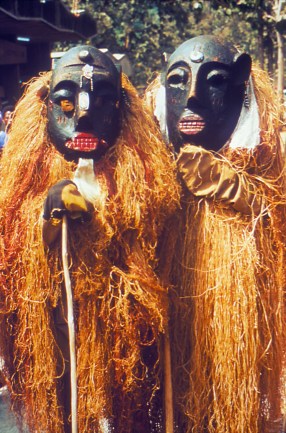
lassa_witch_doctors

African Witch Doctors

in and holds you enthralled from the first to the last page. There is something very ordinary about this police procedural that had me drawing similarities to it and an episode of Midsommer Murders.

Maybe because there’s no fancy CSI – tech driven, American styled storylines. The Botswana lifestyle and culture keep you and the characters firmly grounded a million miles from other stories which feel like they’ve just been transported out of Vegas or NYC.

One of the funniest aspects is that their Forensics department is using a piece of cutting edge lab equipment ! this is however, borrowed from the South African Police Force for another case. Even in their day to day lives the population of this middle income ,developing nation still have to use internet cafés or shared public computers in pubs and shebeens to do basic stuff on the internet.

Again this helps draw out the real beauty of this non-pretentious African nation which unlike it’s it neighbours has been fairly unscathed by political unrest and has gone from having one of the highest rates of HIV in the world to being at the bottom end of the scale now.  Although HIV has left its legacy and this is reflected right the way through book and especially in one of the parallel storylines where David Bengu’s wife is trying to convince him to adopt a friend of his daughters who has been orphaned by the disease.

Assistant Superintendent David Bengu himself is a unique character who through Stanley’s descriptions, had me picturing someone who might look like a result of having fused the genes of Kojacks’s sidekick Stavros and Inspector Morse. Owing to his girth, love of food, opera and wine.

This is the fourth book in the detective Kubu series which was first published in the USA in 2013 and then in the UK late last year. Micheal Stanley is actually a pseudonym for the writing team of South African authors Michael Sears and Stanley Trollip, following in the footsteps of other partnerships using one pen name, such as Chelsea Quinn Yarbro and Bill Fawcett – Quinn Fawcett – who wrote the Madame Vernet series and the Mycroft Holmes series, as well as husband and wife team Nicci Gerrard and Sean French who write crime fiction as Nicci French.

michaelstanley2011lite

Michael Stanley – aka Michael Sears and Stanley Trollip

The other three books in the series are A Carrion of death, A Deadly Trade (The Second Death of Goodluck Tinubu – USA) and Death of The Mantis. A fifth book in series A Death In The Family was just published in August. You can find out more about the authors at their website www.detectivekubu.com

What makes this book such an appealing and a wonderful read is the originality of the story (although I was immediately hooked by the cover art and the blurb on the back) Nowhere else in recent times have I seen the forces of law and order take on the dark forces of black magic Well, not in the last  66 years,  from when James Bond tackled drugs lord ‘Mr. Big’ in Ian Fleming’s Live and let Die. (I am open to correction)

Some could argue John Connolly’s books have law and order tackling dark forces, but Charlie Parker is an ex police detective. Even Botswana’s other great literary export The No.1 Ladies detective agency – written by Scottish author Alexander McCall Smith hasn’t got law and Order going toe to toe with a Witch Doctor, because again his heroine Precious Ramotswe is a private citizen.

This along with the fact that it’s unusual to find a police procedural set in a developing nation punching well above its weight and taking on the ever growing influx of Scandi Crime novels as well as the homegrown British and American stalwarts.  I think that makes this one of the best pieces of crime fiction I’ve read in a while. So as I prepare to go on my honeymoon to the Algarve next week, I’ll definitely make sure that A Death In The Family will be in the case and if like me your heading away soon for a bit of autumnal sun seeking, make sure you take pick up a copy of Deadly Harvest and make friends with an original down to earth detective in the form of Assistant Superintendent David “Kubu” Bengu .

O’BRIEN’S FIRST NOVEL IN A DECADE SLUMPS DOWN IN ITS LITTLE RED CHAIR AFTER ATTEMPTING SHOCK AND AWE

Standard

Little red Chrs cvrDuring my wedding weekend in Lincoln in June, Lincoln castle had some very important guests. they were a segment of the 888,246 ceramic red poppies that were installed in the Tower of London in 2014. The poppies represented the British men and women who were killed fighting in both world wars. This isn’t the first time inanimate objects have been used to represent those slain in battle, on the 6th April 2012 an art installation was unveiled on Sarajevo’s main street, it consisted of 11,541 red chairs which represented the victims of the siege of Sarajevo which lasted from the 1992-1995. In the midst of this audience of empty red chairs were 643 little red chairs representing the children killed during the siege, and that is the inspiration for the title of this month’s book, it’s The Little Red Chairs by Edna O’Brien.

The story centres around the arrival of a mysterious foreigner to a west of Ireland village, he claims to be a faith healer and soon sets up a practice, where he uses his charismatic personality to bring the villagers under his spell. One woman in particular, Fidelma Mccarthy, falls heavily for his charm. When the strangers past – he’s responsible for war crimes in the Balkans – catches up with him, the untimely ending of the relationship in the glare of the media and the close-knit community has long and harrowing repercussions for her. So to try and distance herself from the fallout she goes away to what she thinks is a new life in the UK.

When I said harrowing , I really mean down right in your face gratuitously violent, one scene especially. If O’Brien is going for ‘Shock and Awe’, she hits you straight between the eyes. After that, the rest of the book is rather tame and very weakly stitched together.

At the recent book group meeting at which this book was being discussed, this was the main topics of discussion. There was divided views whether it was really necessary. Some of the members found it quite difficult to carry on reading after that scene , taken along with the inept actions of the main character leading up to this event, they found it a poor piece of writing by one of Ireland’s leading literary figures .

The book is basically two stories, the first part which is the story of the stranger from the Balkans arriving in the village, the relationship and its climax.Then the part of the story set in England reads more like a series of short stories about the lives of refugees in the so called land of the “Bright Lights” and “Streets Made of Gold”.  It was generally agreed that O’Brien had seemed to run out of steam after the ending of the relationship and instead of just writing some sort of short story or Novella, she either decided or was advised by her editors to hang a couple of short stories off the end to give it some sort of substance, which I feel it doesn’t.

Born in Co. Clare Ireland in 1930, Edna’s mother was a strict Irish mammy and O’Brien has often described her Irish upbringing as “fervid” and “enclosed”. She trained as a pharmacist and after marrying the Irish writer Ernest Gebler, against her parents’ wishes,they emigrated to London, where she still lives. There, she started writing full time. Her first book of 17 novels, The Country Girls was published in 1960, others included August is a Wicked Month (1965), Zee & Co (1971) and finally The Little Red Chairs in (2015) published by Faber & Faber. She’s also written nine collections of short stories as well as Plays, TV scripts and works of non-fiction.

Edna O'Brien

Edna O’Brien

O’Brien is among a select and elite group Irish literary luminaries who have had their books previously banned in Ireland, but as history has often shown, banning something doesn’t make it less popular but on the contrary more desirable. The majority of her books  express her despair over the condition of women in contemporary society in particular, they criticize women’s repressive rural upbringing. Her heroines search unsuccessfully for fulfillment in relationships with men, often engaging in doomed love trysts as a escape from their loneliness and emotional isolation, something which is seen clearly in The Little Red Chairs.

Near the end of the book Fidelma visits her ex-lover, now a convicted war criminal – whose inspiration is clearly Radovan Karadzic . The scene is so out of place and really does nothing for the story that again begs the question as to why it’s there? If its to take the rough edge off the story and conclude it somehow, it doesn’t reach any real conclusion just adding  a few extra pages to justify the print costs maybe?

Sarajevo Chairs

The Red Chairs of Sarajevo

The characters in the village are stage Irish and are in keeping with a style of character that often populates O’Brien’s books. They are always 20 years out of date, if it was an attempt to see how the remnants of modern warfare might fit it modern Ireland, firstly you have to write about modern Ireland and stop harking back to “The Quiet man”. As for the London stories, they are not really believable and have been written better by other Irish writers.

My advice is, read it if you are a fan of dark tales about repressed Irish women stuck in another era, otherwise a more enjoyable book set in the aftermath of the Balkan war is People of The Book by Geraldine Brooks, previously reviewed on this site.

HOURICAN TAKES A VERY PRIVILEGED TIGER BY THE TAIL IN HER FIRST NOVEL

Standard


IrelaPrivelged Bk cvrnd has always been seen as an island of saints and scholars and, under the latter you’ll find writers, although not all writers are scholars. Among the many great writers who cut their literary teeth and honed their trade on everything from the Book of Kells to  The Sea, The Sea, were women.  Every year a brace of new female writers  try to emulate the successes of their predecessors like Maeve Binchy, Kate O’Brien and Iris Murdoch. One such hopeful is the author of this months book, its The Priveliged by Emily Hourican published  in April 2016 by Hachette Ireland (www.hachettebooksireland.ie).

My timing was never great and I moved to Dublin just as the boom ended and the recession began. In Hourican’s debut novel , her trio of women are just that, growing up in an affluent Dublin of the early naughties. Amanda, Stella and Laura all attend a private girl’s school but in other respects couldn’t be more different in their upbringing and backgrounds. Amanda is the beautiful, indulged popular girl, her parents riding the crest of the boom. Stella is the hardworking daughter of aspirational middle class parents and Laura has a more bohemian background as an artist’s daughter. Mallory towers this ain’t though. We are plunged into a world with few restrictions,  casual sex and drugs of every type. This is Amanda’s world and Stella and Laura are drawn into it, initially as detached observers eager to enjoy the benefits of her privileged lifestyle and later as friends, seemingly powerless to prevent Amanda’s decline into degradation.

In my opinion, this novel raised some interesting questions on celebrity, friendship and loyalty. As a working class girl, who grew up on a Nottingham council estate and attended a comprehensive, I at first found it difficult to empathise or to be interested in the characters but as they developed I became more invested in them. It was an interesting choice to use three female characters. I felt between the three you almost got one balanced individual; Stella’s drive and sense, Laura’s generosity and Amanda’s kindness would combine nicely!

This is probably the last time period in which the youthful years of the girls could be set. Now nothing would be private and the story could have been told in a series of ill advised snapchats. I did feel the mechanisms of drug addiction were a little simplified in relation to the story. Stella and Laura managed to avoid addiction despite partaking willing and frequently in various substances. Is it only those with underlying issues who become addicted? I doubt it. However, this was a story about a girl who seemed superficially to have it all and who squandered it. Redemption comes in the form of her friends and there’s hope for a happy ending for all.

The characters were well drawn and we saw the good and bad in everyone. I felt like I was suspending belief in some of the scenarios around the D4 upbringing as I have no experience to compare it with it but assumed Emily was writing a little from her own experience. However, I see from the blurb that she grew up in Belgium so perhaps my confidence in her accuracy is misplaced!

Emily Hourcn

Emily Hourican

This is Irish author Emily Hourican’s (www.emilyhourican.com) first work of fiction, her first book a memoir titled How to (Really) Be A Mother was published in 2013. It documented  how she stopped faking it as a mother and learned to become her own version of the real thing. She’s more well known in Ireland as a journalist with the Sunday Independent newspaper as well as the editor of various consumer and trade publications over the years. She recently came to prominence when she wrote a No Holds Barred“column in the Sunday Independent chronicling her battle with an unusual form of viral mouth cancer.

I’d recommend this book for a summer read to my female friends. If you enjoy Heat and Hello magazine and  a bit of voyeurism into the lives of the privileged, this story is right up your street. Mine is probably more Corrie!

Reviewed by Georgina Murphy

IN HER WAKE, JENNINGS LEAVES THE READER DISTURBED BUT EAGERLY SEARCHING FOR HER OTHER BOOKS.

Standard


In Her Wake CvrAccording to the National Center for Missing & Exploited Children 800,000 children go missing in America every year. Down through history there have been high profile cases, such as the Lindbergh baby – kidnapped in 1932 and most recently Madeline McCann who was abducted in Portugal in 2007. Even with the development of Amber Alert schemes, child abduction is an ever present scourge on society. Thus we come to this months book, its In Her Wake by Amanda Jennings published by Orenda Books ( http://www.orendabooks.co.uk) in April.
“In Her Wake” is promoted as a physchological thriller. But if you’re looking for those sharp-intake-of-breath or ‘oh, no I can’t look’ moments, they’re not here. What is in this book is far more harrowing, far more disturbing than momentary shock-horror thrills.

Amanda Jennings takes a topic that we all recoil from – child abduction – and presents  it in a way that forces us to look beyond the stereotyped portrayals of the tabloid press. This is not abduction by a sexual predator.  This is opportunistic abduction – the ‘spur-of-the-moment’ action of a distraught woman desperate to have a child.  A single, momentary decision that sends shock waves through the lives of the child, the abductor, her husband and all members of the child’s family.  The moment that forever after divides their lives into the normal ‘before’ and the abnormal ‘after’.

How do a childless couple explain to their families and friends that they have just acquired a three-year-old daughter? Or do they? How do they ensure that nobody – ever – puts two and two together and links them to the abduction everyone has heard about on the news?

How does a mother cope with having a child stolen from her? Not struck down by illness or fatal accident; not taken by a partner or the social services – stolen. Plucked out of the centre of her life. Disappeared without trace. To where? To what?   What’s everyday life like with those questions perpetually ricocheting through your mind?

And the abducted child’s father? Her sister?  If only they had done / not done … If only they had……..What happens when your life is continually corroded by the dripping acid of guilt?

And the child – what of her?  We meet her as a grown woman in her late twenties on her way to her mother’s funeral.  Married to a fussy, controlling older man she has an emotionally strained, distant relationship with her father.  The loss of her mother has hit her hard, she is reeling with grief. But it is the events that unfold over the coming days that splinter her life apart.  She isn’t who she thought she was. The woman just buried was not her mother.  This is for Bella what the moment of abduction was for the others – the moment that forever more divides her life into ‘before’ and ‘after’.  Would she be better off not knowing? Not finding out? Continuing to live the life she had grown into? But once Pandora’s box is opened, there is no going back.  If she’s not Bella, who is she?

So begins Bella’s quest to find out who she really is.  A quest in which Jenning’s expertly – and unobtrusively – poses all of the above questions and, through some truly wonderful characterizations, explores potential answers.

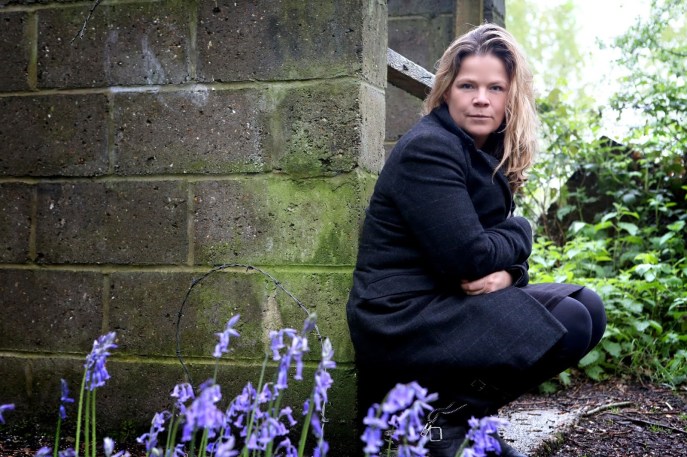
Amanda Jennings

Amanda Jennings

This the third book of British author Amanda Jennings (www.amandajennings.co.uk), her previous two books are  Sworn Secret (2012) and The Judas Scar (2014). She previously worked for the BBC and and sitcom script that was shortlisted by them was was made up her mind to write full time after the birth of her second child. She’s also a regular guest presenter on the BBC  Radio Berkshire’s weekly book club.

I mentioned above that the plot-line of this book is not that of the standard physchological thriller. Nor are the character portrayals. Except for one carbord-cut-out (Greg)  all the other main characters are beautifully drawn – real-life people that the reader can empathise with, even when their actions are driven by cowardice (Bella’s ‘first’ father), despair (Bella’s birth father) and self-centered pomposity (Bella’s husband).  And the description of the unfolding of the relationship between Bella and her sister is truly heartwarming.

Set against the backdrop of the Cornish coast, the plot unfolds with some very unexpected

Madeleine-McCann

Madeline McCann

twists and turns – all but the last ‘near-death’ scene reflecting Jennings talent at presenting a ‘curve-ball’ that is both surprising and, once described, totally obvious.  More than once did I find myself exclaiming – “Oh Yes, I can see that happening , but I’d never have thought of it!”

This is the first Amanda Jenning’s book I have read but, given the complexity of both her character portrayals and her plot-lines it won’t be the last.  A thoroughly good – and absorbing – read.

NO SIGN OF STAALESEN’S STAR FADING IN HIS LATEST TRANSLATION

Standard


Where Roses Never Die cover Vis copy 2It  was only last year, when I read my first Gunnar Staalesen’s crime fiction novel, We Shall Inherit The Wind that I realized that Nordic Noir hadn’t been created in the ‘90s by Jo Nesbo, Henning Mankel and Steig Larsson. With 20 novels in his Varg Veum crime-detective series published since 1977, Gunnar Staalesen’s reputation as one of the pioneers of this gritty, socially-conscious, self-aware style of crime thriller is truly deserved.  In this months book Where Roses Never Die  – the latest of Veum series to be translated into English and published in June  by Orenda Books http://www.orendabooks.co.uk  –Staalesen does not disappoint. His time-honed mastery of plot, characterization, story-telling and atmospheric scene-setting is evident throughout.

At the outset of the story, Veum is in a sorry state. Still mourning the three-year-old death of his girlfriend, Karin, his days revolve around the next glass of aquavit. Socially isolated and with little work, he’s hanging on to a semblance of normality by his fingernails. His lifeline appears in the form of Maja Misvaer, the mother of a 3-year old girl, Mette, who had disappeared without trace almost 25-years earlier. The case had never been solved and within 6 months will be time-barred. So a desperate Maja, who, understandably, has never come to terms with the unexplained disappearance of little Mette, comes to an equally desperate Veum in a last-ditch attempt to find something – anything – that could prompt a reinvestigation of the case.

And she has, of course, come to the right place. In classic fictional gumshoe mode, Veum is that dogged workaholic who leaves no stone unturned, no nuance unprodded and no secret unearthed in his terrier-like approach to solving the case. Inevitably he unearths more secrets than those involved are comfortable with – Maja herself included.

With Staalensen’s consummate mastery of storytelling, a multi-faceted plot unfolds, drawing together a series of seemingly unrelated elements: Mette’s disappearance, a recent jewelry heist, the relationships between neighbours in the tightly-knit community where Maja lives – and from where Mette had disappeared. For my liking, some of the links between elements were a bit thin and tenuous and the eventual denouement stretched my credibility to straining point (to my mind there were too many people involved for the final secret to be maintained for 25 years).

But even with these reservations, the book was compelling reading. And this, of course, is where Scandinavian crime writing trumps over it’s standard UK and US counterparts. Because it isn’t just (or even primarily) a case of finding out ‘whodunit’. It’s not simply a ‘Where’s Wally’ exercise in recognising the clues and putting them together with a ‘Hey, presto – he’s the murderer’ outcome. The Scandinavian approach also focuses on the aftershocks. The sundering judders, shudders, waves and even ripples that spread out into the lives of people affected by the trauma of the central event.

It’s at this that Staalesen really excels. With exquisite subtlety, via descriptions of a character’s appearance, clothes, facial expressions, involuntary responses – even the pictures on the walls and arrangement of furniture in their homes – he paints a detailed picture of their “back story”. A story that the reader cannot fail to be moved by. I defy anyone to read Staalesen’s description of Maja on that first visit to Veum without feeling empathy for a woman struggling to keep going – even before we hear her story. Or not to be moved to sadness at the corrosive effect the keeping of a shameful secret has on the young Joachim Bridgeland.

The story ends on a hopeful note – for Maja, Joachim and for Veum. He’s solved the crime and has a new romantic interest in his life. But aquavit beckons … will he succumb? We have to wait for the translation of the next in the series, No One Is As Safe In Danger, already published in Norwegian.

Gunnar Staalensen 16

Gunnar Staalensen

The story was inspired by the actual disappearance of two young girls in Norway in the ‘70s. Unfortunately these real-life events have not ended on a hopeful note. What happened to the young girls is still unknown. Staalesen choose the title of the book from the gospel-style hymn “Where Roses Never Fade”, the Norwegian version of which is called “Where Roses Never Die”. Commenting on the title in a recent interview he said “for the people left behind there is comfort to be found in the belief that close relatives who are dead have simply traveled to another and much happier world: a place where the roses neither fade or die.” We can only hope that the families of these two girls – and the families of all children who have disappeared – can find some solace, somewhere, to help deal with such a catastrophic tragedy.

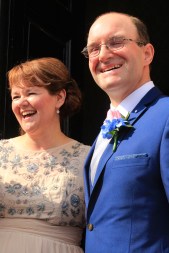
If you’ve thought ‘The Door’ has seemed shut for the past month, it has and there’s a good IMG_2659excuse, I got married. It’s been hard to find time to write and upload reviews for the latter
part of May and most of June, what with assisting my fiancee – now wife to juggle numerous details of the nuptials, while enjoying the ceremony and various events and parties in both Lincoln and Dublin. Now that it’s done and dusted normal service will resume.