INITIALLY CONFUSING. THE GIRL YOU LEFT BEHIND ENDS UP FINDING THE RIGHT POSE TO TELL ITS TALE.

Standard

Girl You Lft Bhnd CvrThere a was story in the news recently about the claim by two Polish men that they know the location of  a mysterious Nazi Ghost train which disappeared  at the end of the second world war. The train which  is supposedly laden with gold, gems, art work and weapons was hidden by a special German unit fleeing the advancing Russian forces at the end of the war, when it was parked in a long forgotten tunnel in Poland and blocked up. Add to that the discovery, 2 years ago, of a horde of stolen art in the walls of a Munich apartment and the success of the movie The Monuments Men last year, you’d wonder why very little is heard about art being stolen during world war one. Quite simply the Treaty of Versailles catered for repatriation of stolen art, were as this wasn’t the case after WWII. One of the pieces found in the flat in Munich was “Woman in a Chair” by the French artist Henri Matisse, this could have been the inspiration for this month book, “The Girl You Left Behind” by JoJo Moyes (www.jojomoyes.com).

The book starts in France midway through First World War. Sophie Leferve is running her family’s hotel the Le Coq Rouge in the northern  French town of St. Perrone not far from where the battle of the Somme is raging. The town is under the control of the German army and it’s brutal rules and regulations. Shortly after arriving in the town the local German Commandant orders the hotel to be used as a mess for
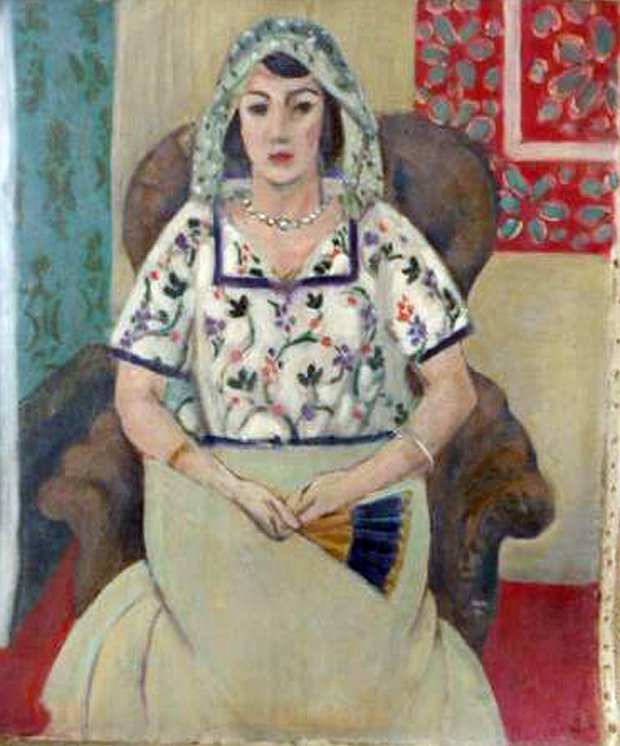
Woman Sitting In A Chair by Henri Matisse

Woman Sitting In A Chair by Henri Matisse

his officers and one night after eating the commandant discovers a portrait of Sophie painted by her husband Edouard,  a well known artist,who is away fighting the Germans on the front. The commandant immediately falls for the painting. A couple of weeks later after hearing Edouard has been captured and held prisoner Sophie secretly approaches the commandant and attempts to trade the portrait for her husband’s safe return. But in an apparent  misunderstanding she is arrested and taken away to an unknown fate.

Jump forward ninety years to  London 2006 and Liv Halston a young widow is struggling to stay on top of her mounting debts and living in a large state of the art waterfront house designed by her late husband. In the master bedroom hangs the portrait of Sophie Leferve titled “The Girl you Left Behind”. While out on drinking session on her husbands anniversary, her bag is stolen. That’s when she meets Paul McCafferty an ex- new york cop and now a stolen art specialist, they fall for each other then one night she brings Paul back to her place and he discovers the painting in the bedroom. Paul’s company has been hired by the Leferve family to find the painting that went missing during the war. The star crossed lovers thus find themselves on opposing sides of a bitter custody battle for the painting. Can Liv retain ownership or will “The Girl You Left behind” make it back to France? What is the real story about how the painting ended up on the other side of the English channel and what ever became of Sophie? Will Liv and Paul’s relationship survive the court case?

My initial thoughts on the book were that it was a bit disjointed. The first part is a gripping story about a family surviving under the suffocating tyranny of German occupied France. This pulls you in from page one and then unceremoniously dumps you into the present day without so much as Delorian and a flux capacitor. For the first couple of pages after this transition I was lost, wondering had there been a printing error. But alas no, it was planned. What Moyes has tried to do is marry together an eerily accurate war story with a piece of “Chick-Lit” and  some day time TV court room drama thrown into the mix for good measure. But this  she does with masterful aplomb, that shows what a skilled seasoned writer can do with the literary ingredients of Ready Steady Cook.

The second part of the story does come across rather ‘Rom Comie’, owing primarily to romance being Moyes’s preferred genre. If it were made into a movie it would have Hugh Grant’s and Richard Curtis names all over it but after the cold hard realities of occupied life, this is a warm and humorous  tale, which does get interesting when the tug of war court room drama kicks in. Then you start rooting for Liv to win, but also secretly for her romance with Paul to survive. You have to feel sorry for Liv, she’s a real down on her luck young widow struggling to get over the loss of her husband. Despite starting out as a difficult transition , this quickly re covers to deliver a charming well blended tale stretching across a generation and two wars.

JoJo Moyes

This is the first book of Moyes’ that I’ve read, although I’ve been aware of her for a while, mainly because being an Everton supporter, I noticed she  shares her surname with one of our great managers. This is the ninth book of thirteen, the thirteenth “After You” is due to be published at the end of September 2015. The former journalist and Arts correspondent started writing in 2002 with her first novel Sheltering Rain, the others include Foreign Fruit (Windfallen – U.S.) 2003, Ship of Brides 2005 and  Me Before You 2012 of which her thirteenth book is a sequel.  Her big claim to fame is that she is one of a small group of authors who have won the coveted Romantic Novelists’ Association’s Romantic Novel of The Year Award twice.

So, if like me, the unrelenting news of about the ongoing migrant crisis in Europe is getting you down. Pop into your local  book store or download a copy of this book and lose yourself in a unique blend of genres from an acclaimed British writer.

BURIAL RITES IS A POWERFUL DEBUT NOVEL BY AN AUTHOR FROM DOWN UNDER, SET IN THE HARSH GREEN WASTES OF ICELAND

Standard

BURIAL-RITES CVRSitting out in the Atlantic almost aloof from the rest of the continent at the northerly tip of Europe, is the island of Iceland. Despite what the name suggests, Ice is scarce compared to it’s neighbour Greenland.  Another rarity in Iceland is Crime, according to a report by a global study on homicide published 2011 by the UN, Iceland’s homicide rate never went above 1.8 per 100,000 head  of population annually over a  ten year period between 1999-2009. Thus it took an Antipodean, to delve into the annals of Icelandic history to find a crime with an interesting tale. That’s this months book – Burial Rites by Hannah Kent (www.hannahkentauthor.com).

Iceland, 1828. A closed rural society governed from far-off Denmark. Two men are murdered on a remote farm and their bodies partially burnt. The shock vibrates throughout the whole country.  An example must be made of the murderers. They must be executed. One of them is Agnes Magnusdottir, a 33-year-old maid-cum-farmhand.

There is no executioner or executioner’s axe in Iceland. A blacksmith is commissioned to make the axe. A farmer must be trained to carry out the beheadings. Meanwhile, Agnes is lodged with a crofter’s family (there are no prisons in Iceland, either) – a family who does not at all welcome the idea of having a murderess in their midst.

Based on these actual events, “Burial Rites” tells Agnes’ story.

Historically, Agnes Magnusdottir was the last woman to be executed in Iceland for the murder of her employer and lover,

Natan Ketilsson, and a farmhand, Petur Jonsson.  The murders and the subsequent execution of Agnes and one of her co-accused, Fridrick Sigurdsson, are knitted into Icelandic history and folklore with Agnes generally being portrayed as “an inhumane witch, stirring up murder”. In writing this novel, Hannah Kent set out to “supply a more ambiguous portrayal of this woman”. In this she succeeds admirably.

Reconstructed from historical documents and re-envisaged, Hannah Kent’s Agnes was born the illegitimate daughter of a servant girl. At age six her mother left her with “A lie for a father. A head of dark hair.  A kiss. A stone so that I might learn to understand the

agnes-grave

Agnes’s Final Resting Place

birds and never be lonely”.  At age eight her foster mother died in childbirth and she was “thrown on the mercy of the parish….a pauper. Left to the mercy of others whether they had any or no”. At fourteen, the confirmation records of the parish describe her as having “an excellent intellect” – an intellect that Agnes subsequently decries as being responsible for her predicament. “If I was young and simple-minded, do you think everyone would be pointing at me? No. They’d blame it on Fridrick ….But they see I have a head on my shoulders, and believe a thinking woman cannot be trusted. Believe there’s no room for innocence”.

Be that as it may, it was undoubtedly Agnes’ intelligence that attracted the attentions of Natan Ketilsson, the murder victim.  Agnes fell in love when Ketilsson, a notorious non-conformist and freethinker, singled her out while visiting a farm where she worked because “he could not read me”.  Having become lovers, Ketilsson asked Agnes to move to his farm as a housekeeper. On her arrival, however, she realized that another servant girl, 15-year-old Sigga, was already installed as housekeeper – and in Nathan’s bed! Was it rage and jealousy at this that drove her to stab Ketilsson when the opportunity presented itself? Or, as she insisted, was it Fridrick that killed him and forced her (and Sigga, who’s sentence was commuted to life in prison) to set the fire to cover it up? We are left with this ambiguity.

While Agnes’ story is compelling, the way Kent unfolds it makes it truly absorbing.  We gradually glean all of this while Agnes is spending her last months working on the small-holding of District Officer Jón Jónsson, his wife Margrét and daughters Lauga and Steina.  In the cramped living space of their croft – where everybody, including Agnes and the farmhands, sleep in a communal ‘badsofa’ – little can be kept private. So it is that Agnes’ conversations with her confessor, Toti, a pastor nominated to “prepare her for her meeting with the Lord” are largely overheard.

Initially horrified, the family gradually soften towards Agnes, realizing that, far from being a dangerous criminal, she is very much a product of the harsh, subsistence-living, farming community that they share. Little-by-little, as Agnes displays her skills at farming and domestic chores and as they hear her story, their dismay dissolves, first into pragmatic acceptance “just as well we’ve an extra pair of woman’s hands about the place” and then to respect, compassion and kindness. Particularly poignant is the description of Margrét, the night before the execution, laying out her best clothes for Agnes to wear in the morning.

Throughout, the narrative is interspersed with vivid descriptions of the wild Icelandic landscape, the harsh weather and the hardships of the community’s subsistence existence. All of which serve to convey a bleak and unforgiving backdrop against which the humanity of the main characters shine.

Hannah Kent

Hannah Kent

By any yardstick, “Burial Rites” is an exceptional novel. Exceptional in its intelligent exposition of the characters and their interaction. Exceptional in its evocative descriptions of Icelandic landscape, culture and social history.  Exceptional in the sureness and confidence of the writing.

What makes this truly astonishing is that (1) Hannah Kent is Australian (2) this is her first novel and (3) she was 28 when it was published and – as you can see from her photograph – she looks 18. Eat your hearts out all aspiring writers (Don’t you just HATE her!). I suspect we’ll be reading a lot more from Ms Kent in the future – a wonderful prospect!

HARDISTY BREATHES NEW LIFE INTO AN AGE OLD GENRE

Standard

Abrupt Physics CvrWhat are the physics of dying? Your heart stopping, old age, stroke, cancer. A tragic accident – being burned, murdered….The list is endless. But does the physics relate just to the first person or is it also to do with how death affects those around us and related to us.  I had cause to dwell on this last week when at two thirty in the morning I witnessed two dogs savage a cat in our neighbours front garden. I think I’m still suffering a mild case of PTSD, normally if you yell at a dog rummaging through your bins it will run off… but as much as I screamed and yelled at these two animals from the bedroom window, they were possessed of an age old need to kill and I was powerless to prevent it and one wonders what were the physics behind their need to attack this cat. So to this month’s book. If you were presented with a book titled The Abrupt Physics of Dying, what would your first impressions be? Is it a self help guide to dealing with grief or a medical text book? Would you think it was a thriller? This is the title of Paul E. Hardisty’s debut novel – The Abrupt Physics of Dying.

Published by Orenda Books (www.orendabooks.co.uk), in December 2014 as an eBook and as a paperback in March 2015, its set in Yemen. Claymore Straker is an engineer for Petro-Tex, an oil company who have a number drilling operations in the country. One day he and his driver are kidnapped by Islamic terrorists. They tell Clay their children are being poisoned by something in the water supply which they believe is originating from Petro-tex’s operations. They force Clay to prove to his bosses that the mysterious illness afflicting their families is their fault otherwise his driver and friend Abdulkader will be killed. Clay discovers there is something in the water but when he tries to convince his bosses, samples get lost. He witnesses the company’s head of security murdering an innocent tribal leader and his elders. All the while the political situation in Yemen starts to crumble and the country nears the precipice of civil war. To try and stop the poisoning and prove to the world that Petro-Tex are involved the cover up of an environmental disaster, he must go on the run from his bosses, the government and other shadowy individuals. Along the way he enlists the help of a French Journalist Rania LaTour. Will Clay and Rania get out of Yemen alive , while saving the innocents?

The first thing that occurred to me when I was reading the opening chapters was, Claymore Straker is trying to be Jack Reacher, or at least a half decent copy. The only differences between Paul and Lee is about seventeen books, eighteen if you include Reacher’s latest adventure “Make Me” which is published in September [rubs hands gleefully]. As well as a couple of million in Child’s bank balance, while Claymore has a passport and owns a company. But this isn’t a bad thing, because Lee can only write so fast and in trying to feed the veracious appetite of his fans, it helps to have another author who can sustain the Reacherites and Reacherettes while his films and books are being produced.

Yehemen wadi

The book is a big read at four hundred and forty pages, and makes it an ideal sun lounger or long haul companion. While I did feel it dragged in parts, the story is gritty, action packed and topical. Paul’s background as a Hydrologist and engineer comes out in the scientific detail and his experiences from working in various parts of the world including Yemen flow off the page and you can feel the desert heat and the sand swirl around you.

Paul_Hardisty2

Paul E. Hardisty

This is Paul’s first work of fiction, in the past he’s written a number of educational books including “The Economics of Groundwater Protection and Remediation” (2004) as well as co written numerous other scholarly papers and reports. Canadian by birth, he has worked all over the world in the area of hydrology and environmental science. His life reads like a fictional character. He worked on oil rigs in Texas, searched for gold in the Arctic, befriended PKK rebels in turkey, rehabilitated wells in Africa and survived a bomb blast in the Yemeni capital of Sanaa in 1993. He’s a visiting professor at Imperial College London and director of Australia’s national land, water, ecosystems and climate adaptation research programmes. Not to mention a sailor, private pilot and outdoorsman, who lives in Australia. Harrison Ford and Bear Grylls can all now leave the building.

Another thing that makes this book standout as a great read is the use of Arabic throughout the whole story. Other books will have a minor sprinkling of the local dialect throughout just to give you a taste. In Hardisty’s book you are immersed in the language and Yemeni culture on every page, just when you think you might need a translator, he neatly stitches the translation into the sentence so that after a while you never even notice.

So if you’re looking for a great read to fill the gap between the next Reacher installment in September and your two weeks in the sun. Pack this in your travel bag, dig out your desert boots, water canteen and factor 50 and prepare to be wowed by a new kid on the block. Then when you’re finished, prepare for the next Claymore Straker novel in 2016 courtesy of the first chapter of “Evolution of Fear” at the back of the book.

THE FATHER OF NORWEGIAN CRIME FICTION IS ON THE VERGE OF INHERITING A WHOLE NEW FANBASE

Standard

We Shall Inherit the Wind BF AW.inddDid you know that in the 2013 peace index – a measure of peacefulness among 162 nations according to 23 qualitative and quantitative indicators – Norway was ranked 11th, since then it’s slipped six places to seventeenth in the 2015 index. This is probably not surprising considering the rise in popularity of it’s crime fiction. Thus bringing us on to the second book of this month, it’s ‘We shall Inherit The Wind’ – by Gunnar Staalesen, published in June by Orenda books (www.orendabooks.co.uk).

Ten pages into this book I was thinking “this guy is copying Steig Larsson”.  The atmosphere, characters and settings were all reminiscent of Larsson’s “Girl with a Dragon Tatoo” Millenium trilogy. A quick Google search revealed that I was very wrong. If anything, it’s the other way ‘round. Steig Larsson was copying Gunnar Staalesen.

My mistake was one that no Norwegian would make. Hailed as one of the fathers of Nordic Noir, Gunnar Staalesen has been

Gunnar Staalesen

Gunnar Staalesen

writing successful detective thrillers since 1977 and is Norway’s answer to Raymond Chandler. His series of novels featuring the private investigator Varg Veum have sold millions of copies and spawned twelve film adaptations. However, only six of these novels have been translated into English – which probably explains why he is relatively unknown in this part of the world. If the calibre of ‘We Shall Inherit the Wind’ is anything to go by, that’s definitely our loss.

When we first meet Varg Veum he’s 65 and at the hospital bedside of his long-term girl friend, Karin (yes, girl friend – like Philip Marlowe, Veum has a problem with commitment!). She’s seriously ill and it’s all his fault. Flipping back in time, the story of how he has gotten into this predicament unfolds.

Although Veum has a rule against taking on marital investigations, as a favour to Karin he agrees to investigate the disappearance of her friend’s husband, Mons Maeland. Karin’s friend, Ranveig, is Maeland’s second wife, his first wife having disappeared, assumed drowned, over 15 years previously. Prior to his own disappearance, Maeland was evaluating a plan to erect wind turbines on an island in the rugged, scenic landscape of Gulen in the western fjords. Needless to say, this plan is vociferously opposed by local environmentalists, including Maeland’s own daughter, and supported by local businesses and politicians. Against this backdrop of feuding families and communities, Veum unearths more secrets than anyone involved wants.

While not as compelling or as gritty as ‘The Girl with the Dragon Tatoo’, this is an absorbing story with sufficient suspense and twists to engage and maintain the reader’s interest.  The characterisation of Veum himself is a big part of the story’s appeal. A non-conformist outsider, he says-it-like-he-sees-it, often inappropriately and to his own – and others – detriment.  But he’s no Philip Marlowe. There’s little black-and-white moralizing here. The complexities and nuances of situations and characters are explored and readers are often left to decide for themselves who, if any, are the good guys and bad guys.

Fjord_Norway_2

But the real mother lode of this book is not the plot, Veum’s characterisation or the nuanced approach to social and personal issues. What brings it out of the realm of yet another professionally executed detective story are the descriptions of the west Norway landscape and its communities. I’ve a fairly long list of places to visit on my bucket list and, up until now, Norway wasn’t on it. But Staalesen’s word pictures of the rugged, wild, bleak beauty of the Gulen area has made me re-think.  I would have loved if a map had been included in the book so that I could follow Veum’s journeys among the fjords and islands.

Equally beguiling are the portrayals of the ancillary characters living in this area. They inhabit west Norway in this book, but I’ve met them in the west of Ireland.  You thought that answering a question with a question was a unique characteristic of people from Kerry? If so, there’s a brilliant description of a Kerry woman living on an island in Gulen. Or maybe you thought that finding out that the person you sat beside on the bus to Connemara is related to your first cousin was a uniquely Irish experience? Well, they’ve imported this phenomenon to west Norway too.  I definitely need to go there – it’ll be just like home!

I have one quibble with Staalesen’s portrayal of Veum, though. In one scenario, Veum is sexually propositioned by an attractive, high-flying businesswoman who’s half his age. This smacks of tired old-fashioned male fantasy to me. Or is it a key difference between life in Norway and Ireland? One thing for sure, if it happened in Ireland it’s unlikely that the opportunity would be turned down!

This minor quibble apart, I’ll be looking out for the next two installments Where Roses Never Die and No One Is So Safe in Danger promised for 2016 and 2017 from Orenda Books . Will we found out what 190344 means?

Hat’s off to the translator, Don Bartlett. There wasn’t a moment where I was conscious of this being a translation from the original Norweigan. It read as if it was written in English.

THE UNINVITED IS A TERRIFYING READ WHICH STILL DELIVERS ALL THESE YEARS LATER AND SCREAMS OUT FOR A SMALL SCREEN ADAPTATION

Standard

The Uninvited CvrWhere were you in 1977? Okay so if you are under the age of 38 then it’s a redundant question, me I was in my last year of residing full time in the UK, before my Irish parents decided to return home to Dublin taking myself and my two sisters with them. It was the year of the Queens Silver Jubilee; people were celebrating with nationwide celebrations and street parties. Not to far up the road from where I was living in Buckinghamshire, a family in Enfield in North London where being terrorized by a malevolent spirit. While in South Wales another family where being terrorized an altogether different entity or entities. This is the subject of this month’s book; it’s The Uninvited by Clive Harold.

First published in 1979, by the W.H. Allen Publishing Company which eventually went on to become Virgin Publishing. The book tells the story of the Coombs family, who live on Ripperston Farm on the south Wales coast over looking St. Brides Bay between Pembroke and Fishguard. What started as a close encounter with a large glowing orb which chased Pauline Coombs home in her car one cold clear January night, escalated to shorting out numerous TV’s and a couple of cars, finally culminating in a numerous visitations by men in silvery glowing space suits. There are also ‘Men In Black’ who drove around in a mysterious large silver car  and the strange, almost hysterically funny,  frequent mass teleportation of nearly one hundred cows over a distance of almost mile. That’s not forgetting the radiation burns suffered by the family members and the abductions too. This all took place over the course of a year between January 1977 and January 1978.

The book is written by journalist Clive Harold who was commissioned by an English magazine in 1977 to write a feature on UFO stories to coincide with the release of the film, Close Encounters of the Third Kind. I came across the book last week while on a well deserved holiday in Devon. I’d brought a couple of books with me to read and review, but while casually perusing the bookshelves of our rented cottage in the town of Colyton, I stumbled upon this book. It was the blurb which caught me straight away, with its opening line “It began with a bright light high in the night sky…” and “This story is true, you’ll wish it wasn’t”. Now being a bit of a paranormal fan and a believer in the unexplained, it didn’t need much more to get me to pick it up and dive right in.

ClsEntctr2

This book is the scariest thing I’ve read in ages and had me jumping at the slightest noise, while reading it late at night in a deathly quiet house in the middle of the East Devon countryside. For all I knew I could have been 200 miles away in South Wales. One thing that occurred to me was, why has this not been adapted for TV like other strange occurrences from this time such as the recently aired Enfield Haunting on Sky, starring Timothy Spall and Matthew McFadden. Having read this book, I’m convinced it’s an ideal candidate for a TV adaptation.

As for the Author Clive Harold, my research claims he wrote other books, but there is no record anywhere of any other book. As to what happened to Clive, there are uncorroborated reports that he was at school with HRH Prince Charles and that they met up when the prince visited the offices of The Big Issue in 1997 where  Clive was working as a seller.

Pauline coombs and daughters

Pauline Coombs and her two daughters Layann and Joanne, looking out of a radiation burned window – image from book

Also very little is known of what became of the Coombs family – Billy, his wife Pauline and their four children, Clinton, Kieron, Layann and Joanne in the intervening years. It’s over 35 years since the events of this book and they come across in the book as being rather innocent and publicity shy for fear of being made laughing a laugh stock of.  Their names and images pop up on UFO and Unexplained forums and sites to this day but as to their whereabouts, that’s almost as big a mystery as to who or what visited them and their neighbours in 1977.

There are two types of people in the world, the believers in the unexplained and the skeptics, If  you are a believer like me, then you’ll immediately go on to Amazon to buy one of the few remaining copies out there. While the skeptics may scoff and walk on by.  However, those liberal and open-minded persuasion will enjoy this well written and utterly convincing story from yesteryear, which takes a very serious and non judgmental look at a topic which even today produces evidence which begs the question is there life beyond the stars and have we been visited by aliens?

So if you suffer from nightmares easily, this may not be your cup of tea as this will keep you awake long after you’ve put it down or in my case finished it  in one sitting. Once you have, then definitely  phone home to make sure everyone is okay.

HOBBS’ DEBUT LEAVES THE READER SEEKING RETRIBUTION AND A LOT MORE

Standard

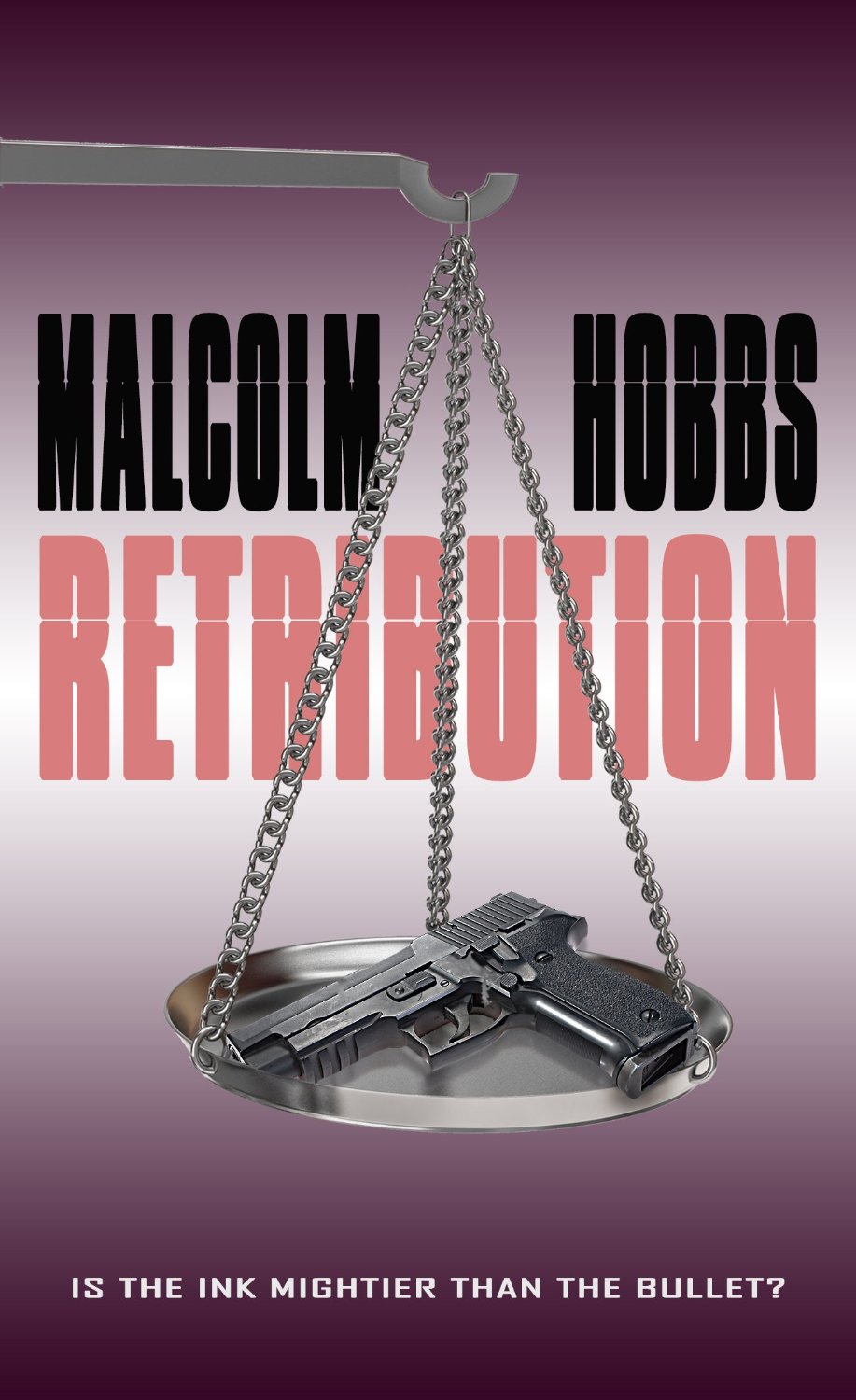
Retribution CvrItaly is famous for many things, great wine, good food, fast cars, football, as the seat of Catholicism, for great fashion and more recently for being over run by African immigrants. We should also not forget its notoriety for crime, in particular mafia related crime. That brings us on to this months book, “Retribution” by Malcolm Hobbs – sent to us by the lovely people at Percy Publishing (www.percy-publishing.com).

Naples, Italy 1969. Two men are gunned down by the Camorra, the city’s organised crime gang.  One, a candidate for the Communist Party, is about to set up a newspaper to expose corrupt politicians who do the Camorra’s bidding. The second, a detective with the Naples Police Department, has just uncovered the identity of a mole who is passing vital police information to the Camorra. Both assassinated men have 14 year-old daughters – only children who adore their fathers and vow to avenge their murders.

The book opens with Rosetta, the daughter of the communist politician, at a meeting presided over by her mother’s father – a crime-boss, head of one of one of the city’s powerful Camorra families.  Steeped in the Camorra tradition, Rosetta is looking for blood – the revenge killing of those who murdered her father. When we first meet Teresa, the detective’s daughter, she is in the Palace of Justice. Her plan is to study law, become a Prosecuting Magistrate and bring her father’s murderers to justice. At this stage of the book – page 30 – I settled down for a good read. This was an interesting set-up.  A thriller that sets vigilantism versus the law, criminal recrimination versus justice. In the gritty underworld of Neapolitan crime and punishment, which would win out?

It proved to be a set-up, alright – but not the type I’d imagined.

My enthusiasm began to wane when, co-incidentally, both girls are sent to the same private school in the Lake District of England (where else do Neapolitan girls go to school?).  Over the next 150 pages they become best friends, Rosetta terrorizes the school bullies, one of their gang is raped by a teacher and Rosetta sets up the teacher’s murder in Hong Kong (as sixteen-year -old girls do!).

The plot (?) then abruptly shifts to a just-married Rosetta – married to the son of a millionaire, of course. To make a long (and tedious) story short: her husband is gunned down, Rosetta murders his killer, goes to prison, uses her Camorra connections to run the place and get released, establishes herself as a Madrina (god-mother), inherits her dead husband’s millions, sets up an internationally successful fashion-designer business and avenges her father’s murder. Meanwhile, Teresa is working in dusty, dingy law offices and has no life beyond her work.

Credibility score – zero. But the coherence factor was the most disconcerting.  Suffice it to say that the narrative was about as coherent as you would get from randomly changing TV channel at half-hour intervals.

What became obvious very early on was that this book wasn’t written for the ordinary thriller reader. No, this book was written for a unique type of reader – the reader who can produce a film or TV series contract from his/her back pocket. But what film could that be? St Trinians meets the Godfather? The Devil meets Prada in Prisoner Cell Block H?

St Trinians

Writing without regard for the general reader is one thing. But to treat the reader as a chump is another. The sucker-punch came at the very end. Having persevered out of a sense of bemused curiosity – how will all these half-developed plots come together? How does it all finish up? I was hit between the eyes with “To be continued”!!!

This book is a set-up – a set-up for the sequel.

My verdict? Dorothy Parker’s widely reputed quip “This is not a book to lightly thrown aside. It should be thrown with great force” immediately comes to mind. Ideally thrown at the author – with such accuracy that it causes significant pain.

“Retribution” is the debut novel of Malcolm Hobbs, the chap who

Malcolm Hobbs

Malcolm Hobbs

has generated my ire and, guess what? the Percy Publishing  site now indicates that  his next book “Don’t Make An Enemy Of Me” is COMING SOON!!

Malcolm’s brief biog indicates that he has experience as a welfare officer and magazine editor and candidly acknowledges that his “own employment was a very far cry from the corruption and malice that I write about”.  Well, sorry Malcolm. There is a reason why every source of advice to would-be authors emphasizes the “write about what you know” rule. It’s because that’s what works. The “what-I-imagine-will-make-me-loadsa-money” approach doesn’t.

THE GIRL ON THE TRAIN IS A NON-STOP EXPRESS THRILLER WITH HAWKINS FIRMLY IN CONTROL AND PROMISING PLENTY MORE DOWN THE LINE

Standard

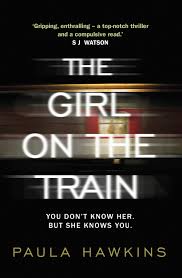
Grl on train cvrTrains and romance have always gone hand in hand and so have trains and mystery. Take the Orient Express, Midnight express, the Great Train Robbery and the Railway Children for example. Then there’s train journeys in general which, just by the mere thought of them, spark ones imagination, the Rocky Mountaineer railway, the Trans-Siberian, even the Eurostar. Commuter trains are no exception, although the daily trip on the DART (Dublin Area Rapid Transit) which links the city centre with the north and south coastal towns and counties, that I’ve taken for the past 20 years or so, doesn’t really have the same inspirational spark as the London underground,  the Metro in Paris or the New York Subway. Although, there are people in those countries who would disagree and would probably give their eye teeth to have the view over Killiney Bay twice a day, instead of the dark ominous brickwork of a tunnel,  I usually have my head stuck in a book. This brings us on to this month’s book.  It’s the current talk of the literary world, and has being suggested as this years “Gone Girl”, it’s The Girl On The Train by Paula Hawkins.

Rachel Watson takes the same train into London every morning and the same train home again every evening. It stops at the same signal each way and over time she gets to know the routines of the people in the houses that she over looks as the train idles there before moving on. So engrossed in the lives of one couple in particular is she, that she has even given them names Jason and Jess. One day she sees “Jess” in her back garden embracing a man not “Jason”. But the coincidental stopping of the train at that  point is not the only reason for Rachel’s interest in those particular houses, she used to live a couple of doors down, before her marriage broke down and now two years on, she’s struggling to get over the break up, which isn’t helped by her alcoholism. One evening she gets off at the nearest station and in a drunken stupor causes a scene at her old home. Coincidentally Megan Hipwell, the neighbour whom Rachel has Christened “Jess” goes missing goes that night – in the aftermath Rachel can’t remember what happened. Just hazy flash backs, which include her ex-husband Tom, his new wife Anna, a man with red hair, as well as waking up next morning bloodied and bruised. Thinking she has vital evidence she decides to go to the police and with her life spiraling into alcoholic oblivion Rachel blunders further into the investigation, when Megan’s body turns up a couple of weeks later. Is Rachel the killer or has she met them and is she about to be their next victim?

The word on the grapevine was that this was a great book to read and I have to say, it was correct. From the get go, Paula Hawkins builds the tension up superbly in the style of the great British thriller writers of the past. Agatha Christie and the recently departed Ruth Rendell would be very proud. The book is told primarily through the eyes of Rachel, but also from the point of view of Megan Hipwell and Anna Watson, the new wife of Rachel’s ex Tom.  At no point can you tell who the killer is until the very last minute. Every one of the main Characters is a viable suspect; it’s been years since I’ve read a book that has left me guessing till the last couple of pages. Also the initial premise of the story, that of what you see in peoples houses when you stare in fleetingly from a passing train, is not something new to any of us. We’re all “Nosey-Parkers”  deep down and we’ve probably see some strange things going on in peoples houses and often wondered what those people are doing, who lives in a house like that or why did they do that to their house or garden?

Its also been a while since I’ve come across such a flawed main character, her alcoholism is so nicely woven into the story-line that you really do feel for Rachel and almost want to step into the pages and take her by the hand and lead her to an AA meeting or pump her full of Coffee. As well as destroying her marriage, it’s also cost her a lucrative PR job in the city, but she still takes the train every day so that her flatmate Cathy thinks she still has a job. It’s Cathy who is her real and only support, despite being the recipient of all the general detritus associated with Rachel’s condition, although her patience is tested and  a sainthood is lurking somewhere in the ether.

Paula Hawkins

Paula Hawkins

Zimbabwean born Hawkins (www.paulahawkinsbooks.com) has been working and living in the UK since 1989. She’s a former journalist who credits reading Agatha Christie as a child as her inspiration, but that it was Donna Tarrt’s Secret History which was the real eye opener to the possibilities of psychological thrillers. This is her first book, but in a recent interview with Penguin Canada she admitted she has hundreds of pieces of fiction stored on hard drives, some a few pages long others tens of thousands of words long.

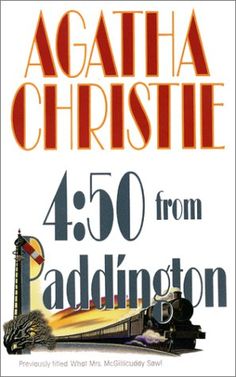
There are loads of similarities to other works set on a train in this 450 frm paddnton cvrbook but the closest is Agatha Christie’s The 4:50 From Paddington. The plot is scarily similar, two trains pull along side each other and a woman travelling alone in her carriage witnesses another woman being murdered in the other train, the only person who can help her is that wiley old sleuth Ms Marple.

So the next time you stare out the train window into houses along the way or another train, be careful what you see, you never know you could be witness to a crime. But in general just smile and wave, even if nobody returns the gesture. Then if you haven’t already, been prompted by this review to get a copy, then jump off at the next available station and pick up this book.

CATCH 22 MAY HAVE CHANGED THE WORLD, BUT IN A CHANGED WORLD IT IS NOW DEFINITELY OUT OF ITS DEPTH

Standard

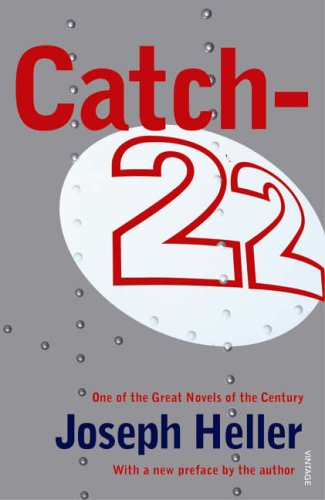
Catch 22If I said Joseph Heller to you, what’s the first thing to come to mind? What if I just said “Catch 22”. Some of you would probably say its a paradoxical situation from which there’s no escape. While quite a few  would think yep read it or its on my “To Be Read” list, because that’s what Catch-22 was. A cult book (if not THE cult book) of the ‘60s. Every self-respecting student had a copy. It’s title is now part of the English language. The paperback edition set sales records. It’s one of the best-selling novels of the 20th century, having sold over 10 million copies.

I first read it in the ‘70s and remember it as being zany, hilarious and hard-hitting. When chosen as our bookclub book recently, I was delighted – imagining hours of laughter and entertainment.  I was sorely disappointed. And it wasn’t only me. Several other avid bookclub readers couldn’t generate the interest or enthusiasm to go beyond page 150 (of 536).

Why? Because Catch-22 is a book of it’s time – for it’s time.

Published in 1961 just as US involvement in the Vietnam war was escalating, it resonated with the growing protest movements that epitomize the 1960s. Often cited as an anti-war book, Catch-22 was more than that for the ‘60s generation who were ripping up their parents’ rule book and challenging all the givens they were expected to live by. It was anti-war, anti-religious, anti-capitalist and anti-authority. And – most particularly – it cocked a snook at all these sacred cows by ridiculing and making fun of them. It was Heller’s satirical approach that truly caught the ‘zeitgeist’ of the ‘60s

Set in the second World War, the book’s main protagonist, Yossarian, is a bombardier whose life is more threatened by the machinations of his superior officers than by German anti-aircraft gunners. Yossarian’s commanding officer, Colonel Cathcart, who is solely interested in his own career advancement, continually increases the number of bombing missions his men have to complete before being discharged. If Yossarian was crazy he could be discharged on medical grounds but – the Catch 22 – in the situation he’s in, claiming to be crazy is proof of his sanity.

Heller’s depiction of the predicament that Yossarian and his fellow soldiers find themselves in is sometimes poignant, sometimes insightful and – most of the time – over-the-top, slap-stick-style satire.  This works for about the first 100 pages but then becomes repetitive, relentless and boring.

There are some gems, though. My favorites include the moment of revelation when the Chaplain, having lied for the first time, discovered “the handy technique of protective rationalization… It was miraculous. It was almost no trick at all, he saw, to turn vice into virtue and slander into truth… brutality into patriotism and sadism into justice. Anybody could do it; it required no brains at all. It merely required no character.”

Also up there with the best is the doctor’s predicament when the plane he was supposed to be in (but wasn’t) was shot down. As there were no survivors, he was dead. The army record said so. When his wife, after a period of mourning, received the widow’s pension she and their children moved home – without leaving a forwarding address.

But the true hero of the book has to be Yossarin’s tent-mate, Orr, the “happy and unsuspecting simpleton” who ditched his plane in the sea on virtually every mission. Though he worried about Orr’s ability to look after himself, Yossarin (understandably given Orr’s record) avoided flying with him, despite Orr’s repeated requests that he do so. But it was Orr, the simpleton, who successfully beat the system by ditching his plane (safely, having practiced this to perfection) and rowing to neutral Sweden using the plane’s emergency dinghy. A true subversive!

Joseph Heller

Joseph Heller

Catch 22 was American author Joseph Heller’s debut novel, he first had the idea for the story in 1953 when the opening lines came to him while sitting at his desk one day, within a week he’d written the first chapter and sent it to his agent. He only started to write the rest of the book a year later . The book was finally published in 1961, not before the title which was originally Catch 18 was changed to 22 so as not to be confused with Leon Uris’s Novel Mila 18. After that he went on to write five other novels including a follow up to Catch 22 called Something Happened, in 1971. He wrote a number of plays and TV scripts most of which had a an anti-war theme to them. In 1981 Heller was diagnosed with the debilitating illness Guillian-Barre Syndrome, after a prolonged period of recovery he married his nurse.

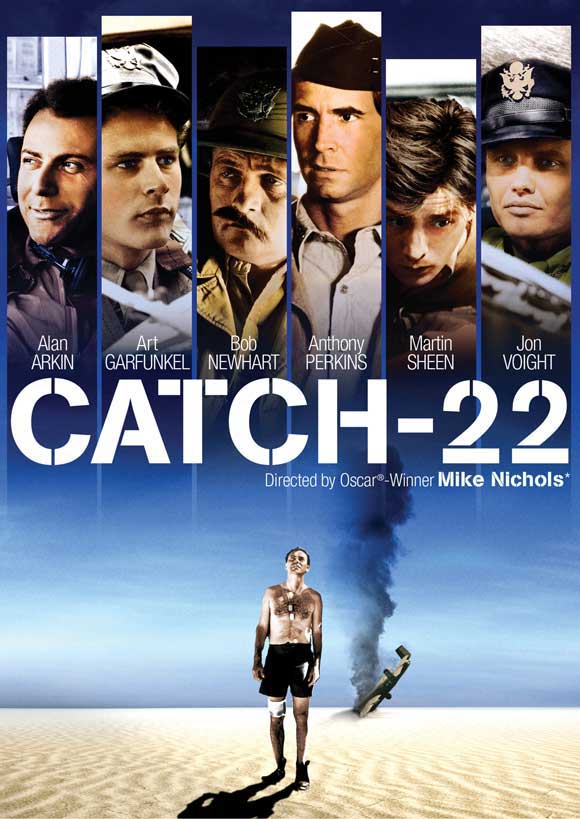
The book was made into a movie in 1970, directed by Mike Nichols and starred Alan Arkin as Yossarian with a supporting cast of Art Garfunkel, Bob Newhart, Anthony Perkins, Martin Sheen and Jon Voight. Heller died in 1999 shortly after the publication of his last novel Portrait of An Artist, As An Old Man.

Unfortunately, in terms of readability and relevance Catch 22 has catch-22-posternot stood the test of time. As a satire it definitely hit the funny-bone of its time and its zany comic style was echoed in many subsequent comedy classics including MASH, The Rowan and Martin Laugh-In and Monty Python. But times have changed. Lack of reverence for authority is now so much part of our culture that it is difficult to even imagine the pre-‘60s world where anyone in a position of authority was automatically deferred to, no matter how inept or self-promoting they were.

However, as a portal through which we can get a flavour of how it felt to BE in the ‘60s the book does deserve its position as a classic of the 20th century. And no matter how jaded the reader or how out-of-date the writing style, nothing can take from Heller the highest accolade of all – it is a book that changed it’s world.

MANKELL STEPS OUT OF HIS COMFORT ZONE IN HIS ITALIAN SHOES

Standard

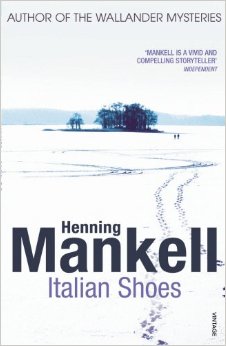
Italian Shoes CoverHow many pairs of shoes do you have? Two, six, twelve, more!!! Are you in the Imelda Marcos league? We’re led to believe most women are and some men too. I have four which I wear regularly, two pairs of runners, a tatty and well worn pair of shoes for work and a casual pair of shoes for… Well, going out casually in. Then there are the two dressy shoes. But one thing I can say is they are all comfortable. Which according to the Chinese philosopher Chuang Chou is important, “As long as the shoe fits, you don’t think about the foot…”. It is often said that there are opera singers around the world who don’t care what directors or conductors think as long as the shoe they wear is comfortable, that’s all that matters. We learn this from last months book group read, “Italian Shoes” by the Swedish author Henning Mankell, a writer more associated with Crime fiction then the book we have before us.

Italian Shoes follows a year in the life of retired surgeon Frederick Welin, who lives a reclusive existence on an Island off the Swedish coast. When across the frozen sea one morning he sees an elderly woman with a Walking frame slowing making her way towards his house. She stumbles and falls, when he goes out to help he discovers it is Harriet, his first real love, whom he abandoned forty years earlier.  She’s tracked him down because as a dying wish she wants him to follow through on a promise he made all those years ago. To take her to a mysterious lake hidden deep in the forests of northern Sweden. The journey awakens old memories, and brings him into contact with the daughter he didn’t know he had, as well allowing him to confront the ghosts of the terrible event which cost him his career and drove him to the solitary life he now leads. Never again will his quiet little island be the same after this year.

Henning-Mankell_2

Henning Mankell

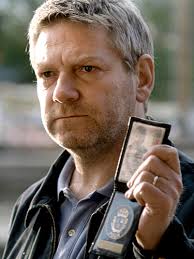
Before reading this book I thought Henning Mankell, was just one of the new wave of unknown Scandinavian crime writers who was following in the ground breaking exploits of Steig Larsson. Who have now found a hungry new audience beyond their homelands borders. Just think, ten years ago, you were a very broad minded person if you read Scandinavian crime novels or a linguist with a passion for Swedish or Norwegian. Now, like their furniture hypermarkets, you can’t turnaround but you run into the latest crime novel or TV drama from that part of the world. They’ve even spawned a genre – Scandi Noir/ Nordic Noir and like Starsky & Hutch a trend in woollen knitwear. But Mankell is best known for his Kurt Wallander series, which was made into a UK crime drama staring Kenneth Branagh. But he’s more prolific then that.  He’s written twelve Kurt Wallander books, seventeen non Wallander novels including “Italian Shoes”, eight children’s books, four original TV screenplays as well as forty six plays… Good god he’s a machine! Although the 68 year old does have an emotional side, he wrote a crime novel with Wallander’s daughter Linda in it, which he planned to turn into a trilogy, but after the actress who played her in the Swedish version of the series took her own life, so distraught was he that, he didn’t complete the trilogy.

When you’re used to reading one type of work by an author, and then they go and write something totally outside their comfort zone or genre, or better still if they change their style of writing from lets say first person to third, you can often find it really hard to read anything else they write. I’ve done this in the past with Patricia Cornwell, after around her tenth book she changed her style of writing, I haven’t been back since. With Mankell it was different, I’d never read any Wallander, although I knew who Mankell was and that he mainly wrote crime drama, or so I thought. So when this book was presented, I was very intrigued and excited at the prospect of reading it.

The book is refreshing; it reads and looks like a small book, but at almost 360 pages it’s about the average size. The pace is delivered by a master storyteller who seems to be able to make

Kenneth Brannagh as Wallander

Kenneth Branagh as Wallander

even most mundane thing sound interesting. It’s a simple story of a man living on an island with his ageing dog and cat, then throw in an ant hill in his guest bedroom for a bit of quirkiness, his ex girlfriend turning up terminally ill and requesting he take her to a mysterious lake in the wild of Sweden and already your wondering what the hell is in store, your always trying to guess what’s around the next corner, when is he going to fall back into murder mystery territory. But no, Mankell tells a wonderful tale of long lost love that never really died, even if it did seem a bit of a well worn subject. While also examining what goes through the minds of people who are in the twilight of their lives.

The only real downside to this book is the title. The “Italian shoes” in question are only really mentioned in a ten page piece midway through the book and seems to have no real bearing on the story. Thus I’m putting it down to something lost in translation; maybe the original title translation from Swedish into English was even more obscure.

So if you’re looking for a nice easy read, you can’t go far wrong with this book from a Swedish writing juggernaut. Put on your most comfortable shoes and walk down to your nearest book store and pick up a copy or slip into your comfy slippers and down load it to your eReader.

INDSIDE THE LINES HAS ENTERED A CROWDED FIELD, BUT IT USES SOME OF COOPERS STYLE TO CHASE DOWN MR GREY

Standard

flat ebookThey say ‘sex sells’ and that has never been truer since the world wide phenomena that was ‘Fifty Shades of Grey’. Amazon’s bestseller listing for kindle and the shelves of high street bookstores now offer a variety of erotic fiction aimed at both women and men and this novel falls well ‘inside the lines’ of that category (excuse the Pun) and so this month sees the release of  “Inside The Lines” by Ally Bishop.  The Library Door was delighted to be invited to review the book in advance of its launch on the 9th of March.

This book is a thoroughly modern romance with a sassy, smart and beautiful heroine in the shape of Lux Trace AKA Mistress Hathaway, who inducts us into the world of BDSM and the Dominatrix as she introduces  Fin McKenzie to all aspects of her life. For the uninitiated, BDSM is a catch all phrase used to cover Bondage Discipline, Domination, Submission, Sadism and Masochism. After meeting Fin , when he stands in for an escort friend on a ‘job’ Lux breaks her own rules and starts to date him. The story follows their romance  with the expected and unexpected trials and tribulations along the way.’ True love never runs smooth’ its said and that’s especially true when The horse whisperer meets Dominatrix.

This is New York based author Ally Bishop’s (www.allybishop.com) first book. She been writing since she was eight on an electric typewriter and  in spiral note books, before graduating on to a MAC. In the past she’s run writing groups, judged writing competitions and gained two writing degrees on the road to her first book.

Hot on the heels of Fifty Shades of Grey, Inside The Lines is a

Ally Bishop

Ally Bishop

book for the woman who knows what she wants and isn’t afraid to ask for it. It paints a vivid picture of the fetish world whilst giving the characters depth and feelings . Whilst its packed full of every kind of sex scene you can think of , you can enjoy being a voyeur without feeling seedy . The sex scenes are well written, realistic and without those awful banal phrases you find in some’ chick lit’ efforts . The storyline carries you through and you are keen to find out if it all works out in the end as a good romance should.

There is a supporting cast of characters used to move along or explain aspects of the plot. Lux’s enthusiasm for all things BDSM shines through. I initially thought I might be disappointed by a clichéd reason for Lux’s interest in BDSM but Ms. Bishop manages to not to alienate all those non traumatized ‘toppers’ and ‘bottomers’ out there by presenting Lux as a fully rounded personality. All the characters are likable and I was pleased to hear there might be a further instalment in their story.

Riders_-_Jilly_CooperBack in my 20’s I read Jilly Cooper novels when they were considered the steamiest thing you could read in public. Now with the advent of E Readers we can indulge whatever fantasies we wish on the bus to work. The content here is 20 years beyond what was considered daring then but I was reminded a little of Cooper’s best efforts in the equestrian related aspects of the story.

I’d recommend this as a read for broadminded women of any age but I think it would most likely appeal to those in their twenties . Yes the characters are all gorgeous, rich and extremely energetic, which generally would irritate me but who wants its too real in a fantasy? The reality may be that your ‘sub’ isn’t an underwear model but one can hope!

Our American readers can avail of a chance to to win a $25 Etsy gift card along with a signed copy of the book and 3 eBooks. To be in with a chance click on the link below.

http://www.rafflecopter.com/rafl/display/f1d2d3a01/

Reviewed by Georgina Self

Go back

Your message has been sent

Warning
Warning
Warning
Warning

Warning.