
 The urge to know our roots and lineage is strong. Recently I was offered the chance by an app on Facebook for it to guess my ancestry from my profile photo. Don’t judge me, I was five weeks into lockdown, and I was feeling bored. Seeing a friend’s interesting, if slightly off beam results prompted me to try. As previous readers of my reviews on this blog know, I’m of longstanding entirely northern English working-class stock. So, I was amused when it suggested I was mainly Spanish, with a dash of Mexican and Danish and a pinch of Italian.
However , when you think that there has been a constant movement of people for centuries due to war, emigration , the colonialization of countries by other nations and by travel for pleasure in recent times, it’s easy to see how our genetic heritage may be more complex than we at first imagine. I still don’t accept I’m mainly Spanish though! However, I’d be intrigued enough to take a proper DNA test as advertised by online family history research groups, to see if I am as wholly English as I think.
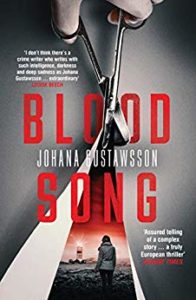
My musings bring me to this month’s first book review. Its of Blood Song by Johana Gustawsson and published by Orenda books (www.orendabook.co.uk) in September 2019. This isn’t her book featuring the investigative duo of Emily Roy of the RCMP and the journalist and author Alexis Castells. They previously featured in Block 46 and Keeper, both reviewed by Adrian Murphy in the blog. We were delighted to be given a copy of Blood Song to review and add to our collection by Karen Sullivan and her team at Orenda. I was particularly attracted to the fact that it is partly based during the Spanish Civil War. Its not a period of history I am familiar with but having had some introduction from reading ‘The Horseman’s Song’ by Ben Pastor, I have since been keen to read other books set in the period.
Blood Song moves to and fro from the period of the Spanish Civil War and the inhumane treatment of republican prisoners by Franco’s brutal dictatorship to present day Sweden and the savage murder of a family in their home. The family in question are that of Alienor Lindberg, who is working with Scotland Yard, in the UK, and is absent from their family gathering and is spared. The Lindberg’s run a highly successful fertility clinic. Could the murders be related to their work or to something in their past?
This novel delves into the scenarios of historic adoptions after war and genocide and the ramifications of what happens to those children as they become adults and their trauma resurfaces. Also, it looks into the present-day fertility industry and the recent scandals that have affected it as well as the difficult and painful journeys some people have to undertake to become parents. How easy is it for such programmes to play god and make life affecting decisions for the children engineered in such a way? Johana approaches the topics with sensitivity, having had personal experience of fertility clinics and IVF and one feels she has some empathy with the process.
The main investigators are Emily Roy, a profiler and Alexis Castells, a true crime writer. The combination of the two allows for, what I think to be, accurate police procedurals and the option to work outside the box. The characters are from a variety of European backgrounds and the movement of the story from Sweden, to Spain and the UK, with some exchanges in Swedish, English, French and Spanish make this a very international novel. Emily and Alexis are smart, attractive and refreshingly human ‘detectives’. I enjoyed their interactions and acceptance of each other’s flaws as well as the well-drawn cast of supporting characters.
This is French born author Johana Gustawsson’s (www.en.johanagustawsson.com) third

Johana Gustawsson
novel after Block 46 (2015) and The Keeper (2017). She has a degree in political science and has worked as a journalist in TV and Print in both Spain and France. The Roy & Castells series has won numerous awards as is published in nineteen countries, while a joint French, Swedish and UK TV adaptation is currently underway. This book’s theme was inspired by Johana’s own experiences of IVF. She currently lives in London with her Swedish husband and their three sons.
The novel jumps around in location and time but the chapter titles helpfully guide the reader along. Not something I would usually notice, but here I took in each one and reset my thoughts to the appropriate story thread with more ease than I would have without them. Its certainly a book I felt I enjoyed more in chunks rather than a few pages at a time as its quite complex and as with most Scandi Noir type novels the character names and technical terms can take a bit of adapting to.
A well-structured plot leads to a satisfying denouement and despite the roaming from location to location and era to era, it had the feel of a limited cast detective story. The places are well described too making this an ideal book for this period of restricted travel. So, when the book shops re open, swing by and pick up a copy or if you can’t wait, go online and order a copy. Then sit back and enjoy the mystery and visit Europe from the comfort of your couch.
Reviewed by: Georgina Murphy
Finally, both of us here at The Library Door would like to send our best wishes to Karen Sullivan the MD of Orenda Books who was recently laid up with a bout of suspected Corona Virus. We hope she’s fully recovered now or at least well on the road to recovery. Stay safe everyone.
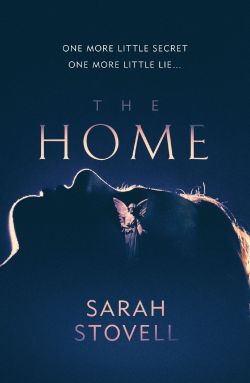 The Italic typeface is a cursive font used to denote someone speaking or highlight a foreign word or phrase. It takes its name from the fact that calligraphy inspired typefaces were first designed in Italy and were invented to replace the old Chancery style of writing. Nowadays we all usually use the default of Calibri or san Serif, when writing an email or composing a word document, as I do with the drafts of these reviews. It may look nice for presentation purposes to intersperse a piece with Italics, but you can have too much of a good thing, as it seems in this months second book review, which is The Home by Sarah Stovell and published by Orenda Books (www.orendabooks.co.uk).

 With Christmas less than a month away, we’ll all become more acutely aware of the pressure placed on us by TV and social media, to be of good cheer and surround ourselves with large gatherings of friends and family. But in doing so we overlook the people in society who are more vulnerable, who are left with a greater feeling of loneliness, depression and in some tragic cases feeling suicidal at this festive time.
 I never had a gap year. Where I grew up, if you were lucky enough and smart enough you went from college to university, or like me, directly to a job with an apprenticeship and a professional qualification at the end. The rest of my year went on the ‘dole’ or into youth employment schemes. I suppose it was the era before gap years really became trendy. I can certainly see the benefits of a little worldly experience before you settle down to work and study.

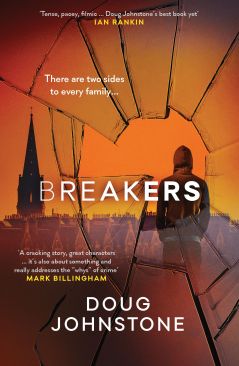 There’s a decidedly Scottish flavour to this month’s book reviews. What with both the Way of The Flesh, by Ambrose Parry , being reviewed at the start of the month and this, our second book review, which is also set in Edinburgh. But for the fact that there’s a a decade or two in the intervening time period, both deal with the underworld of this great city. Whereas Parry’s book is set in the world of unorthodox, sometimes unproven techniques and quackery in the development of anaesthesia and midwifery; this book is set around the seedy world of larceny. It’s Breakers by Doug Johnstone, published by Orenda books (

 I noticed over Christmas that American TV’s love affair with remakes is continuing unabated. In the past couple of years we’ve seen the updated return of Hawaii Five-O and more recently the return of McGyver. Now, both of these have more or less kept to the basic premise of their originals, Steve Garret still says “book him Dano...” now and then and McGyver still wears a well worn leather jacket and fixes most problems with his trusty Swiss Army Knife, much to the delight of Victoronix. But what has shocked me most over the festive season is seeing the trailer for the new Magnum PI!!!! The actor playing him is some unknown and he doesn’t even have a big bushy mustache. Also adding fuel to my ire is the fact that “Higgins” originally played by the diminutive actor John Hillerman, has been replaced by a young blonde… Sacre Bleu!!


 Every year millions are spent around the world by people trying to stall the march of time and retain their youthful looks. According to an article on Marie Claire online last year, British people spend on average £4,400 per year on beauty products. Its all well and good staying young like Dorian Gray, but what about living forever? Yes, our own mortality is still one of the biggest taboo subjects but eventually death comes to us all. With the advances in medical science, we are all living longer, thus putting a strain on the planets resources and those of the individual countries we live in, pensions, health care etc. Eternal life is one of the main topics in this month’s book review and blog tour. Its ‘Attend’, by West Camel which is published by Orenda Books (www.orendabooks.co.uk) on the 13th December.


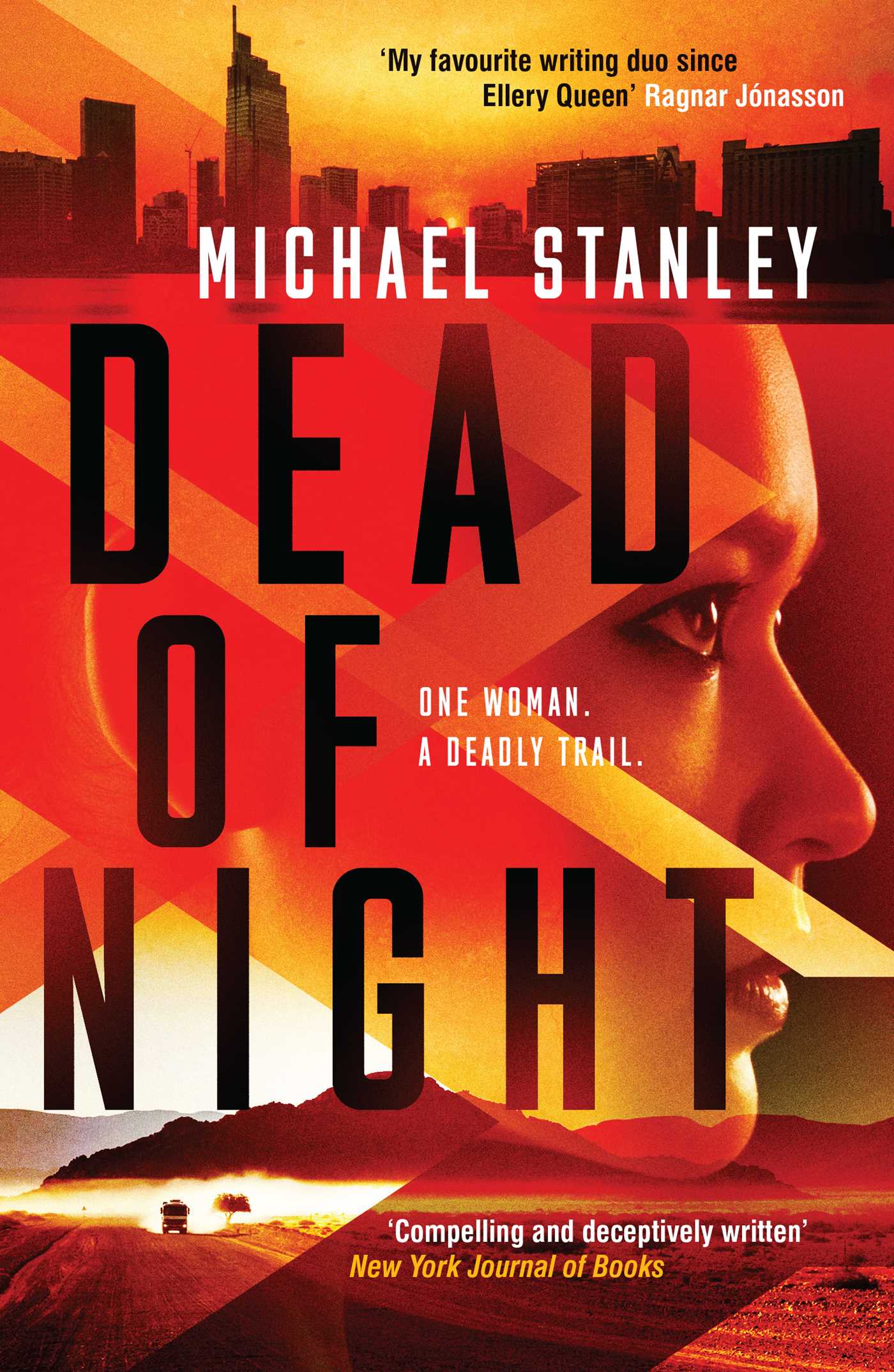 It is believed in the west that gold, cocaine and platinum are some of the most expensive commodities on the planet but actually in Asia there is something even more expensive than all three of them; ground down rhino horn. The current market price is estimated at $60,000 per kilogram. As for the number of Rhinos poached, 1,175 was the number in South Africa in 2016 according to Al Jazeera. Poaching in South Africa has increased by 8000% between 2007 and 2017. Its not only the rhinos who suffer. In 2014 there were 56 ranger deaths reported worldwide as a result of being killed by poachers. Of that number 27 were in South Africa and it is estimated that the actual number of rangers killed there is three or four times that. The trade in rhino horn is the subject for this months second book review. Its ‘Dead Of Night‘, by Michael Stanley and was published in June 2018 by Orenda books (www.Orendabooks.co.uk)
 to extinction. The WWF Living Planet Report published in October claims the animal population on the planet has declined by 60% between 1970 and 2014 . Along with the assertion by some people that our impact over the last few generations may be compared to the four great extinction events in global history, the last of which famously wiped out the dinosaurs.
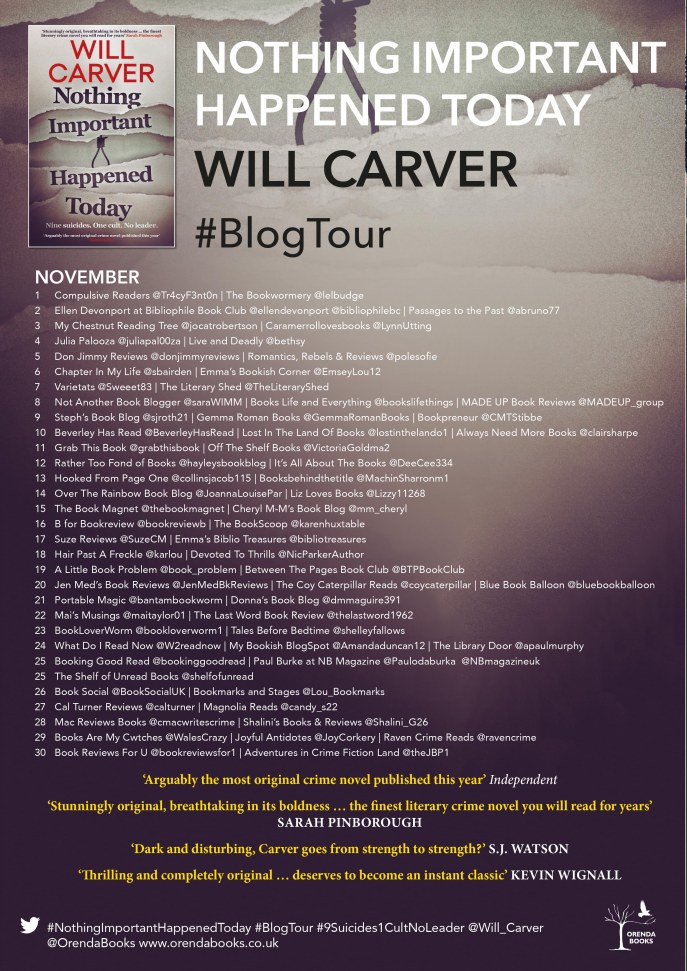
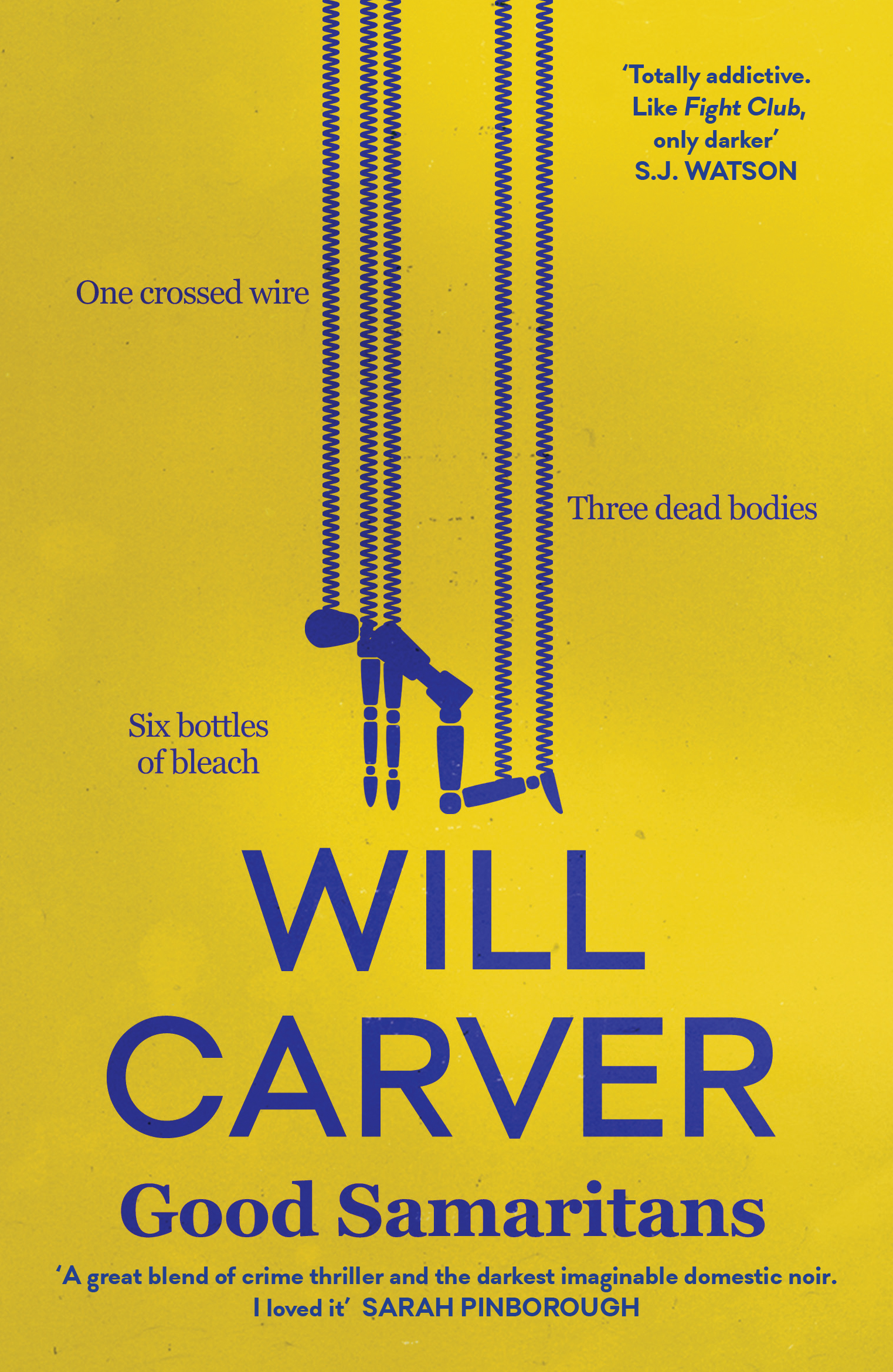 We’ve come a long way since Alexander Graham Bell summoned his assistant via a early telephone from the next room. Data from the GSMA, the body representing worldwide mobile network operators, shows Two-thirds of the world’s population are connected by mobile devices. By 2020, almost 75% of the global population will be connected by mobile phones. But with the development of the smart phone, there are a few draw backs, for one we are less reliant on our memory to recall important numbers. I can still remember life without a mobile and think it strange how our life seems to fall apart nowadays if we misplace it. As well as that, there’s another thing the development of the smart phone hasn’t managed to over come, the miss-dialed number. This easily done thing is the catalyst for this months book. Its Good Samaritans by will Carver and published by Orenda books (www.orendabooks.co.uk) on the 10th November.

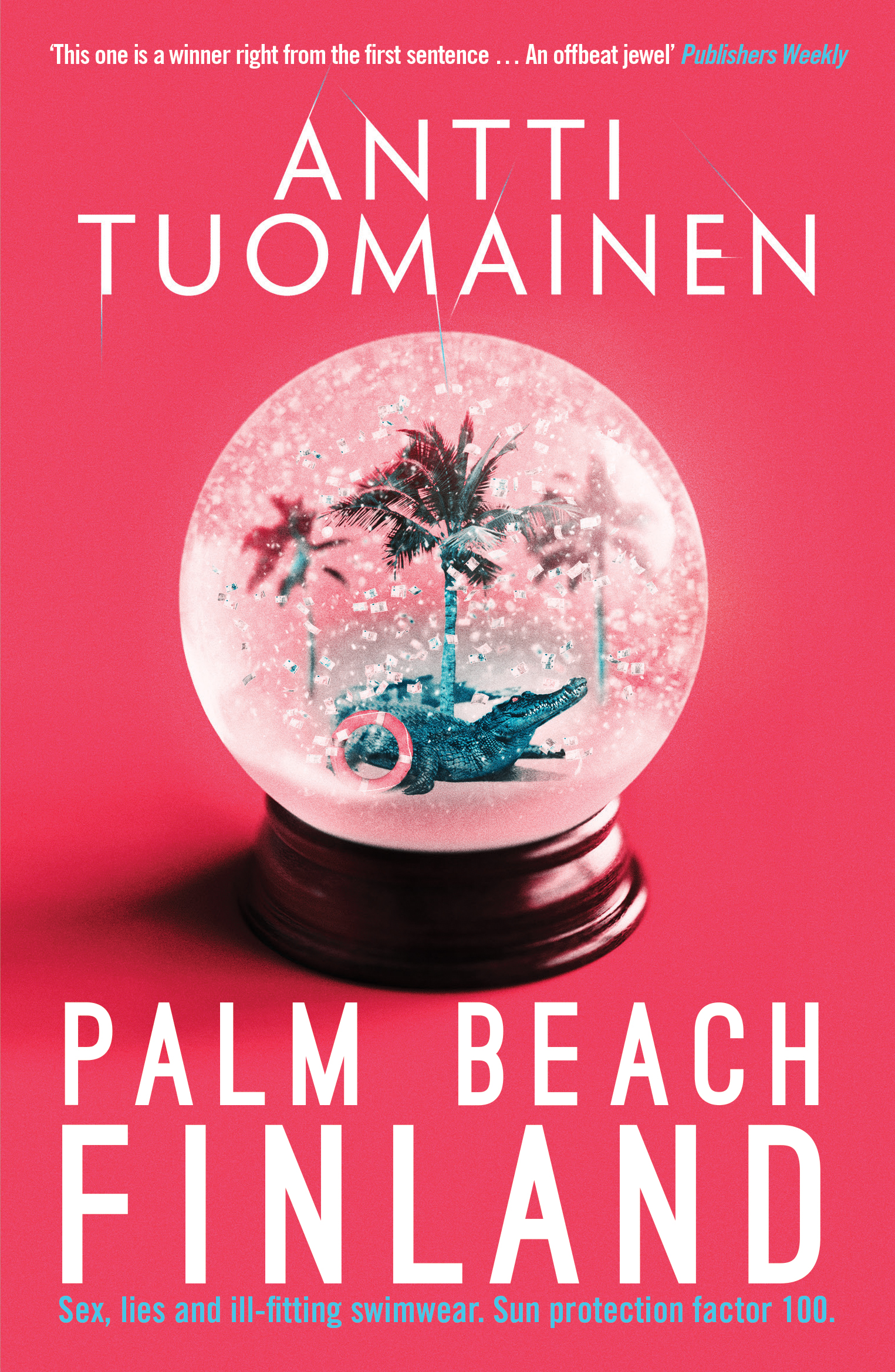 Every decade has its memorable TV crime shows, the seventies had Starsky & Hutch, The Sweeney and Hawaii 5-0 to name a few. The eighties had more than its fair share, such as Cagney & Lacey, Magnum and Knight Rider. Some left us with a catch phrase, like “Book Em Dano” or Regan shouting in a thick London accent, “You’re nicked !!!”, while others left us with a new sense of style. Magnum for example, made bushy mustaches and Hawaiian shirts all the rage, while one other programme of the eighties left us with white linen jackets , matched with crew necked t-shirts and a strange hankering for wearing no socks. Yes, it was of course, Miami Vice. Florida and it’s TV series play a part in this months second review, Palm Beach Finland by Antti Toumainen, which is published by Orenda Books (www.orendabooks.co.uk) on October 18th.

 the library door