HOBBS’ DEBUT LEAVES THE READER SEEKING RETRIBUTION AND A LOT MORE

Standard

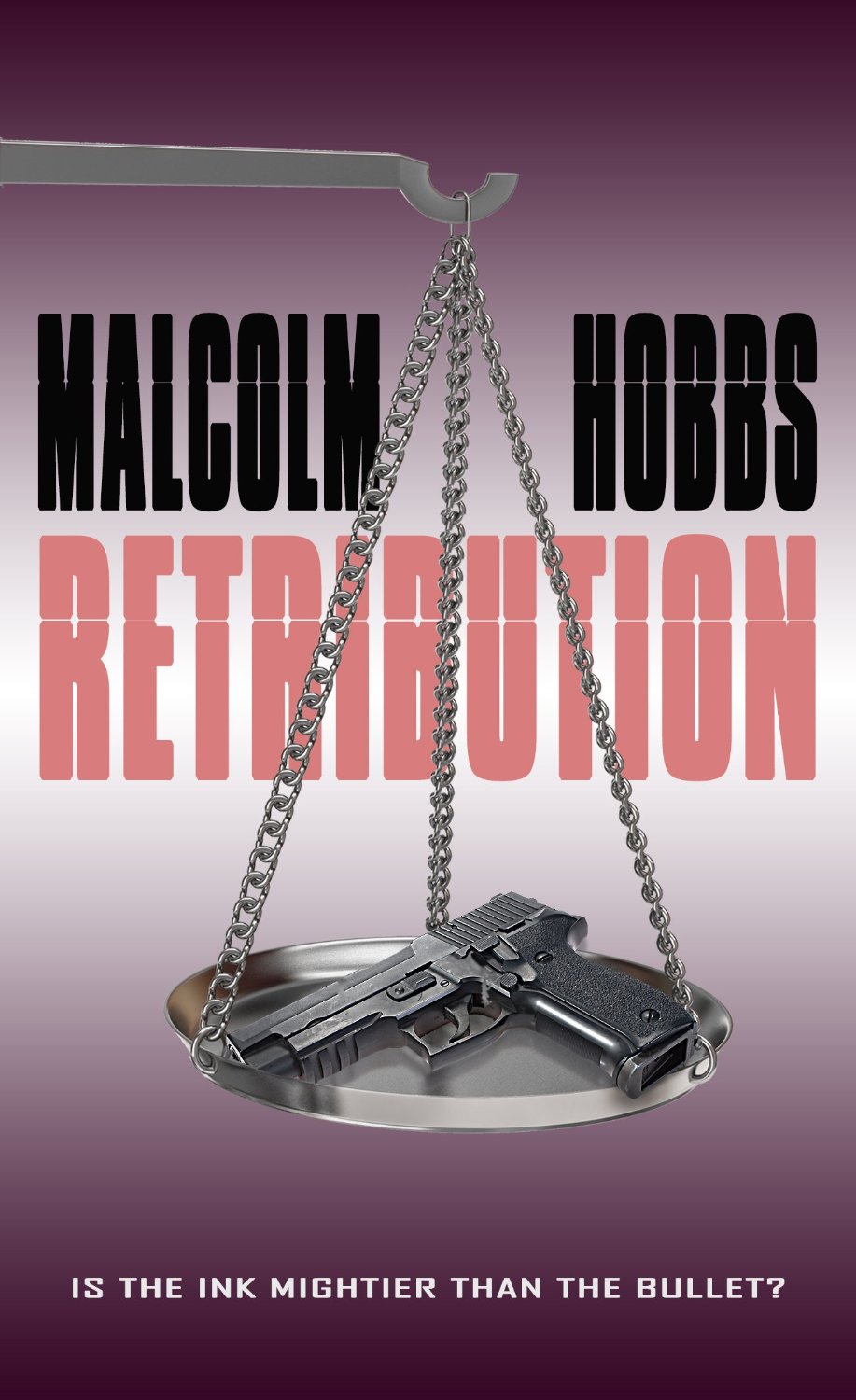
Retribution CvrItaly is famous for many things, great wine, good food, fast cars, football, as the seat of Catholicism, for great fashion and more recently for being over run by African immigrants. We should also not forget its notoriety for crime, in particular mafia related crime. That brings us on to this months book, “Retribution” by Malcolm Hobbs – sent to us by the lovely people at Percy Publishing (www.percy-publishing.com).

Naples, Italy 1969. Two men are gunned down by the Camorra, the city’s organised crime gang.  One, a candidate for the Communist Party, is about to set up a newspaper to expose corrupt politicians who do the Camorra’s bidding. The second, a detective with the Naples Police Department, has just uncovered the identity of a mole who is passing vital police information to the Camorra. Both assassinated men have 14 year-old daughters – only children who adore their fathers and vow to avenge their murders.

The book opens with Rosetta, the daughter of the communist politician, at a meeting presided over by her mother’s father – a crime-boss, head of one of one of the city’s powerful Camorra families.  Steeped in the Camorra tradition, Rosetta is looking for blood – the revenge killing of those who murdered her father. When we first meet Teresa, the detective’s daughter, she is in the Palace of Justice. Her plan is to study law, become a Prosecuting Magistrate and bring her father’s murderers to justice. At this stage of the book – page 30 – I settled down for a good read. This was an interesting set-up.  A thriller that sets vigilantism versus the law, criminal recrimination versus justice. In the gritty underworld of Neapolitan crime and punishment, which would win out?

It proved to be a set-up, alright – but not the type I’d imagined.

My enthusiasm began to wane when, co-incidentally, both girls are sent to the same private school in the Lake District of England (where else do Neapolitan girls go to school?).  Over the next 150 pages they become best friends, Rosetta terrorizes the school bullies, one of their gang is raped by a teacher and Rosetta sets up the teacher’s murder in Hong Kong (as sixteen-year -old girls do!).

The plot (?) then abruptly shifts to a just-married Rosetta – married to the son of a millionaire, of course. To make a long (and tedious) story short: her husband is gunned down, Rosetta murders his killer, goes to prison, uses her Camorra connections to run the place and get released, establishes herself as a Madrina (god-mother), inherits her dead husband’s millions, sets up an internationally successful fashion-designer business and avenges her father’s murder. Meanwhile, Teresa is working in dusty, dingy law offices and has no life beyond her work.

Credibility score – zero. But the coherence factor was the most disconcerting.  Suffice it to say that the narrative was about as coherent as you would get from randomly changing TV channel at half-hour intervals.

What became obvious very early on was that this book wasn’t written for the ordinary thriller reader. No, this book was written for a unique type of reader – the reader who can produce a film or TV series contract from his/her back pocket. But what film could that be? St Trinians meets the Godfather? The Devil meets Prada in Prisoner Cell Block H?

St Trinians

Writing without regard for the general reader is one thing. But to treat the reader as a chump is another. The sucker-punch came at the very end. Having persevered out of a sense of bemused curiosity – how will all these half-developed plots come together? How does it all finish up? I was hit between the eyes with “To be continued”!!!

This book is a set-up – a set-up for the sequel.

My verdict? Dorothy Parker’s widely reputed quip “This is not a book to lightly thrown aside. It should be thrown with great force” immediately comes to mind. Ideally thrown at the author – with such accuracy that it causes significant pain.

“Retribution” is the debut novel of Malcolm Hobbs, the chap who

Malcolm Hobbs

Malcolm Hobbs

has generated my ire and, guess what? the Percy Publishing  site now indicates that  his next book “Don’t Make An Enemy Of Me” is COMING SOON!!

Malcolm’s brief biog indicates that he has experience as a welfare officer and magazine editor and candidly acknowledges that his “own employment was a very far cry from the corruption and malice that I write about”.  Well, sorry Malcolm. There is a reason why every source of advice to would-be authors emphasizes the “write about what you know” rule. It’s because that’s what works. The “what-I-imagine-will-make-me-loadsa-money” approach doesn’t.
THE GIRL ON THE TRAIN IS A NON-STOP EXPRESS THRILLER WITH HAWKINS FIRMLY IN CONTROL AND PROMISING PLENTY MORE DOWN THE LINE

Standard

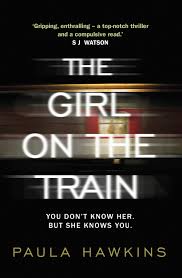
Grl on train cvrTrains and romance have always gone hand in hand and so have trains and mystery. Take the Orient Express, Midnight express, the Great Train Robbery and the Railway Children for example. Then there’s train journeys in general which, just by the mere thought of them, spark ones imagination, the Rocky Mountaineer railway, the Trans-Siberian, even the Eurostar. Commuter trains are no exception, although the daily trip on the DART (Dublin Area Rapid Transit) which links the city centre with the north and south coastal towns and counties, that I’ve taken for the past 20 years or so, doesn’t really have the same inspirational spark as the London underground,  the Metro in Paris or the New York Subway. Although, there are people in those countries who would disagree and would probably give their eye teeth to have the view over Killiney Bay twice a day, instead of the dark ominous brickwork of a tunnel,  I usually have my head stuck in a book. This brings us on to this month’s book.  It’s the current talk of the literary world, and has being suggested as this years “Gone Girl”, it’s The Girl On The Train by Paula Hawkins.

Rachel Watson takes the same train into London every morning and the same train home again every evening. It stops at the same signal each way and over time she gets to know the routines of the people in the houses that she over looks as the train idles there before moving on. So engrossed in the lives of one couple in particular is she, that she has even given them names Jason and Jess. One day she sees “Jess” in her back garden embracing a man not “Jason”. But the coincidental stopping of the train at that  point is not the only reason for Rachel’s interest in those particular houses, she used to live a couple of doors down, before her marriage broke down and now two years on, she’s struggling to get over the break up, which isn’t helped by her alcoholism. One evening she gets off at the nearest station and in a drunken stupor causes a scene at her old home. Coincidentally Megan Hipwell, the neighbour whom Rachel has Christened “Jess” goes missing goes that night – in the aftermath Rachel can’t remember what happened. Just hazy flash backs, which include her ex-husband Tom, his new wife Anna, a man with red hair, as well as waking up next morning bloodied and bruised. Thinking she has vital evidence she decides to go to the police and with her life spiraling into alcoholic oblivion Rachel blunders further into the investigation, when Megan’s body turns up a couple of weeks later. Is Rachel the killer or has she met them and is she about to be their next victim?

The word on the grapevine was that this was a great book to read and I have to say, it was correct. From the get go, Paula Hawkins builds the tension up superbly in the style of the great British thriller writers of the past. Agatha Christie and the recently departed Ruth Rendell would be very proud. The book is told primarily through the eyes of Rachel, but also from the point of view of Megan Hipwell and Anna Watson, the new wife of Rachel’s ex Tom.  At no point can you tell who the killer is until the very last minute. Every one of the main Characters is a viable suspect; it’s been years since I’ve read a book that has left me guessing till the last couple of pages. Also the initial premise of the story, that of what you see in peoples houses when you stare in fleetingly from a passing train, is not something new to any of us. We’re all “Nosey-Parkers”  deep down and we’ve probably see some strange things going on in peoples houses and often wondered what those people are doing, who lives in a house like that or why did they do that to their house or garden?

Its also been a while since I’ve come across such a flawed main character, her alcoholism is so nicely woven into the story-line that you really do feel for Rachel and almost want to step into the pages and take her by the hand and lead her to an AA meeting or pump her full of Coffee. As well as destroying her marriage, it’s also cost her a lucrative PR job in the city, but she still takes the train every day so that her flatmate Cathy thinks she still has a job. It’s Cathy who is her real and only support, despite being the recipient of all the general detritus associated with Rachel’s condition, although her patience is tested and  a sainthood is lurking somewhere in the ether.

Paula Hawkins

Paula Hawkins

Zimbabwean born Hawkins (www.paulahawkinsbooks.com) has been working and living in the UK since 1989. She’s a former journalist who credits reading Agatha Christie as a child as her inspiration, but that it was Donna Tarrt’s Secret History which was the real eye opener to the possibilities of psychological thrillers. This is her first book, but in a recent interview with Penguin Canada she admitted she has hundreds of pieces of fiction stored on hard drives, some a few pages long others tens of thousands of words long.

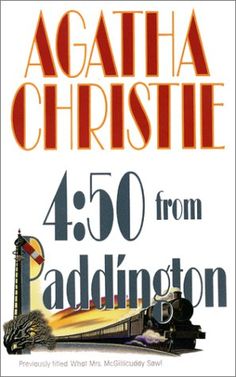
There are loads of similarities to other works set on a train in this 450 frm paddnton cvrbook but the closest is Agatha Christie’s The 4:50 From Paddington. The plot is scarily similar, two trains pull along side each other and a woman travelling alone in her carriage witnesses another woman being murdered in the other train, the only person who can help her is that wiley old sleuth Ms Marple.

So the next time you stare out the train window into houses along the way or another train, be careful what you see, you never know you could be witness to a crime. But in general just smile and wave, even if nobody returns the gesture. Then if you haven’t already, been prompted by this review to get a copy, then jump off at the next available station and pick up this book.

CATCH 22 MAY HAVE CHANGED THE WORLD, BUT IN A CHANGED WORLD IT IS NOW DEFINITELY OUT OF ITS DEPTH

Standard

Catch 22If I said Joseph Heller to you, what’s the first thing to come to mind? What if I just said “Catch 22”. Some of you would probably say its a paradoxical situation from which there’s no escape. While quite a few  would think yep read it or its on my “To Be Read” list, because that’s what Catch-22 was. A cult book (if not THE cult book) of the ‘60s. Every self-respecting student had a copy. It’s title is now part of the English language. The paperback edition set sales records. It’s one of the best-selling novels of the 20th century, having sold over 10 million copies.

I first read it in the ‘70s and remember it as being zany, hilarious and hard-hitting. When chosen as our bookclub book recently, I was delighted – imagining hours of laughter and entertainment.  I was sorely disappointed. And it wasn’t only me. Several other avid bookclub readers couldn’t generate the interest or enthusiasm to go beyond page 150 (of 536).

Why? Because Catch-22 is a book of it’s time – for it’s time.

Published in 1961 just as US involvement in the Vietnam war was escalating, it resonated with the growing protest movements that epitomize the 1960s. Often cited as an anti-war book, Catch-22 was more than that for the ‘60s generation who were ripping up their parents’ rule book and challenging all the givens they were expected to live by. It was anti-war, anti-religious, anti-capitalist and anti-authority. And – most particularly – it cocked a snook at all these sacred cows by ridiculing and making fun of them. It was Heller’s satirical approach that truly caught the ‘zeitgeist’ of the ‘60s

Set in the second World War, the book’s main protagonist, Yossarian, is a bombardier whose life is more threatened by the machinations of his superior officers than by German anti-aircraft gunners. Yossarian’s commanding officer, Colonel Cathcart, who is solely interested in his own career advancement, continually increases the number of bombing missions his men have to complete before being discharged. If Yossarian was crazy he could be discharged on medical grounds but – the Catch 22 – in the situation he’s in, claiming to be crazy is proof of his sanity.

Heller’s depiction of the predicament that Yossarian and his fellow soldiers find themselves in is sometimes poignant, sometimes insightful and – most of the time – over-the-top, slap-stick-style satire.  This works for about the first 100 pages but then becomes repetitive, relentless and boring.

There are some gems, though. My favorites include the moment of revelation when the Chaplain, having lied for the first time, discovered “the handy technique of protective rationalization… It was miraculous. It was almost no trick at all, he saw, to turn vice into virtue and slander into truth… brutality into patriotism and sadism into justice. Anybody could do it; it required no brains at all. It merely required no character.”

Also up there with the best is the doctor’s predicament when the plane he was supposed to be in (but wasn’t) was shot down. As there were no survivors, he was dead. The army record said so. When his wife, after a period of mourning, received the widow’s pension she and their children moved home – without leaving a forwarding address.

But the true hero of the book has to be Yossarin’s tent-mate, Orr, the “happy and unsuspecting simpleton” who ditched his plane in the sea on virtually every mission. Though he worried about Orr’s ability to look after himself, Yossarin (understandably given Orr’s record) avoided flying with him, despite Orr’s repeated requests that he do so. But it was Orr, the simpleton, who successfully beat the system by ditching his plane (safely, having practiced this to perfection) and rowing to neutral Sweden using the plane’s emergency dinghy. A true subversive!

Joseph Heller

Joseph Heller

Catch 22 was American author Joseph Heller’s debut novel, he first had the idea for the story in 1953 when the opening lines came to him while sitting at his desk one day, within a week he’d written the first chapter and sent it to his agent. He only started to write the rest of the book a year later . The book was finally published in 1961, not before the title which was originally Catch 18 was changed to 22 so as not to be confused with Leon Uris’s Novel Mila 18. After that he went on to write five other novels including a follow up to Catch 22 called Something Happened, in 1971. He wrote a number of plays and TV scripts most of which had a an anti-war theme to them. In 1981 Heller was diagnosed with the debilitating illness Guillian-Barre Syndrome, after a prolonged period of recovery he married his nurse.

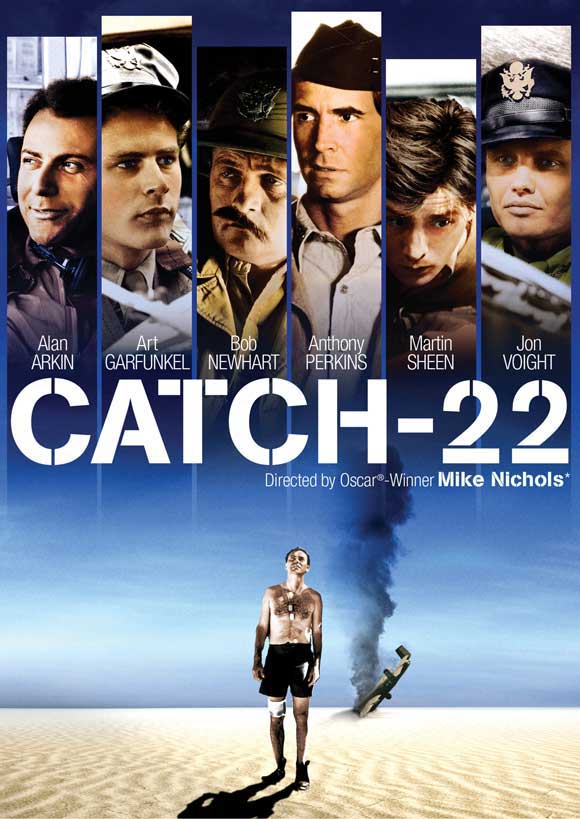
The book was made into a movie in 1970, directed by Mike Nichols and starred Alan Arkin as Yossarian with a supporting cast of Art Garfunkel, Bob Newhart, Anthony Perkins, Martin Sheen and Jon Voight. Heller died in 1999 shortly after the publication of his last novel Portrait of An Artist, As An Old Man.

Unfortunately, in terms of readability and relevance Catch 22 has catch-22-posternot stood the test of time. As a satire it definitely hit the funny-bone of its time and its zany comic style was echoed in many subsequent comedy classics including MASH, The Rowan and Martin Laugh-In and Monty Python. But times have changed. Lack of reverence for authority is now so much part of our culture that it is difficult to even imagine the pre-‘60s world where anyone in a position of authority was automatically deferred to, no matter how inept or self-promoting they were.

However, as a portal through which we can get a flavour of how it felt to BE in the ‘60s the book does deserve its position as a classic of the 20th century. And no matter how jaded the reader or how out-of-date the writing style, nothing can take from Heller the highest accolade of all – it is a book that changed it’s world.

MANKELL STEPS OUT OF HIS COMFORT ZONE IN HIS ITALIAN SHOES

Standard

Italian Shoes CoverHow many pairs of shoes do you have? Two, six, twelve, more!!! Are you in the Imelda Marcos league? We’re led to believe most women are and some men too. I have four which I wear regularly, two pairs of runners, a tatty and well worn pair of shoes for work and a casual pair of shoes for… Well, going out casually in. Then there are the two dressy shoes. But one thing I can say is they are all comfortable. Which according to the Chinese philosopher Chuang Chou is important, “As long as the shoe fits, you don’t think about the foot…”. It is often said that there are opera singers around the world who don’t care what directors or conductors think as long as the shoe they wear is comfortable, that’s all that matters. We learn this from last months book group read, “Italian Shoes” by the Swedish author Henning Mankell, a writer more associated with Crime fiction then the book we have before us.

Italian Shoes follows a year in the life of retired surgeon Frederick Welin, who lives a reclusive existence on an Island off the Swedish coast. When across the frozen sea one morning he sees an elderly woman with a Walking frame slowing making her way towards his house. She stumbles and falls, when he goes out to help he discovers it is Harriet, his first real love, whom he abandoned forty years earlier.  She’s tracked him down because as a dying wish she wants him to follow through on a promise he made all those years ago. To take her to a mysterious lake hidden deep in the forests of northern Sweden. The journey awakens old memories, and brings him into contact with the daughter he didn’t know he had, as well allowing him to confront the ghosts of the terrible event which cost him his career and drove him to the solitary life he now leads. Never again will his quiet little island be the same after this year.

Henning-Mankell_2

Henning Mankell

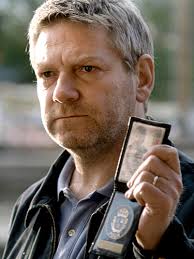
Before reading this book I thought Henning Mankell, was just one of the new wave of unknown Scandinavian crime writers who was following in the ground breaking exploits of Steig Larsson. Who have now found a hungry new audience beyond their homelands borders. Just think, ten years ago, you were a very broad minded person if you read Scandinavian crime novels or a linguist with a passion for Swedish or Norwegian. Now, like their furniture hypermarkets, you can’t turnaround but you run into the latest crime novel or TV drama from that part of the world. They’ve even spawned a genre – Scandi Noir/ Nordic Noir and like Starsky & Hutch a trend in woollen knitwear. But Mankell is best known for his Kurt Wallander series, which was made into a UK crime drama staring Kenneth Branagh. But he’s more prolific then that.  He’s written twelve Kurt Wallander books, seventeen non Wallander novels including “Italian Shoes”, eight children’s books, four original TV screenplays as well as forty six plays… Good god he’s a machine! Although the 68 year old does have an emotional side, he wrote a crime novel with Wallander’s daughter Linda in it, which he planned to turn into a trilogy, but after the actress who played her in the Swedish version of the series took her own life, so distraught was he that, he didn’t complete the trilogy.

When you’re used to reading one type of work by an author, and then they go and write something totally outside their comfort zone or genre, or better still if they change their style of writing from lets say first person to third, you can often find it really hard to read anything else they write. I’ve done this in the past with Patricia Cornwell, after around her tenth book she changed her style of writing, I haven’t been back since. With Mankell it was different, I’d never read any Wallander, although I knew who Mankell was and that he mainly wrote crime drama, or so I thought. So when this book was presented, I was very intrigued and excited at the prospect of reading it.

The book is refreshing; it reads and looks like a small book, but at almost 360 pages it’s about the average size. The pace is delivered by a master storyteller who seems to be able to make

Kenneth Brannagh as Wallander

Kenneth Branagh as Wallander

even most mundane thing sound interesting. It’s a simple story of a man living on an island with his ageing dog and cat, then throw in an ant hill in his guest bedroom for a bit of quirkiness, his ex girlfriend turning up terminally ill and requesting he take her to a mysterious lake in the wild of Sweden and already your wondering what the hell is in store, your always trying to guess what’s around the next corner, when is he going to fall back into murder mystery territory. But no, Mankell tells a wonderful tale of long lost love that never really died, even if it did seem a bit of a well worn subject. While also examining what goes through the minds of people who are in the twilight of their lives.

The only real downside to this book is the title. The “Italian shoes” in question are only really mentioned in a ten page piece midway through the book and seems to have no real bearing on the story. Thus I’m putting it down to something lost in translation; maybe the original title translation from Swedish into English was even more obscure.

So if you’re looking for a nice easy read, you can’t go far wrong with this book from a Swedish writing juggernaut. Put on your most comfortable shoes and walk down to your nearest book store and pick up a copy or slip into your comfy slippers and down load it to your eReader.

INDSIDE THE LINES HAS ENTERED A CROWDED FIELD, BUT IT USES SOME OF COOPERS STYLE TO CHASE DOWN MR GREY

Standard

flat ebookThey say ‘sex sells’ and that has never been truer since the world wide phenomena that was ‘Fifty Shades of Grey’. Amazon’s bestseller listing for kindle and the shelves of high street bookstores now offer a variety of erotic fiction aimed at both women and men and this novel falls well ‘inside the lines’ of that category (excuse the Pun) and so this month sees the release of  “Inside The Lines” by Ally Bishop.  The Library Door was delighted to be invited to review the book in advance of its launch on the 9th of March.

This book is a thoroughly modern romance with a sassy, smart and beautiful heroine in the shape of Lux Trace AKA Mistress Hathaway, who inducts us into the world of BDSM and the Dominatrix as she introduces  Fin McKenzie to all aspects of her life. For the uninitiated, BDSM is a catch all phrase used to cover Bondage Discipline, Domination, Submission, Sadism and Masochism. After meeting Fin , when he stands in for an escort friend on a ‘job’ Lux breaks her own rules and starts to date him. The story follows their romance  with the expected and unexpected trials and tribulations along the way.’ True love never runs smooth’ its said and that’s especially true when The horse whisperer meets Dominatrix.

This is New York based author Ally Bishop’s (www.allybishop.com) first book. She been writing since she was eight on an electric typewriter and  in spiral note books, before graduating on to a MAC. In the past she’s run writing groups, judged writing competitions and gained two writing degrees on the road to her first book.

Hot on the heels of Fifty Shades of Grey, Inside The Lines is a

Ally Bishop

Ally Bishop

book for the woman who knows what she wants and isn’t afraid to ask for it. It paints a vivid picture of the fetish world whilst giving the characters depth and feelings . Whilst its packed full of every kind of sex scene you can think of , you can enjoy being a voyeur without feeling seedy . The sex scenes are well written, realistic and without those awful banal phrases you find in some’ chick lit’ efforts . The storyline carries you through and you are keen to find out if it all works out in the end as a good romance should.

There is a supporting cast of characters used to move along or explain aspects of the plot. Lux’s enthusiasm for all things BDSM shines through. I initially thought I might be disappointed by a clichéd reason for Lux’s interest in BDSM but Ms. Bishop manages to not to alienate all those non traumatized ‘toppers’ and ‘bottomers’ out there by presenting Lux as a fully rounded personality. All the characters are likable and I was pleased to hear there might be a further instalment in their story.

Riders_-_Jilly_CooperBack in my 20’s I read Jilly Cooper novels when they were considered the steamiest thing you could read in public. Now with the advent of E Readers we can indulge whatever fantasies we wish on the bus to work. The content here is 20 years beyond what was considered daring then but I was reminded a little of Cooper’s best efforts in the equestrian related aspects of the story.

I’d recommend this as a read for broadminded women of any age but I think it would most likely appeal to those in their twenties . Yes the characters are all gorgeous, rich and extremely energetic, which generally would irritate me but who wants its too real in a fantasy? The reality may be that your ‘sub’ isn’t an underwear model but one can hope!

Our American readers can avail of a chance to to win a $25 Etsy gift card along with a signed copy of the book and 3 eBooks. To be in with a chance click on the link below.

http://www.rafflecopter.com/rafl/display/f1d2d3a01/

Reviewed by Georgina Self

Go back

Your message has been sent

Warning
Warning
Warning
Warning

Warning.

FOWLER GOES FROM SCI-FI TO SCI-FACT FOR THE SUBJECT MATTER OF COMPLETELY BESIDE OURSELVES

Standard

Completely bsde coverThey fuck you up, your mum and dad. They may not mean to, but they do. They fill you with the faults they had and add some extra, just for you…”  

Philip Larkin’s pithy observation on parenthood is now so accepted as a truism that a story of a young adult coming to terms with childhood trauma runs the risk of falling into the “also ran” category – at best adding a slightly different perspective to a well-trodden (over exposed?) literary path. Not so last months book group read “We Are All Completely Beside Ourselves” by Karen Joy Fowler.

When we meet the narrator, Rosemary, she’s in her early twenties in her 5th year in college. She’s changed majors several times, is unlikely to graduate in the foreseeable future, has been arrested (for a minor misdemeanor) and resents having to spend Thanksgiving with her parents – who are still paying all her expenses. So what’s new? Sounds like the typical, annoying, “because I’m worth it” university student that can be found in thousands on any campus in the Western world.

As Rosemary’s tale unfolds we gradually realize that her childhood challenges really are out of the ordinary. But then her father was an ambitious academic psychologist. In this, her grandmother’s low opinion of psychologists as people who “conducted studies around the breakfast table, made freak shows of their own families, and all to answer questions nice people wouldn’t even think to ask” gives us an early forewarning of what’s to come.

For the first five years of her life Rosemary was a central subject in one of her father’s research projects. Living in a large farm with her parents, older brother and twin sister, graduate students observed and recorded all aspects of her development – and compared it to that of her sister, Fern. Was it any wonder that sibling rivalry was heightened to the extent that she strived to do better than Fern at everything? Her language skills were significantly better than Fern’s, so Rosemary talked incessantly. She copied and tried to outdo Fern at the activities Fern was better at – dancing on tables, climbing trees, sliding down banisters. And when Fern did something truly shocking, Rosemary told.

She told knowing that Fern would get into trouble – but she couldn’t have foreseen the consequences. Rosemary was sent to her grandparents for a visit and when she returned the family had moved house and Fern was gone. Her brother, Lowell, made it very clear who he thought was responsible – “If only you had just, for once, kept your goddamn mouth shut”.  The research project was abandoned, but the fall-out was to define the future of the whole family.

Karen Joy Fowler

Karen Joy Fowler

This is American writer Karen Joy Fowler’s (www.karenjoyfowler.com) 5th novel, published in 2013 it was shortlisted for the 2014 Man Booker Prize. But she is best known for her 2004 book “The Jane Austen Book Club”, which was subsequently made into a movie starring Emily Blunt, Maggie Grace, Amy Brenneman and Hugh Dancy. Her other books are “Wits End”(2008), “Sister Noon”(2001), “Sweetheart Season”(1996). She’s also published four collections of short stories and started her career writing Science Fiction short stories.

There is a twist to the book that I won’t reveal here. Partly because of the “spoiler alert” convention but also because what makes the book truly compelling is that the story is presented as unexceptional, normal – Rosemary and Lowell’s normality. For all children their family environment is what normality is. It is onlyJane Austen Bk grp as we grow up that we realize that it just might not be universal. By unfolding the story from Rosemary’s perspective as she navigates early adulthood, Joy-Fowler draws the reader into Rosemary and Lowell’s normality. So we understand Lowell’s ill-fated quest to find and avenge the injustice done to Fern. We empathize with Rosemary’s inability to trust her own judgment and her disinterest in the ‘normality’ of student life. Joy-Fowler’s genius is in enabling us to really ‘walk in their shoes’ – and in doing so question some deep-seated perceptions, assumptions and prejudices of our own.

This book is a truly compelling and thought-provoking read. Even if at times some of  the subject matter maybe a bit upsetting for a few and will have a huge bearing on who you recommend it to, as we found out at the meeting.


Go back

Your message has been sent

Warning
Warning
Warning
Warning

Warning.

THE BUDDHA IN THE ATTIC IS TARDIS-ESQUE, BUT INSIDE IS A BIG STORY FROM OTSUKA

Standard

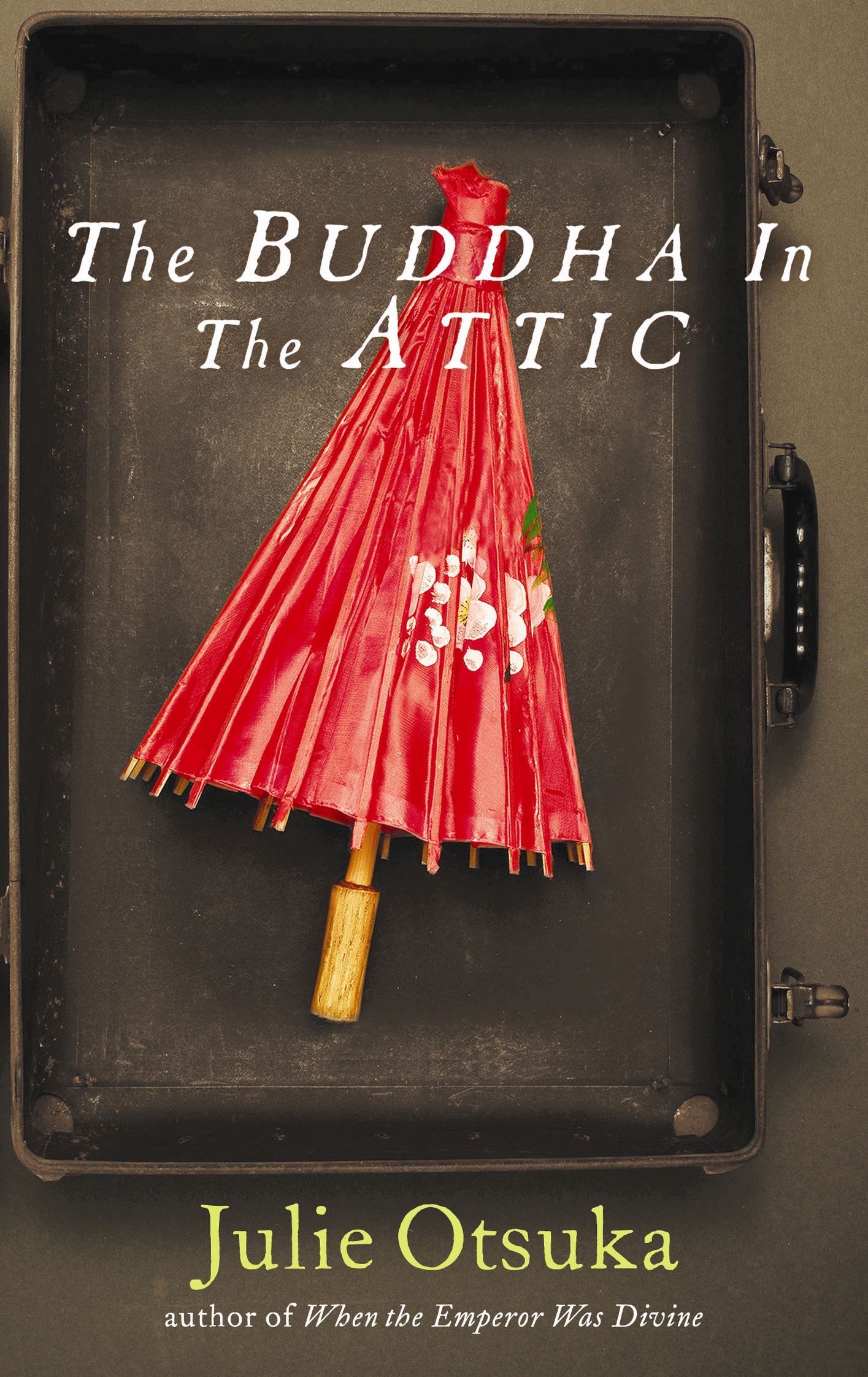
buddha CvrThe opening lines of the song “America” by Neil Diamond  go, “we’ve been travelling far without a home, but not without a star… Free we huddle close, hang onto a dream…. Never looking back again, they’re coming to America..”.  America is a big boiling pot of many different nationalities, the Irish, Mexicans and Italians to list of some of the larger groups. Among the other assorted nationalities are the Japanese. The difference between the Japanese and the other immigrant groups is that their homelands never attacked America, a few Irish Fenian’s tried to invade the British ruled Canada from America in 1866, but that was a rather fool hardy attempt which was put down quickly. As for the Italians they may have fought against America during World War II, but they were never seen as a perceived threat. Whereas the Japanese who emigrated to America made lives and integrated, only for it to be taken away from them when Pearl Harbor was attacked and that’s where last months book group read takes us. The book is “The Budda In The Attic “ by Julie Otsuka.

The book tells the story of a group of non-English speaking Japanese women who arrive in America between the two world wars, primarily as Picture Brides an early form of Sex trafficking.

These women never knew their husbands; they just embarked on the arduous trip clutching a grainy black and white photo of their betrothed (hence the term) and the promises of love,

Picture Brides Arriving California 1910

Picture Brides Arriving California 1910

happiness and riches. Of course what met them when they arrived was just as promised for some and a violent, abused, put upon hell as well as back breaking slavery for others.  From there they had to start from scratch, initially learning the language and the customs. After a while they started businesses, raised families and lead new lives, but with world war two comes internment and then what…?

Good things come in small packages, and this can be especially said of this book, the whole book is small at only one hundred and twenty nine pages long, it’s a novella. I’ve read longer IKEA manuals, but none of those have been  as great as this little bundle of joy.

The characters are also small, owing to the fact that you never actually get to follow one character, all in all the book is a reportage of what happened to this group, but it is told beautifully and wittily. The only thing big about this book is the packet steamer they sailed on and the vast new world they found themselves in on arrival, not forgetting the big warm contented feeling this book leaves you with after the last page.

The staccato style of writing is very poetic and reads very easily, if at some points it feels repetitive, this is all part Otsuka’s excellent way of telling the story of many in a condensed but very informative way, mixing heart wrenching tales with just the right amount of humour to take the edge off it. Which allows the reader to get a very detailed picture of what different immigrants experienced during their voyage across the pacific, then on arrival and subsequently during their lives. Amidst the book group discussion it came to me that the style of writing reminded me of the Johnny cash song “The One On The Right Is On The Left” its the tale of a successful folk group which is destroyed by political instability. The chorus goes ”Well the one on the right was on the left and the one in the middle was on the right and the guy on the right was in the middle and the guy in the rear. Burned his driving licence…” The thing is in each chorus the guy in the rear does something different. Which is just how Otsuka’s story telling comes across.

Julie Otsuka

The Buddha in the Attic is Japanese American author Julie Otsuka’s (www.julieotsuka.com) second book published in 2011; nine years after her first book “When The Emperor Was Devine”. Where as Buddha in the Attic deals with the Picture brides arrival and subsequent lives up to internment, her first book deals with the actual internment. Both books have won numerous awards including the Asian and American Literary Award and the Langum Prize for American Historical Fiction. As well as that both books are prescribed reading for “Freshmen” in numerous colleges across America.

So if you’re looking for an excellently written book that traces the path of the Japanese in America from there early beginnings as mere sex slaves to hard working members of community and their eventually internment and the mistrust it cast over them, this is right up your street. I just don’t know what Alex Haley would have done if some had suggested that he condense “Roots” into one hundred and twenty nine pages.

JOYCE AND HAROLD FRY SET THE PACE FOR THE YEAR AHEAD WITH AN OUTSTANDING READ

Standard

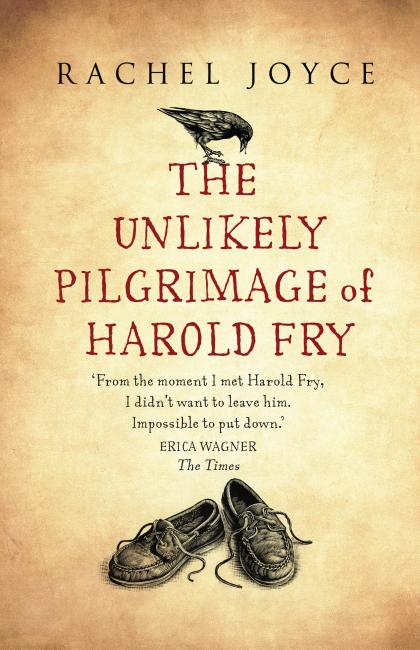
Harold Fry cvrWe are all at different stages on the road of life, some near the end, others at the beginning, a few of us in the middle and some stuck not knowing where to go next. Then there are the real journeys we take every day, like the commute to and from work, the journey on the road to recovery from illness. Then there’s the journey’s we want to do when we retire or take a career break, such as going on a cruise, travelling round Australia or walking the Camino Way. Now that’s something I have on my Bucket List.

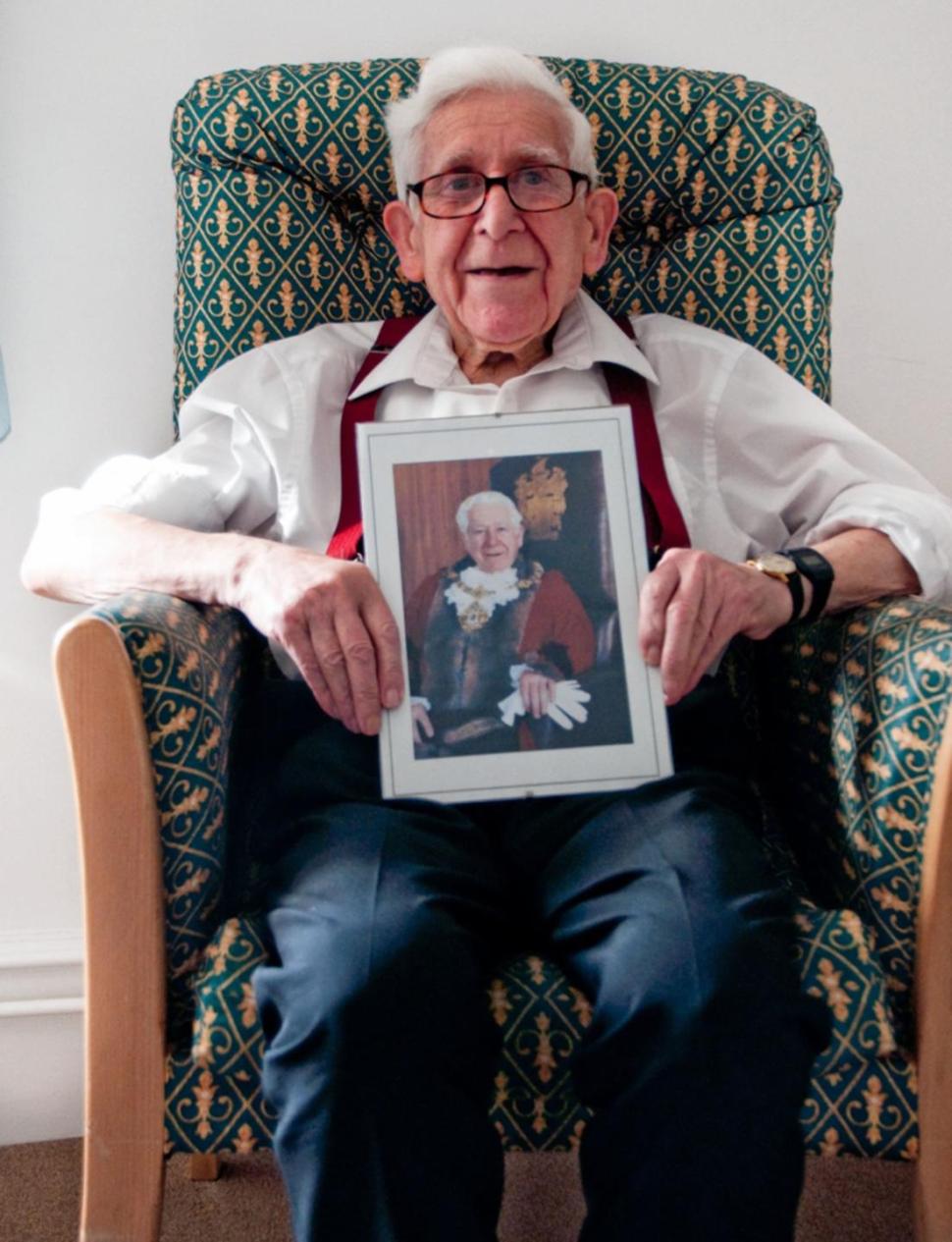
Then there are the Pilgrimages – religious journeys to places like Lourdes, Mecca or Sri Pada. Then there’s the personal

Bernard Jordan

Bernard Jordan

pilgrimages, as was  the case in June last year when D-Day veteran Bernard Jordan, who after being told by staff at his care home in England that he couldn’t attend the 70th anniversary memorial services in Normandy. Snuck out and made his own way there. Mr. Jordan sadly died at the beginning of January. This brings us on to this month’s book, The Unlikely Pilgrimage of Harold Fry by Rachel Joyce.

Harold is on a pilgrimage too, just like Bernard Jordan. One morning in his home in Devon Harold receives a letter from a woman he used to work with, but hasn’t seen or heard from in about 20 years. Its postal address is a hospice in Berwick – on – Tweed, at the other end of the country. Queenie Hennessy is dying of cancer, she just wants to say goodbye. Harold writes a letter back to her and walks to the end of the road to the post-box, but then he decides to walk to the next one and then the one after and before long he’s phoned the hospice and asked them to tell Queenie not too die, as he walking to her. But Harold is not dressed for a 627 mile hike; he’s wearing loafers on his feet, ordinary trousers, a shirt and a windcheater. He has no mobile phone or compass, all he knows is that he must walk to save Queenie, because he owes her.

On this impromptu mission of mercy, he meets a wide and varied cross section of British life; he also becomes an accidental hero and a celebrity, a modern day prophet of sorts with a group of followers and not forgetting a dog he befriends along the way too. But then there’s Maureen, Harold’s wife. Their marriage has grown stale; they’re just living together because it’s the easiest thing to do. Maureen’s also on a journey but at least she has their son David. But what will happen when and if Harold reaches Scotland? Will he come home? Will he and David reconcile? Will Harold save Queenie?

From the moment I picked this book up I knew I’d like it, you will too. The story telling is rich, helped greatly by the excellent Illustrations that form a masthead for every chapter, as well as the description of everyday British life which are picture perfect, even the uniqueness of things like Maureen having to get out her driving shoes. Who still has driving shoes? To me it’s a generational thing; I don’t think any of my generation would own a pair of driving shoes, owning slippers is stigma enough. A sign you’re getting into your dotage, although if you are fastidiously tidy and house proud you might slip into a pair when you walk through the door, but personally I think a thirty-fifty something person answering their door in slippers is a bit odd.

As with Harold, you can almost feel yourself walk every step with him, as well as  feel his pain from the multitude of blisters and the aches and pains a man unused to walking any distance let alone 20-30 miles a day, whose also in his sixties would feel. If Boat shoesyou saw the recent Channel Four documentary, “Walking the Nile” with the explorer Levinson Wood and the state his feet got into and he was wearing the correct footwear, you don’t need much help from Rachel Joyce’s descriptions to imagine how bad Harold’s get and he’s only wearing “Boating Shoes” or “Dubes” as they are referred to on the Southside of Dublin, after the manufacturer Dubarry.

The story itself poses quite a few questions all the way through, this is one of the many reasons you are compelled to go on this journey with Harold. They become quite apparent after a while and are beautifully resolved near the end. Things like what does he owe a woman he hasn’t spoken to in 20 years that he feels compelled to set out on a walk of this magnitude on a whim? Why he and Maureen are sleeping in separate rooms? What caused the split between him and his son David?

Then of course there’s the big question, will he actually save Queenie? How sick is she really? All we’re told is that she has cancer. But due to medical advances, not all cancers have the finality hanging over them that they once did. On the other hand I did find myself hoping that she survives, because I’d grown to love Queenie, thanks to Joyce’s depiction of her and how she and Harold met when she joined the Brewery, working as an accountant under their misogynistic boss “Napier”. How they regularly travelled the country together visiting pubs. the way Queenie complemented the loner Harold on his car and the way she dressed and carried herself. This even gets you wondering was there something going on between them…

Rachel Joyce

Rachel Joyce


This is English author Rachel Joyce’s www.rachel-joyce.co.uk  first book, but Since being first published in 2012 by Doubleday, she has now written three. The second called “Perfect” and  as I write this review her third a sequel to this one called “The Love Song of Ms Queenie Hennessy” was published in late 2014 and is now on the bookshelves. Apart from that she has written over twenty original radio plays for BBC radio four and is a former actress with the world renowned Royal Shakespeare Company.

The book is crammed full of character and characters, from the girl serving behind the counter at a petrol station, to the Eastern European doctor who can’t get her qualifications recognized, so works as a cleaner. Plus the bedraggled group of followers who join him half way along his trek and start to disrupt and takeover Harold’s pilgrimage, they too, like Harold are on a journey to find themselves. The only characters in the book who don’t seem to give too much of their story away or at least leave you wondering what their journey is, are the charming dog who tags along with him then just as quickly leaves him for a little girl at a bus stop and Harold and Maureen’s widowed next door neighbour Rex. Then there’s Queenie who is waiting mysteriously in a Scottish hospice, you really want to know where’s she’s been for the past two decades.

So if you have a journey to make and want something emotional, heart-warming and engrossing to pass the time or if you just need to delve into a really good book, throw this in the case, pick up a copy from your local book store or download it for the kindle. Because this is the best way to kick start a great year of reading ahead.

Finally, while I read the book there was a song that stuck in my head and had me humming it constantly, not not the Persuaders “I Will walk 500 Miles“, but Oleta Adams “Get Here”…

Go back

Your message has been sent

Warning
Warning
Warning
Warning

Warning.

LAURA PROMISES A HAIR RAISING TALE BUT FIRTH DELIVERS A DIRE PIECE OF BUNKUM.

Standard

Laura cvrIts about this time of year that animal charities and welfare organisations plead with us not to give animals as presents, because an animal is for life not just for Christmas. But every year in the days and weeks after December 25th their shelters and veterinary practices are inundated with the results of weak-willed and irresponsible parents, who gave in to the demands of their kids. Who up until the 24th December, think every cute kitten or puppy is a must, but by midday on Christmas day the reality is it can’t compete with a doll or a computer game, which has no responsibilities attached and can be left down and picked up at will. Well with this months book, I feel a bit like this and more importantly I’ve been sold a pup. The book is Laura by Anne Firth.

This is the second of two books that I was invited by Austin MacAuley Publishing to select for review from the range on their website (www.austinmacauley.com)  earlier this year. What appealed to me was the blurb both on the website and on the back of the book when it arrived. The blurb states: Laura Blakeslee is a promising law student. When she picks up a part-time job with the Manley brothers, she thinks Henri, Robert and William are no more then a quaint bunch of bachelors. Yet their offices have a grand staircase leading to a STRICTLY PRIVATE notice? If it’s just for storage why is it out of bounds? Also why is the largest room in the offices left unused? Is it also connected to the mysterious “Robert’s Boys” coming in to care for the beautiful, but hidden back garden? All three Manley Brothers have secrets, but little does Laura know that their father has the deepest secret of all. Unwittingly she has stumbled on a trail that will lead to a mysterious island in Bermuda, a ghost story, a love story and the woman whose bracelet she wears.

bermuda289

Bermuda

What I got was the first two hundred pages of a three hundred page book filled with Laura shagging her way across Canada and then the south of England, before she even comes anywhere near the Manley brothers and their weird hot chocolate filled lives. It’s peppy at the start but then gets puerile after that. The book is more like Fifty Shades meets Sex and The City in the Home Counties and a poor imitation of Fifty Shades at that. The book is pure suburban erotica, not set in any sort of reality. When Laura finally settles down with her husband Tom, they have it away like rabbits almost every night as well as consuming wine like a pair of alcoholics, which as we all know is not going to help him in the bedroom dept, let alone her. It comes across all jolly hockey sticks and quite Enid Blyton-esque, although there wasn’t as much sex in Ms Blyton’s work.

enid blyton writing

Enid Blyton

The book is divided into three parts, but the first one and a half are totally useless and by the time you get to any sort of mystery, then there’s a fifty page preface to go through at the start of part three. Anne Firth may have thought she was drawing out the suspense, but you have to have built some sort of suspense first before drawing it out. In this instance she was just prolonging the agony.

At this stage, as I write the review, I’ve got three quarters of the way through the book and its still hasn’t delivered on any real mystery or ghost story. So having lost all Interest in this tawdry piece of bunkum, I’ve given up. The best thing Anne can do with this book is rip out the first two thirds and republish Laura as a novella.

This is Firth’s first novel and going by it, she might want to consider going back to her roots(excuse the pun) running  a successful hair and beauty business in the south of England or seek some new wise council on how to write your first serious piece of literature. Yes, a few successful actors have started their careers by making the odd pornographic flick just too make ends meet, but very quickly they have moved on to bigger and better things and have tried to bury their sordid past. Porn stars never win Oscars.

In the literary world, trying to use sex to sell your first novel is not on either As I’ve said earlier it’s worked once – all eyes’ are now on EL James to see what she’ll do next, people have tried to copy her success but this topic is a one hit wonder. Why not start by writing children’s stories, plays or even TV and radio dramas. Then if you think you have a penchant for eroticism by all means inject some into to your various works, but not bury the first serious piece in it.

___________________________________________________

I’d like to take this opportunity to wish all my followers on Word Press, Facebook,Twitter and LinkedIn a Happy and Prosperous New Year for 2015 and I look forward to bringing you more book reviews over the next twelve months. Please spread the word about The Library Door to your friends and family.

Feel free to leave a comment on any of the reviews. If you are an author or a publisher and want to send me a book for review you can contact me by twitter @apaulmurphy  or apaulmurphy@gmail.com.  

Media organisations can also contact me at the above, if interested in having me provide reviews for magazines, newspapers or contribute to radio or TV programmes.

Adrian

Go back

Your message has been sent

Warning
Warning
Warning
Warning

Warning.

ELLIS’S FIRST BOOK IS MORE DAMP SQUIB THAN WET & WILD

Standard

WetnWild cvrI generally like pet shops because they conjure up images of fantastical emporiums that are meant to enthral you with the wide and variety of cute living breathing products they stock. For me, as an animal lover, I do sometimes feel uncomfortable passing pet shops. Yes, they are a necessity for food, collars and other assorted consumables as well as sometimes needless accessories, not forgetting the procurement of a new family member when the previous incumbent has gone to a better life.

But in a way they hold the same appeal as animal rescue centres, if I enter one and stay longer then necessary I’d feel the overwhelming urge to take every creature home, well almost everyone. I hate seeing the various occupants staring longingly out the window, tormented by unruly young kids who pay little or no heed to signs on the windows saying “Don’t Knock!” while on the other side of the glass, the poor creatures wait for their lottery numbers to come up and some person to come in and take them away to what we hope is a better life.

I was delighted when publishers Austin Macauley www.austinmacauley.com asked if I’d review a couple of there new titles. One of the ones I chose was this month’s book Wet & Wild by David Ellis, the title and the cover design are what attracted me to the book, as well as the blurb about it on their website .

The story centres on the lives of a few of the occupants of the aptly named pet shop Wet & Wild, along with its rather unusual owner Roderick and his equally unique assistant Brian. Roderick is a shapeshifting bi-sexual and between jobs actor who regularly freaks people out with “Shimmering” between the two entities who inhabit his body. Brian is a regular Dr. Doolittle who has an uncanny knack of communicating with animals through a series of groans, whistles and growls but the real stars of this novella (it has less then two hundred pages – I’ve read bigger IKEA manuals) are Jeff, a rather over enthusiastic electric Eel; Cyril, an overfed cat with Vulcan–like mental powers; Bruno, a Tibetan Terrier with a mysterious past and Gecko pads on his feet, which lead him into all sorts of strange places. Then there’s Frank, a Chameleon who likes to get down and boogie and finally Ebenezer, a time travelling goldfish.

Published earlier this year, this is English author David Ellis’s first book of fiction. In a recent interview he admitted thatauthor-david-ellis since finishing it he’s written a number of short stories and novellas over the past year and a half. This isn’t the first foray into the world of publishing for the ex doctor and researcher who has previously written books on medical computing and using computers to compose music, as well as co-writing a book and software to teach medical students anatomy.

From the opening lines of this book I got the distinct feeling it was going to be like Douglas Adams book, The Hitchhikers Guide to the Galaxy. The way the book starts and ends, the  tone of the narrator is similar to that of THGTTG and  a note on a fish tank in the last chapter says “ Roderick, so long and thanks for all the goldfish…”.

The opening chapter is about Brian, it is very funny and compelling as a result I assumed he would be a major feature throughout or even the main character… Nada, after that, he gets sidelined which is very disappointing. From then on you quickly realise that the book is just a group of seven short stories loosely stitched together by a very flimsy story line which, with a little more work, could be very good.

Roderick is an interesting enough character, who reminds me of a cross between Dustin Hoffman’s Mr. Magorium and one of the X Men. He’s unusual in the fact that of the two entities inside him, one is gay and the other straight, which could lead to some very funny situations, but like most of this book it’s not exploited to it full potential. This book is also full of gay characters and undertones. There very few heterosexuals, those characters that are straight are mere support cast but you can understand why it has this theme when you read authors bio at the front and discover that Ellis himself is gay.

Tibetian terr

The author’s note at the back goes someway to explain the ideas and inspiration behind the storylines and characters, but again it doesn’t really do anything to a book that on the outside looks promising but is let down by an author trying to cram too many great ideas into too little space. Another one hundred and fifty to two hundred pages more and we might have got a much better read. Another amusing thing to take from this read was that the sight of me reading a book called Wet & Wild in the office led a very innocent Italian intern to presume the subject matter was similar to fifty shades.

So on a whole I was very disappointed by the book, the idea is original, if not a slight tweaking of The Little Shop of Horrors theme, but there are some major storylines inside which with a little more time and development could have made this book even more enjoyable. Ebenezer the time travelling goldfish for one feels like an after thought as his chapter at the end lasts thirteen pages compared to an average of thirty for the others. As for humour, yes it’s funny, but as its just a short book, it felt more like I was reading a couple of  pages of one-liners when again it’s potential is that it could be up there with the likes of James Herriot.

Go back

Your message has been sent

Warning
Warning
Warning
Warning

Warning.