HARRIS AND PIQUART DELIVER A TOUR DE FORCE FOR “DREYFUSARDS”

Standard

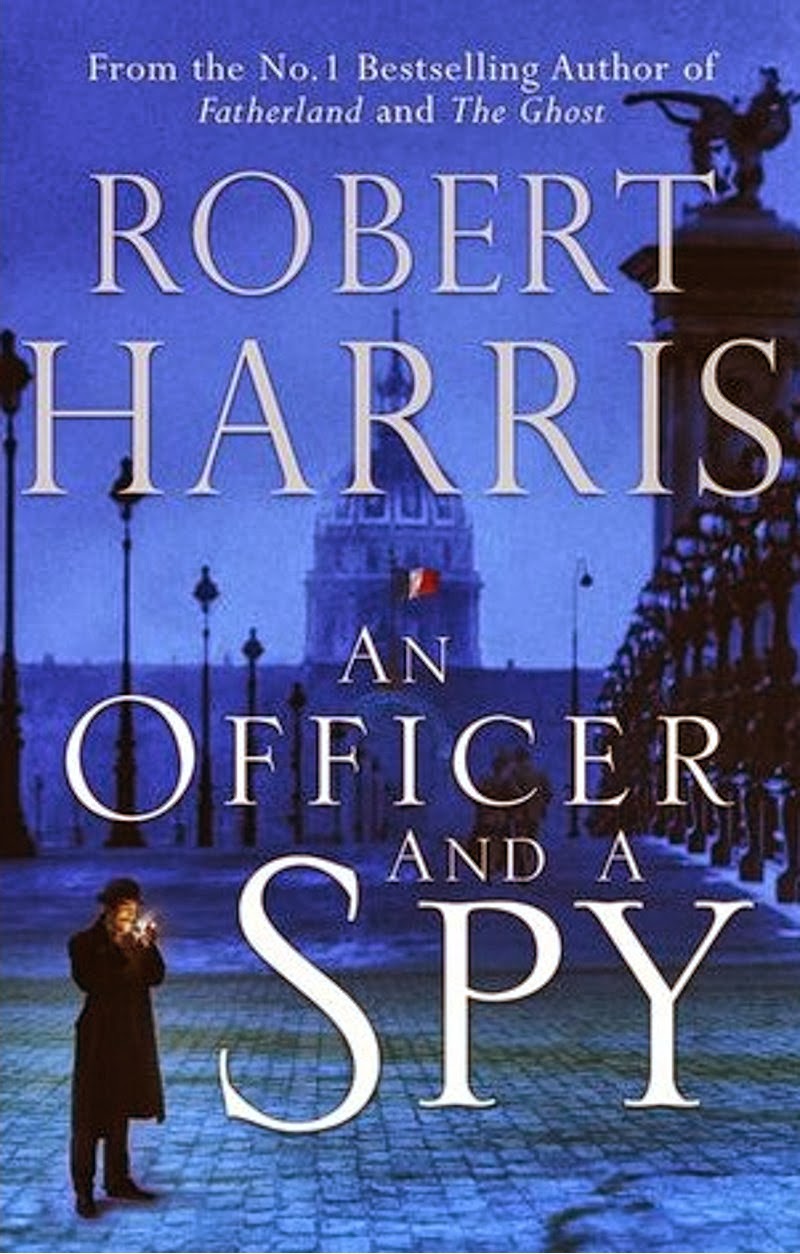
Harris-Officer-Spy CvrHistory is littered with cases of miscarriages of justice from around the world that have shaken society to its core and attracted the attention of the world media. America has examples such as the Salem Witch Trials which led to the deaths of 19 innocent people on suspicion of Witchcraft, while the 1954 Dr. Sam Shepherd case is believed to have inspired the TV series and movie “The Fugitive”.  Britain has its fair share  although quite a few are related to the “Troubles” in Northern Ireland,  The Birmingham Six (1975), Judith Ward (1974),The Guildford Four (1974) and Maguire seven (1976).

It’s to France we go for this month’s book, a country not immune from miscarriages of justice and scandal. Joan of Arc was burned at the stake in 1431 on charges of Heresy but she was posthumously cleared in 1456. However, it’s the other big historical miscarriage of justice, The Dreyfus affair which forms the basis for the Robert Harris book “An Officer and a Spy”.

The Dreyfus affair was a political scandal which divided France from 1894 till 1906. It started with the court-martial of a Jewish

Alfred Dreyfusofficer Alfred Dreyfus on charges of treason and passing secrets to a foreign nation (Germany). He was found guilty in 1894 and sentenced to life imprisonment at the penal colony of Devils Island in French Guiana. He spent five years there in ever worsening and inhumane conditions imposed on him by a government desperate to rid him from the memory of its people. During that time evidence came to light that the actual culprit was one Major Esterhazy. The book tells the story through the eyes of Major Georges Piquart, the officer who actually first discovered that there were problems with the evidence. The evidence in question based solely on a couple of telegrams retrieved from the waste paper basket in the German embassy.

A career soldier, Piquart finds himself up against a very Georges Piquartdetermined foe in the French army and it’s Statistics Section (The Secret service) of which he is the head. As is usual in the clandestine world, there are no real friends and everyone is out to look after themselves. From the moment he is appointed head of the Secret Service he knows he is an outsider and that the staff under his command resent him. The more he pursues the truth and aims to prove Dreyfus’ innocence the more the government and its long tentacles of power attempt to deter him, even threatening his life and those of his family and loved ones.

I was first introduced to the case in history class in school, through my teacher Mr. Walsh; where the real hero was the eminent French journalist Emil Zola and his cabal of “Dreyfusards”. According to the history lessons and the schools books, Piquart plays a mere supporting role.  The thing about Irish schooling is that European history is widely covered. While my partner who was educated in England had never heard of the Dreyfus affair before she read this book.

Before this I’d never read a Robert Harris book, I’d seen the film “The Ghost Writer” an adaptation of his book “The Ghost” with Ewan McGregor, Pierce Brosnan and Kim Cattrall and after seeing it, was kicking myself for not reading the book before hand. This is Harris’s ninth book of fiction which includes the afore mentioned The Ghost plus Fatherland, Enigma, Archangel, Pompeii, Imperium, Lustrum and The Fear Index. He’s written five books of non-fiction on subjects such as Hitler, Neil Kinnock, the media and the Falkland’s crisis and co – authored a book on the history of chemical and biological warfare with  BBC current affairs presenter Jeremy Paxman. Harris is married to the author Gill Hornby , the sister of Nick Hornby.

harriswebnew2_2683845b


When it was initially recommended for the book group, even the chooser had some slight reservation about its length and suitability for a book group read. There are no real hard and fast rules about books for book groups, each to there own. But it has to be practical to be able to read the book in the time between meetings most groups meet month to month although some may make it shorter due to being made up solely of housewives or retired members, who might have a bit more time on their hands. Although that said, I respect that housewives lead very busy lives too and are not spending their days sipping latté’s, watching daytime TV and reading.

One of the group, bought the audio version, due to difficulties in sourcing a copy (I can assure you it is quite widely available) and said it was the best way to read it as the narrator David Rintoul really brought it to life with his pronunciation of the French names and place names.

An Officer and a Spy takes a long drawn out piece of French history and turns it into an engrossing page turner. Another member of the group read it over the Easter weekend just gone, that’s almost 500 pages in four days. Personally, I had the book finished with a week to spare before book group. Evidence, if it was needed, that this book really hooks the reader from the first page to the four hundred and seventy ninth with its gripping narrative, cast of well drawn characters and tension filled story-line.

In the past I’ve often berated books for being over crowded with characters, but in this book, Harris’s skilled penmanship makes sure that they don’t detract from the story-line and the role of the main character Piquart. It takes a certain skill to make a piece of history tantalizing and Harris is a master at this having done it numerous times before, for example creating an alternative ending to the Second World War as a basis for a detective novel in Fatherland. Similarly Pompeii is used as the setting of  a thriller set days before the eruption, Enigma is set around the code breakers of Bletchley in WWII and Archangel a mystery around the death of Stalin and his apparent heir.

Just researching these other titles for this piece has me salivating Fear Indexover them. Only the other day I discovered a friend had given me a copy of Harris’s 2011 book The Fear Index. This will definitely be moved up the bedside locker TBR pile and may even accompany me on a weeks hiking in the Derbyshire Peak District later this year.

They say the past is another country; it may be set in another country in this book. But Harris makes it very real and one of the best history lessons I’ve had in a while, sorry Mr. Walsh. So take my advice, hop on your bike and pedal to the shops for a copy of this book, some croissants and French roast coffee. Then lock the door, dig out your favourite beret and settle in for an amazing read that will leave you breathless even before the Tour De France starts.

Go back

Your message has been sent

Warning
Warning
Warning
Warning

Warning.

JONASSON’S OAP ADVENTURE STORY IS OVERWORKED AND NEEDS A ZIMMER FRAME FOR THE READER.

Standard

The longest place name in the world with 85 letters is Taumata­whakatangihanga­koauau­o­tamatea­turi­g  pukakapiki­maunga­horo­nuku­pokai­whenua­kitanatahu. It’s a town on the north island of

World-Oldest-Place-Name-221077New Zealand and means “The summit where Tamatea, the man with the big knees, the climber of mountains, the land-swallower who travelled about, played his flute to his loved one”. The longest place name in Europe is a Welsh town on the island of Anglesea called, Llanfairpwllgwyngyllgogerychwyrndrobwllllantysiliogogogoch with 58 letters, which means  “Saint Mary’s church in a hollow of white hazel near the swirling whirlpool of the church of Saint Tysilio with a red cave” (just imagine trying to get a taxi to there after a few drinks).

There’s no listing for the longest place name in Sweden, but owing to Swedish grammar they have some infinite words and the longest one is Spårvagnsaktiebolagsskensmutsskjutarefackföreningspersonalbeklädnadsmagasinsförrådsförvaltarens, which at 95 letters means “The manager of the depot for the supply of uniforms to the personnel of the track cleaner’s union of the tramway companies”. (I’d love to see the sign on his office door)

There are quite a few books with very long titles; the longest ever isbook-cover-100-year-old-man a book by Nigel Tomms which has over 3999 characters and 370 words. A list compiled by members of the website www.goodreads.com  a couple of years ago listed 491 wordy titles, but this months book wasn’t  on it, due to being unpublished. It has 13 words in the title and is ‘The Hundred year Old man who Climbed Out of the Window and Disappeared’, by Jonas Jonasson.

The book tells the story of Allan Karlsson a centenarian who only minutes before attending a one hundred birthday party in his honour, decides on a whim to climb out the window of the nursing home where he resides and go for a walk. Thus starts a big adventure, in which, Allan steals a case full of drug money and befriends a gaggle of weird and wonderful human companions with whom he divides the 50 Million Swedish Kronor. There’s also an Elephant in tow. Allan’s disappearance sparks a nationwide man hunt lead by a lonely Police Inspector and members of the drug gang intent on reclaiming their loot. Soon the police are inundated with tips and misleading leads, not to mention the bodies of two of the drug gang. But innocent old Allan isn’t unused to being the centre of attention, because at regular intervals we revisit Allan’s early life, in which he seems to have been at every major political event and dined with every major political leader over the past century from Mao Se Tung to Stalin, Truman and Kim Jung Il . He also discovered how to create the Atom Bomb and gave nuclear secrets to the Russians quite by chance. All while in the company of Albert Einstein’s younger and slower brother, Herbert. But in the present day the rag tag group seem to just about remain one step a head of their pursuers, but for how much longer? And when they are caught what will happen to them?

Jonas-Jonasson-2-

This is Swedish journalist Jonas Jonasson’s first of two books which was published in 2009 but then translated into English in 2012 and has since been converted into another 29 languages. His second book was originally called the “The Analphabet who knew How to count”, but has recently been changed for the American market into “The Orphan who saved the king of Sweden”. Jeez, here we go again, dumbing things down for middle America. Couldn’t they just call it “The Illiterate Who Could Count”? Middle America is not that backward that they don’t know what the word “illiterate” means and anyone there who doesn’t know that, will not be found in a bookshop or a library. The hundred year old man has since been made into a movie, with subtitles, how long I wonder before there’s an US backed English language version? Time will tell.

This book is supposed to be rip roaring yarn, or a “… laugh out loud best seller…” according to The Telegraph, the Irish Times says it should carry a health warning for those irritated by helpless chortling. Wrong! It’s funny, but nowhere did it have me bent double with pains of laughter. It’s more a series highs and lows, at first the premise of an OAP climbing out of his nursing home window and wandering off is promising, the first half of the book Is humorous, and had me smiling and chuckling, but from midway its a chore to carry on, the story telling feels laboured and that Jonasson is trying too hard to make light of everything. The supposedly funny events are not memorable. Hence, it is nowhere near the likes of James Herriot’s and the recently deceased Sue Townsend’s books. Now those are funny books, especially Sue’s early work with Adrian Mole.

I found that Jonasson has tried to fit too much into one book, this book is 389 pages long! It’s a regular gripe at the book group, that there is little or no  input by a half decent editor these days, using a big read biro or scissors. This is clearly in evidence here. Trying to run two very intricate stories side by side through a book like this never works and ends up distracting the reader, it’s like watching two siblings vie for your attention. The stories from Allan’s early life come across more as a set of sketches, which could have been their own book, with a bit more work, but Jonasson and his lazy editorial team have fallen down on the job badly.

As for the characters, there’s too many of them, even with their unusual names, such as the henchmen “Bucket” and “Bolt”, then there’s their Boss. Called The Boss, whose real name is  Per Gunnar Gerdin, he’s referred to by both monikers in the book. Of the rag-tag bunch of friends Allan picks up, Sonya the elephant sticks out, then her surrogate owner “The Beauty” we do find out her name but  I forget it now. There’s an immigrant hotdog seller who’s a ‘jack of all trades’, another  uninspiring character whose name  I forget  and his estranged brother. Not to mention the police inspector, the prosecutor and that’s just in the current story, there’s loads more in the autobiographical story. As for Allan, he’s believable to a point, but he comes across as a Swedish version of Damien from the The Omen, as almost everyone who comers into contact him with meets their maker shortly after they part company.

As for the inclusion of the historical world leaders, it feels like a literary attempt at product placement. At first, it’s funny to have Allan having dinner with Trueman on the night Woodrow Wilson dies, and then Stalin, but  by the time you get to Kim Jung IL and Churchill it’s parody gone mad.

I hate coming down on books and before I come across as  being very clinical and overly judgmental about The Hundred Year Old Man, there is another reason why this didn’t work for me. Overall the book group was split on likes and dislikes, but one theory I expressed was that people have very different tastes in comedy. What central Europeans and Scandinavian’s find hilariously funny is not what us Celts may find funny. How many Europeans find the likes of Father Ted, Fawlty Towers and Allo Allo, hilarious? It’s the same thing with many of Europe’s home produced comedy programmes (Not that we see many) The crime fiction genre is a different kettle of fish and is proven by the success of the Millennium trilogy, by Stig Larsson, Jo Nesbo’s books and the TV series Borgen. So one has to ask, is the reason I feel this didn’t work also down to things being lost in translation? Comedy doesn’t translate across as easily as crime.

I discovered two things while researching this article, firstly that fifty million Kroner is actually worth very little outside Sweden, according to www.xe.com it’s almost five and a half million euro, seven and a half million dollars or four and a half million pounds sterling. That’s one of the few things that made me laugh, the thought that if they crossed a border or somehow got on a plane the case of money Allan was dividing equally among his cohorts would devalue rather rapidly.

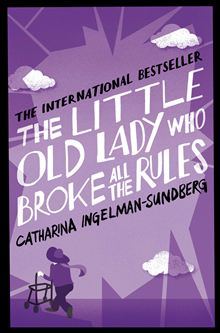
the-little-old-lady-who-broke-all-the-rules-978144725061601Secondly is that an almost exact replica of this story has been published in Sweden in 2012 and since translated in to English, by the same translator. It’s “The Little Old Lady Who Broke All the Rules” by Catharina Ingelman Sundberg. Basically, it’s about a 79 year old who plans to break out of her nursing home with a group of her fellow residents, to run riot, rob banks and get up to all sorts of mischief. It begs the question, don’t they do originality in Sweden? Is it just a fluke or did Ingelman’s publishers not read Jonasson’s book?

So, if you’re looking for an unchallenging moderately funny book to while a way a beach holiday, this may be your cup of tea but if it’s a commuter read that you’ll pick up in the morning and evening on your way to and from work this is to be avoided. The numerous characters and stories will have you wondering where the hell you are.

Go back

Your message has been sent

Warning
Warning
Warning
Warning

Warning.

NO LONELY PLANET FOR CITY OF BOHANE, BUT AN EXCELLENT JOURNEY TO THE DARKSIDE.

Standard

city-of-bohane-orangeThere’s a new doctor in the house. No, I’m perfectly fine. It’s a Sci-Fi reference and if you’re still lost I’m talking about the recent appointment of Peter Capaldi as the new doctor in the long running BBC drama Doctor Who. If the 12th  Doc’ was to open the door of the TARDIS in the next series and find himself in the setting for this month’s book, then it would be a very interesting episode indeed. The book is City of Bohane by Kevin Barry.

The story is set in the fictional city of Bohane on the west coast of Ireland (pronounced Bo-Haan, I’m reliably informed by other members of the book group). It’s a seedy, malevolent place where life is cheap and sex and drugs are what fuels its economy. Control of the different parts of the city and the profits from its illicit trade are run by various gangs, the largest being the Hartnett fancy gang and their leader Logan Hartnett. A number of rival gangs from the other side of the city are itching to get their hands on his business so it looks like the tenuous peace of the city is about to be shattered, as well as that Hartnett’s old nemesis  Gant Broderick has returned to the city after a twenty five year absence. He has unfinished business with Hartnett’s wife Macu but is that all? What of the younger members of the gang? Is Logan facing trouble from within his own ranks? Will life and the balance of power ever be the same in the once great metropolis of Bohane?

kevin Barry


This is Limerick born writer Kevin Barry’s first novel, he’s previously written two collections of short stories ‘There Are Little Kingdoms’ in 2007 and ‘Dark Lies the Island’ in 2012.  The book won the 2013 Dublin IMPAC literary award and it is the first time I have had cause to actually agree with the judges on their choice. Usually it’s the shortlisted runners up that I’ve thought were more deserving of the top spot. IMPAC is far from the world’s best known literary prize, but it is growing in recognition and stature behind its all conquering neighbour in the UK, the Man Booker. Thanks in part to it having the largest prize in the world of €100,000.

This maybe very different from any Irish book I’ve read before but its now one of the best. Firstly, Bohane itself is a mishmash of various other cities both fictional and real. It’s like Barry took Gotham, New York, Dublin and Paris then stitched them all together. This is not surprising as he lived in seventeen different places before he was thirty six years old, including Cork, Santa Barbara and Barcelona.  Bohane does seem to be set in an alternate universe, where there are no cars and very few pieces of technology like phones or TV’s but they have trucks and an ‘EL’ train. No guns either, all the fighting is done by hand or with knives.

One of the nicest things about the book is the language, its fruity to say the least and quite knackery. At first it’s hard to imagine where in Ireland you are, sometimes inner-city Dublin other times the west of Ireland. Phrases like “Sweet Baba Jay” when taking the lords name in vain reminded me of Hill Street Blues Lt. Hunter, who often exclaimed “Judas Priest!!!” or “Judas H, Christmas!!!” The down side to the rich flowery dialect is that it often slows the reader down as you try to translate what the characters are saying but don’t let that take anything from a warming and descriptive element of the book. It’s not surprising that this book wasn’t nominated by libraries from outside of Ireland for IMPAC, as with the release of the film The Commitments in the US, readers not acquainted or related with the Emerald Isle might require a small list of translations to help them on their journey through Bohane.

The book shows the influence of films such as Blade Runner and Sin City, owing to the very sepia styled imagery and gothic themes running through it. Also the Mad Max movie Beyond the Thunderdome came across to me as inspiration for one tribe WillyWonkacalled the “Sand Pikey’s” who live in the dunes outside the city. Meanwhile the whole gang rivalry storyline is rather weak and seems like a bad episode of the internationally acclaimed RTE hit ‘Love Hate’. However, it is emboldened by the vivid descriptions of the settings and the myriad of weird and wonderful characters, like the local paper Editor Dom Gleeson, his hunched back photographer, Mary Grimes and Logan’s two henchmen, Wolfie Stanners and Fucker Burke, while Hartnett comes across as a rather dandy character who dresses like Willy Wonka.

If this book was ever to be developed into a visual format, I could see it as a graphic novel initially. But you only have to see that graphic novels and darkly drawn comic heroes have an excellent track record in crossing over to the big screen. In an interview in 2012 Barry confirmed the book had been optioned and that he’s written a first draft of a script.

So take my advice, forget about packing your copy of lonely planet. put on your best Pikey or Oirish accent, along with a decent pair of knuckle dusters and prepare for a very enjoyable trip into the shadowy environs of Bohane.

Go back

Your message has been sent

Warning
Warning
Warning
Warning

Warning.

FITZGERALD’S ICONIC PIECE FALLS SHORT OF GATSBY’S GREAT EGO AND PARTIES IN SIZE AND SUBSTANCE.

Standard

great-gatsby-penguin-modern-classicsWhen was the last time you sat in a public place, like a train station, bus stop or cafe and passed the time waiting for someone or just enjoying the ambience, by people watching and playing the game “Guess-What they do?”, we humans are a naturally inquisitive bunch. While most people leave the guessing to their imagination, some people take the game too far, to pique their curiosity and verge on the practice of stalking, by following the subject down the street just to see if they go into an accountant’s office, or a car repair workshop. In the literary world there are numerous examples of people with mysterious or non-existent backgrounds for one reason or another, some are prime examples of bad writing whereby the characters haven’t been flushed out fully or it is a plot device; in this months book it forms an integral part of the story. The book in question is F. Scott Fitzgerald’s – “The Great Gatsby”.
The Great Gatsby tells the story of Nick Carroway a bond salesman in 1920’s New York, who lives in Long Island. He discovers by chance, that his neighbour is a flamboyant socialite known for his large opulent house parties that take place every weekend. The host is Mr. Jay Gatsby, who gives off the outward appearance of an enigmatic individual, who has lived a life less ordinary but in reality is a rather reserved, lonesome and mysterious figure. When Nick is suddenly summoned by Gatsby to one of his parties, he meets the hoi polloi of American high society. Most are invited, while there are quite a few who are there just because they’ve followed the crowd. Whilst nobody knows much about the man at the centre; they all have their own opinions and help the rumour mill as to where their host is from or what he did in the past. Nick and Gatsby become friends of sorts as his curiosity as to who the real Gatsby is gets the better of him. Their summer long friendship takes Nick on a heady journey through the sordid and often hedonistic lives of the well to do in America at the beginning of the roaring twenties but, as with most lives led this way, there are casualties and this is where things start to unravel. Can their friendship, Gatsby’s enigmatic persona and the lives of those around him survive the repercussions?

The-Great-Gatsby1

What makes a book a classic, does it have to have made it on to the school curriculum? Does it have to have had a number of screen adaptations? Or is it longevity? It’s hard to tell, if you haven’t seen either of the screen adaptations the most recent starring Leonardo Di Caprio, then that’s good, because you can now read this book and then compare all three.

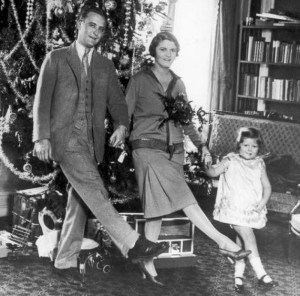
Francis Scott Key Fitzgerald was an American writer of five novels, This Side of Paradise, The Beautiful and the Damned, The Great Gatsby, Tender is The Night and The Love of the Last Tycoon. He also wrote ten collections of short stories, which included among them The Curious Case of Benjamin Button; published in the collection Tales of the Jazz Age. The Fitzgerald’sfscottfitzgerald & family had one child a daughter called, very imaginatively Frances Scott Fitzgerald, who went on to become a writer and journalist too. His relationship and life with his wife Zelda mirrored that of the lifestyle of those in the Great Gatsby. It is claimed that Hemingway believed Zelda was forcing Fitzgerald to drink in order to distract him from his writing. As well as that, Fitzgerald’s short 44 years on this earth were regularly overshadowed by financial woes as a result of the couples taste for the good life.

What of the book its self? Well the characters are rather shallow and one dimensional, Nick is a lowly bond trader in the city, who just manages to somehow get enough money to live on Long Island. Gatsby’s house is a large rambling pile with servants; a pool etc, while nothing at all is mentioned about Nick’s home. Is it a three bed cottage?  Does he have servants? As for the other notable characters, such as Nick’s cousin, Daisy Buchanan and her husband Tom: they live in a large house with servants on the other side of the bay, directly across from Gatsby’s and Nick’s. The main crux of the story is unfinished business between Daisy and Gatsby. Tom is a typical college footballer, straight out of Ivy League who again does something in the city (What, we’re never really told), but bar that his main pursuit in life is carrying on with a mistress behind Daisy’s back. The only other main character is that of Jordan Baker, a professional female golfer (something of a rarity back then), who has an on-off relationship with Nick. If you can call it that.

mia-farrow-robert-redford-the-great-gatsby-coverIf  I was to take anything from the book it’s that it could easily have been set in the modern world where we are still, if not even more, fascinated with being the centre of attention and everyone wants to be an over night celebrity. But just like Gatsby, when we do get to be the centre of attention, can you really keep up? As with the spate of recent “Neknominations”, trying to be the next big thing can have tragic consequences.  The book is also very short at 165 pages in length, calling it a novella is being generous; I’ve read longer instruction manuals. But this is not surprising as Fitzgerald was more accustomed to short story writing. God help him if he’d had to write a modern day book which average out at 350 pages.

So take my advice, unless it’s on your bucket list avoid this bland little yarn and watch either version of the film adaptations instead.

Go back

Your message has been sent

Warning
Warning
Warning
Warning

Warning.

THE PEOPLE OF THE BOOK IS A GRIPPING HISTORICAL THRILLER, BUT NEEDS ANOTHER COUPLE OF INSTALLMENTS TO THREATEN DAN BROWN AND LANGDON

Standard

People of the bookDo you know what a Haggadah is? Neither did I till Christmas. It’s a Jewish Passover prayer book, usually owned by individual families. Even a friend of mine whose mum is Jewish, but is a lapsed practitioner  and whose extended family are of the Jewish faith, admitted he had to Google it when I asked him recently by way of research for this article.

All across the globe and down through history there have been historic literary works which contain ornate and intricate paintings and stylized text and other various illuminated manuscripts. In Ireland we have the Book of Kells, England has the Magna Carta. The majority of the world’s religions have had numerous illuminated manuscripts such as the Book of Hours for devout Catholics, the Hebrew Seder Keri’ath Shema Al ha-Mitha (prays before retiring at night), the Jewish Torah and the Koran of Islam. Many of these magnificent works have also been lost as a result war and religious persecution. This month’s book group choice was a novel about BookOfKells3one such book and was selected by our founder Kathleen (who bears an uncanny resemblance to author Sophie Hannah -see previous review). Her choice was the Geraldine Brooks novel The People Of The Book.

The People Of The Book tells the story Dr Hana Heath an Australian book conservator who is summoned by the UN to Sarajevo in the spring of 1996 to trace the history of an ancient Jewish Haggadah found in the basement of the battle scarred national museum. It’s only a matter of months after the ending of the civil war and the city is still quiet tense while also trying to return to some semblance of normality, without the fear of death by sniper. On opening the book Hana finds among its pages things like a butterfly wing, sea salt, wine and blood stains and a white hair. What seem like totally random and ordinary everyday things you might find in an old manuscript, are to Hana’s trained eye, huge clues as to how the book found its way to Sarajevo and also where it came from originally. In the resulting narratives we are transported back in time to Sarajevo in the midst of the second World War,  to a very promiscuous Vienna in the 1800’s, to  16th century Venice during the inquisitions and  to Spain in the late fourteen hundreds.

As she nears the end of her voyage of discovery, which, in real time takes her back and fourth across the Atlantic and Europe while also answering questions about her own past, as well as explaining  the reason for the dysfunctional nature of her relationship with her mum. Hana discovers a sinister plot to destroy this book, which almost costs her, her career. Will she finally discover the truth about this mysterious book and stop it falling into the wrong hands.

Ten years ago very few people knew what a symbologist was or did; now, thanks to Dan Brown, Tom Hanks, four blockbusting books and two hugely successful films, more and more students are considering symbology as a career (actually its Typography or religious Iconology).  The same may now be said for book conservation following this book. From the first page the book feels like an imitation of a Dan Brown novel. But Brooks doesn’t imitate, she and Dr. Hana Heath go out and say “Oih! Robert Langdon, move over there’s a new girl in town”. It’s currently a one off piece and hopefully this won’t be, as Hana is a great character. She’s likable and different; her attitude to sex and relationships is easy going to say the least, not what you might expect from someone in her line of work (although neither is Robert Langdon and his Mickey Mouse watch). She seems to have an ex in every country and the back story involving the all but non-existent  relationship with her mum is solid and makes her character believable.

angels-and-demons-robert-langdon

The book is engrossing and informative from the get go, if you aren’t too familiar with Jewish history, this is a fantastic way to get acquainted with it and ancient Europe. Even when it jumps back in time to tell the individual stories behind the clues Hana finds in the Haggadah, each short story grabs you and drags you into its own little world. Whether you’re reading about a Venetian Rabbi feeding his gambling habit with a charitable donation he got to help the poor in the ghetto  or a young Jewish girl trying to outrun the inquisition in Spain. Before returning the reader back to Hana and the modern day story, which equally holds you.

sarajevo haggadhThe novel was inspired by the events surrounding the real Sarajevo Haggadah which was thought to have been lost during the civil war but was discovered following a break in at the national museum near the end of the war. It was restored using UN funding and now is on permanent display in Sarajevo.

Published in 2008, this isn’t the Australian born, former war correspondent’s first book of fiction, but her third of four. Her other books include, Year of Wonders (2001), March (2005) for which she won the Pulitzer Prize for fiction in 2006 and finally Caleb’s Crossing (2011). She’s also written two non-fiction books, Nine Parts Desire(1995) and Foreign Correspondence(1997).

I sincerely hope some film director or producer decides to turn thisbrooks_dock_col book into a movie because it would do equally as well as Angels and Demons or The Da Vinci Code. I could easily see Toni Collette as Hana.  So take my advice, if you liked Robert Langdon’s escapades you’ll enjoy this and even if you didn’t you’ll still  love this original take on the work of a book conservationist. So get down to your local bookshop and snap up a copy of The People Of The Book.

Go back

Your message has been sent

Warning
Warning
Warning
Warning

Warning.

LIEBSTER AWARD : ACCEPTANCE – YIPPEE

Standard

liebster1Recognition, we all like to receive it. But do we really go out of our way to get it? No of course not, because the best part of receiving an award or more importantly recognition for something you’ve done, is the utter surprise. If we all expected to receive an award for our work then the fake reaction would be noticeable from space and as cheesy as the acting you see on U.S. shows such as Pimp My Ride. Where the supposed utter shock and surprise shown by the lucky car owner at seeing the presenter, Xzibit at their door, is so over the top, as to make one cringe. So you can imagine my utter shock when I realized on Saturday 4th January that I had been nominated for a Liebster Award by Hana Telige  http://hanatelige.wordpress.com for my review of Gillian Flynn’s Gone Girl on this blog. Thanks Hana and please everyone visit Hana’s blog above and tell her what you think of it because to all of us plying our trade as bloggers/writers on the web, the best thing we can ever get is feed back and recognition.

So, what is a “Liebster Award”, according  to the research I’ve done on the web, it’s an online award given to new blogs which have a following of less than 200 or 2000 followers, depending on what you read. There is no prize or fancy black tie ceremony with a red carpet, just the online accolade and benefits of increased awareness of your blog. I’ve already seen that, especially after I posted the news on Facebook, thanks to all my friends’ and LiebsterAwardRulesacquaintances, who’ve sent messages of congratulations and wished me well in person. There’s is also a little bit of work to do as a result of a nomination.

1)      I have to thank my nominator by linking them in this acceptance blog (done above), but again thanks Hana.

2)      I have to answer 10 questions set by Hana (some award nominators request 11 and 11 random facts, but I think Hana is going easy on her nominees)   .

3)      I have to nominate 10 other blogs for a Liebster (This is harder then it sounds, most of my ten have somewhere between less the 200 and 2000 followers. If you have more, sorry, I hope you appreciate the award and graciously accept it).

4)      And finally set 11 questions for these bloggers to answer.

So here are the 10 questions set by Hana:

1)      Why did you start a Blog? It was originally as a way to express my musings on life and events in the news, that blog was on BlogSpot but about two years ago I started putting book reviews on it, then last November I set up this Word Press blog to cater solely for my book reviews.

2)      What is your favourite video game? Currently it’s GTA5 as that’s what I’m playing at the moment, but the best ever game was a little known title called Flight Unlimited 3 by Looking Glass studios and EA. As a flight Sim it was very realistic and gave me hours of fun flying various planes all over Washington State.

3)      What’s the first thing on your bucket list? Why? God, There’s still so much I want to do, that I don’t really know what is top of my list , or why.

4)      Would you want to live for ever (at the age you are now)? Why or why not? Yes, because like most people I’m scared of dying. Although in all seriousness I know I’ll die some day, despite all the major advances in medical science.

5)      Favourite quote or one that makes you think? Some days you’re the pigeon, some days you’re the statue.

6)      Why do you like your favourite food? Wine, because no two bottles are ever the same and it’s 5pm somewhere.

7)      What’s the first book you remember loving? Shall We Tell The President by Jeffery Archer

8)      What instrument would you most like to play? The Piano

9)      Favourite thing that happened in 2013? Spending a week hill walking in Derbyshire, while also sampling some great local ales.

10)   What are you most excited about in 2014? Seeing my best mate Ivan, whose been travelling around the globe, he returns in February.

liebster-blog-award2

Now for my ten lucky nominees, well done. http://maresespieces.com/

http://mylittlebookblog.wordpress.com/

http://pols80.wordpress.com/

http://theirishbeersnob.blogspot.ie/

http://anygivenbeer.com/

http://livingawritinglife.blogspot.ie/

http://brickmoviereviews.wordpress.com/

http://adventuresincupcakes.com/

http://tarjoiluehdotus.blogspot.ie/

http://littleredreviewer.wordpress.com

I need 11 random facts  and 11 Nominations and 11 questions, might as well stick to the rules.

My 11 questions to my nominees:

  1. What was the last book you read? How did you come to read it?
  2. Do you have a guilty pleasure?
  3. If you could ask someone dead or living (they don’t have to be famous) a question what would it be?
  4. If you could be the witness to some event in history what would it be? And why?
  5. What’s the worst present you ever got and regretted giving?
  6. Where’s the best place you’ve visited on a holiday? Why?
  7. Have you ever Book Crossed and if so where’s the strangest place you left a book or found a book?
  8. Do you remember your first kiss? Go on, who was it and have you seen that person since?
  9. What books are on you TBR list for this year 2014?
  10. Where were you on 9/11, how did you hear about the news?
  11. When was the last time you cried, why?

Go back

Your message has been sent

Warning
Warning
Warning
Warning

Warning.

HANNAH AND HER ORPHAN CHOIR SHOULD REMAIN UNSEEN AND HEARD MORE AS THEY SING TOTALLY OFF THE HORROR KEY TO SUCCESS.

Standard

orphn choirDo you believe in ghosts? Have you ever seen one? What about noisy neighbours? The most famous ghost story ever told is set around this time of year. As for my experiences with them, yes I believe in them. Thanks to a rather chilling night in Wicklow’s historic gaol (www.wicklowshistoricgaol.com), south of Dublin and the numerous unexplained stuff featured on Pick TV’s “Most Haunted”.  As for the noise from next-door, no, we just have thin walls my neighbours would wholeheartedly agree. So what does this have to do with this month’s book, it’s The Orphan Choir by Sophie Hannah.

Sophie Hannah is a British Novelist and Poet; she has previously s_Sophie-Hannahwritten eight psychological thrillers featuring her characters Simon Waterhouse and Charlie Zailer, the most recent being The Carrier (2013). They have  been adapted for TV as the series “Case Sensitive” starring Olivia Williams and Darren Boyd. She’s also written two children’s books and this one horror novella also published in 2013.

The Orphan Choir tells the story of Louise Beeston, a mother of one, whose gifted son Joseph is forced to board at a school in Cambridge so he can sing in the schools elite boys’ choir. She doesn’t like this, believing he’s being detained against his will by his choir master but has gone along with her husband’s wishes for the betterment of her son’s education. Then her neighbour Justin or Mr Fahrenheit as she refers to him, who  smokes hash and drinks with his fellow delinquent friends, starts playing loud music at all hours of the night at full volume. She complains to the council but to no avail, then she starts to hear not Just “Queen” being played in the wee small hours, but choral music sung by young children. She suspects Mr. Fahrenheit is tormenting her.   When the opportunity comes up to move to a private estate in the Cambridgeshire countryside, fearing for her sanity, she jumps at the chance but the choral music doesn’t stop. Louise must find out how Mr. Fahrenheit is managing to get to her this far out of town – or is he responsible?

This is the best time of year to read spooky books, well not just Christmas time, but winter in general. When the nights have closed in and the wind is howling around the rafters. The cover of the book really catches your attention, so does the title. It suggests all manner of things and my mind was racing away at thoughts of what might lie beyond the covers. Alas the book is a let down in certain aspects. Yes it tells a good story and the idea was a good one but it comes across as more like  the demented ravings of a menopausal woman than someone haunted by the sounds of an unseen choir of children.

cropped-choristers-IMG_9666CC

Near the end there are a couple of nice twists and the liturgical responses which pop up through out the story, because they are being sung by the choir would probably add something to the piece if  I could sing or even hum them to get a feel for it or if I’d had the time to hunt the music out and have it playing in the background while reading. This only confirmed my suspicions that unless you are familiar with the music featured in the book, it would only really get the hair standing on the back your head if it was adapted for radio. But apart from that it falls short of the first rule of horror writing… Scare them.

So over the remaining months and weeks of winter, if you’re searching for something to have you looking over your shoulder, and flinching at every little sound on those dark cold evenings, this book isn’t it. Me, I’d worry about the credit card bill that’s coming in a couple of week’s time, that’s the scariest thing, this side of Christmas.

______________________________________

Let me take this opportunity to thank all those of you who have started to follow The Library Door and through the various social media made others aware of it’s existence. May you have a happy new year and enjoy reading all my future reviews from beyond The Library Door.  Adrian

Go back

Your message has been sent

Warning
Warning
Warning
Warning

Warning.

TRUST YOUR EYES PROVES THAT EVEN IN THE DIGITAL AGE THE CAMERA NEVER LIES.

Standard

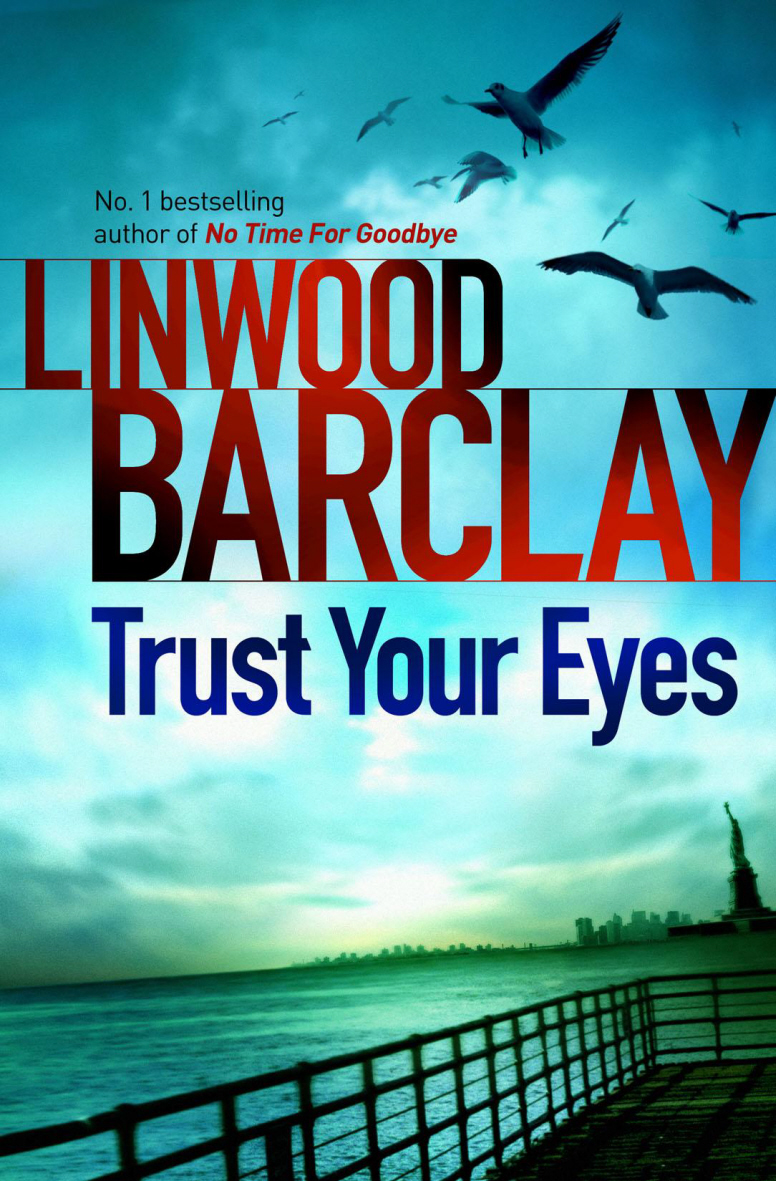
trust your eyesWe’ve come a long way over the past couple of millennium in the area of cartography and navigation. From the days when sailors navigated the globe using charts, sextants and the stars to modern ordinance survey maps and our present day use of GPS and Sat. Nav’s in our cars and phones. In 2005 the next step arrived in the form of Google maps “street view”, as a result of their funny looking vehicles which travel the planet photographing every inch of road around us. Thanks to this development, you can now see what your destination looks like or even visit somewhere totally random such as Springfield Illinois, Tel A Viv or San Francisco from the comfort of your own home and take a virtual drive around the area. This may sound a bit sad, but I must admit I’ve whiled away a lunch hour now and again doing it. This activity is the premise for Linwood Barclay’s thriller “Trust Your Eyes”, published in 2012

The book tells the story Thomas Kilbride who suffers from psychiatric problems. As a result he lives with his dad and spends all day every day in his room travelling the globe memorizing the streets of every city on the planet via “Whirl360” a fictional version of Google maps street view. When his father dies in an apparent accident on his ride on mower, Thomas’s brother Ray, a talented freelance illustrator for newspapers and websites returns home to attend to his father’s affairs.  He realises how bad his younger brother’s problems are when he discovers Thomas thinks he’s getting instructions from ex President Bill Clinton to work on a “Black-Ops” mission for the CIA, so much so that he’s started emailing updates to a random CIA email, which results in a visit from the “Fed’s”. Then one day while on a virtual trip down a street in New York Thomas thinks the “Whirl360” car has caught the image of a murder taking place in an apartment block.

google car

Ray is reluctant at first to believe it, but when the image suddenly disappears from the web 24 hours later, Ray is forced to go into New York and find the apartment. He discovers that it’s empty since the occupants left unexpectedly a couple of months previously, but that someone is still paying the rent. His interest in the apartment brings him to the attention of an ex-cop who’s a fixer for the campaign manager of the district attorney for the state of New York as well as a failed Olympic gymnast turned hit woman.  So can Ray and Thomas find proof that the camera never lies and find and why someone wants it to.

For me Barclay, a former columnist with the Toronto daily Star, has Linwood Barclaya hit and miss record regarding his previous five stand alone books which don’t feature the science fiction writer turned P.I. Zack Walker. I read “No Time For Goodbye” which was a real page turner and a bestseller. His third stand alone thriller “Fear the Worst” was also a taught page turner, but his second one “Too Close To Home”, had me losing interest and putting it down after the first 50 pages. Also, the blurb on the backs of his fourth and fifth books, “Never Look Away” and “The Accident”, didn’t grab me and gave me the inclination that they were just retreads of a well worn route.

While the whole premise of “Trust Your Eyes”, had me chomping at the bit and really fired my imagination as to where it would take the reader, being both bang up to date and a plot that hasn’t been used as a storyline in print, film or TV yet. I was a little let down, mainly because the skill Thomas has – being able to memorize the maps of whole cities – is used in the last quarter of the book when there were plenty of other opportunities and plot devices which could have had him using this unique trait  to better effect.  Also there’s a child abuse storyline which meanders in and out of the book, for no real reason only to end up being a distraction. As to the revelation of how their father died on the last page, again I didn’t really care, because it too comes across as a something missed in the editing process.

The Two main characters were believable, while a budding romance between Ray and Julie, a girl he went to school with limps along with her character. This too in the end seems to serve very little purpose. The use of a failed Olympian as hit woman is something I liked. God if they turned this into a movie maybe they’d give her Oscar Pistorious type blades. She could become a spin-off character, only for the slight problem that Barclay kills her off. Although that never stopped producers before as the words “inspired by the characters…” can reincarnate any stone cold character.

So if you‘re looking to for an original technically inspired novel .This book will do the job, just try not to get lost in the numerous other loose and confusing stories running through it. Personally I hope they adapt it for film and develop the story a bit.

(First published http://www.murphysview.blogspot.com 2013)

Go back

Your message has been sent

Warning
Warning
Warning
Warning

Warning.

MOGGACH’S ASIAN RETIREMENT YARN, IS PUT OUT TO PASTURE BY A COUPLE OF CLASSY DAMES AND A REWORKED SCRIPT.

Standard

Best exotic marigld hotlAccording to Shakespeare there are seven ages of man, you may not be aware of the whole poem of the same name, but you’ll know one of its oft quoted lines, “All the worlds a stage and all its men and women merely players..”, from “As You Like It“. According to the poem, the sixth stage is old age, “the sixth stage shifts into lean and slippered pantaloon. With spectacles on nose and pouch on side…. A world too wide for his shrunk shank; and his big manly voice turning again to towards childish treble…”  This stage is something we’ll all experience eventually. The sixth age is also the theme of last month’s book group selection. The book is known by two titles; originally it was “These Foolish Things” by Deborah Moggach. But after the release of the hugely successful film adaptation, all subsequent printed copies of the book were renamed, “The Best Exotic Marigold Hotel”.

The book tells the story of a group of pensioners who take up the opportunity to live out their remaining years away from the cold British weather, the high cost of living and the deterioration of society and the values of old. For the warmer and less economically challenged climbs of a new Indian retirement home. The book follows their new lives and their adjustment to the totally alien cultures and experiences.

The-best-exotic film pster

The film which features a cast of such British acting heavyweights as Dame Maggie Smith, Dame Judi Dench, Tom Wilkinson and Bill Nighy. Tells the story of a group of pensioners who travel to a brand spanking new retirement home in Jaipur, only to discover on arrival that it is far from the glamorous claims and pictures of the brochure and on the verge of closure. So they set about turning its fortunes around while finding romance and new lives in the diverse and developing cultures and economy of India.

As a rule I never read a book after I’ve seen the film adaptation first. I’ll go see a film adaptation after reading a book, just to see how the writer and director interpreted it; because a film is never as good as how your imagination pictures the story.  In this case the book was never going to be as good as the movie. It’s rather slow and the characters lives before they go to India are quite interesting, but once they arrive things just tick over and the stories really go nowhere. I and most of the other members of the book group had seen the film beforehand and where always trying to picture the characters from the film in the book, but alas we couldn’t. If you hadn’t seen the film before reading the book it would stand alone as an alternate story.

This is not to take away from the fact that Moggach is an excellent Deb Moggachwriter, who has written twenty books which include seventeen novels and 3 collections of short stories. She’s also an acclaimed scriptwriter who is responsible for the screenplay of the BBC Drama “Pride and Prejudice”, starring Colin Firth. She’s adapted four of her own books for TV, as well as the “The Diary of Anne Frank”, a Nancy Mitford novel and an Anne Fine novel. Surprisingly, whilst she did adapt a screenplay for “These Foolish Things” , it was Ol Parker’s version that was finally used and I can see why. Moggach has lead an interesting life which includes living in Pakistan, as well as campaigning for the change in the law regarding Assisted Suicide, following her mothers imprisonment for assisting a terminally ill friend take their life.

So my advice is, if your feeling your age and looking for something to pick yourself up, don’t reach for this book. But go out and rent the film, as they say laughter is the best medicine. This is certainly the tonic and may also convince you to add a trip to India to your “bucket list”. Where as this book should be consigned to your own personal room 101.

(First published http://www.murphysview.blogspot.com 2013)

Go back

Your message has been sent

Warning
Warning
Warning
Warning

Warning.

FLYNN IS MISSING NOTHING WITH GONE GIRL

Standard

GONE_GIRLAccording to the Missing Persons Bureau in the UK 200,000 people went missing in England between 2009 and 2010. In Ireland 8,511 people were reported missing in 2011. While in the US, the FBI received 661,593 missing person reports, in 2012. There are various reasons why people go missing, but do we ever really understand what those reasons are and what happens to those who are left behind?  This month’s book states that there are two sides to every story; the book is Gillian Flynn’s, Gone Girl.

Gone Girl is this years most talked about work of fiction, in much the same respects as Fifty Shades was last year’s, except with out the sex and titillation. This is the former TV critic’s third novel following on from her 2006 debut, Sharp Objects and the 2009 book Dark Places.

Gone Girl is the story of a married couple Amy and Nick Dunne, who seem to have everything. Amy is the daughter of famous novelists and the inspiration for a series of “Amazing Amy” children’s books. While Nick is an ex newspaper columnist, who after losing his job in NYC, convinces Amy to move to his sleepy home town of Carthage, Missouri after his Sister Margo or  “Go” calls for help in looking after their Alzheimer afflicted father. Nick invests some of the couple’s (Amy’s trust fund) money into buy a bar with his sister. Everything’s going well until the day of their fifth wedding anniversary when Amy just disappears. All the clues lead to a violent abduction and the distinct possibility that Amy is lying dead somewhere. The two local detectives, Boney and Gilpin, start working the case and very soon they have a suspect, thanks to some very incriminating clues. But is Nick the Killer? Is Amy dead? Or is there a more sinister game being played by someone and is that game revenge no matter what the cost?

USA - Portraiture - Gillian Flynn

The book tells the story through the eyes of Nick in real time and Amy in the past tense from her Diary. For the first 200 pages, I found myself skimming through the Amy’s chapters to get back to Nick’s real time description of events, as I thought Amy’s diary distracted from a good murder mystery.

I felt sorry for Nick, but I often wanted to slap him for being an idiot at times too, but more then anything else he’s a well written character who is believable from the get go. Then bang! On 214 pages and nearly halfway through, Flynn hits you with a ‘curve ball’ out of ‘left field’. You’re immediately left scrambling to adjust to the pace and direction of the story from there on in. It was then I realised why everyone was jumping up and down and raving about this book.

As for Amy, I found her whiney, selfish, introverted and irritating.  By the end of the book, I’d have taken a shovel or shotgun to her myself.  She reminded me of a couple of women I know, one in particular who makes me and other members of my close circle seethe with fury. The other characters in the book are glossed over; the only one who really stuck with me was Nick’s sister “Go”, who I envisaged as looking like Kathy Bates. Her relationship with Nick is portrayed excellently; she is his only support, even when he cocks up. Otherwise Carthage and its various inhabitants’ come across as your regular bunch of mid-western small town inhabitants.

If anything, the book reminded me of the Kathleen Turner, Michael Pike nd AfleckDouglas movie “War of the Roses”, but this book takes that premise to the whole new level. Talking of movies, there is a movie adaptation in pre-production as I write. Set for release in 2015, with Ben Affleck and Rosamund Pike signed up the play the lead roles.

This book does for missing persons what Emma Donoghue’s – “Room”, does for abductees. It brings you inside the mind and suffering of those left behind. More importantly, what a husband goes through because as we know; they’re the number one suspect in all these cases, until proven innocent or until they break under damning evidence. It also highlights the warped and rather dark side of certain individuals and how deep down even the most grounded relationships can eventually take their toll on those at the centre. It asks the question; do you ever really know the person you live with?

So my advice would be, run out and get this book. But while you do that, you might want to pick up a stab vest and a secure lock for the spare bedroom door. We all have secrets, and harbour the odd bad thought about our loved ones, but you never really know how dark and devious theirs are. You also may want to heed the warning on  the inside cover of this book, “Marriage can be a real killer…

(first published http://www.murphysview.blogspot.com 2013)

Go back

Your message has been sent

Warning
Warning
Warning
Warning

Warning.